In the U.S., a car A/C recharge typically costs a few hundred dollars, but a recharge is not necessarily a repair. RepairPal’s June 2026 estimate puts an automotive A/C recharge at $282–$366 on average. A selected ConsumerAffairs survey found quotes averaging about $430–$521, or roughly $400–$550 across its sample. The difference reflects vehicle mix, refrigerant type, location, shop type, and whether the quote includes more than simply adding refrigerant.
If the system is losing refrigerant because of a leak—or if the condenser, compressor, or evaporator has failed—the final bill can rise to roughly $827–$1,880 for the component repairs covered by current RepairPal estimates. Before approving a “recharge,” find out whether the shop is quoting a top-off, a complete recovery-and-recharge service, leak diagnosis, or an actual repair.
As an Amazon Associate I earn from qualifying purchases.
Typical car A/C recharge and repair costs
The following are U.S. estimates, not guaranteed prices for a particular vehicle or ZIP code. Taxes, shop fees, refrigerant quantity, access difficulty, diagnostic work, warranty coverage, and related repairs can change the total.
Recommended Free Tools
| Service or repair | Estimated cost | What can change the price |
|---|---|---|
| A/C recharge | $282–$366 average | Labor was estimated at $178–$261, with parts around $104 in RepairPal’s June 2026 estimate. A simple top-off may cost less; a full recovery, evacuation, leak test, and recharge may cost more. |
| Recharge quotes in a ConsumerAffairs sample | About $400–$550 | The sample averaged approximately $430–$521. This is a survey of selected vehicles and mechanics, not a universal market price. |
| A/C diagnosis | $122–$179 example | RepairPal’s figure is for a Chevrolet Equinox example. Diagnostic charges vary by vehicle, location, and the tests required. |
| A/C condenser replacement | $827–$970 average | Estimated labor was $294–$432 and parts were about $532–$537. |
| A/C compressor replacement | $1,038–$1,383 average | Estimated labor was $239–$350 and parts were about $800–$1,033. A compressor failure may also require system flushing or replacement of related service parts. |
| A/C evaporator replacement | $1,341–$1,880 average | Estimated labor was $907–$1,330 and parts were about $434–$550. The evaporator is often buried inside the vehicle, which explains the high labor range. |
These figures are current to the cited 2026 source dates. They should be used to understand the scale of a repair—not as a promise that every make, model, refrigerant, or shop will fall within the ranges.
#1 Best Overall

- Professional AC Leak Detector Kit: Designed specifically for detecting automotive air conditioner leak, Vansky AC leak detector flashlight incorporates cutting-edge R&D technologies. Equipped with 68 high-quality LED beads, it can accurately pinpoint leaks, even in garage or indoor space. Compared to other flashlights, Vansky optimized ultraviolet light operates at a level 40% brighter, setting it apart in brightness.
- Premium UV Filter Glasses: Using the car AC leak detection flashlight in conjunction with glasses equipped with high-quality yellow-filter optical lenses can filter out foreign light from the environment, providing clearer and purer visibility of UV dyes undergoing fluorescence reactions. Simultaneously, it protects your eyes from UV exposure.
- Multiple Inspection Applications: Designed for fluorescent leak inspection in automotive maintenance and other applications, including oil and fluid leak detection. The UV flashlight helps illuminate fluorescent traces so suspected leak areas can be identified more easily. Fluorescent dye is not included.
- Compact & Durable Design: Crafted from durable aluminum alloy with a textured, non-slip grip, this lightweight flashlight is designed for convenient handling and transportation. 7.1*3.7*2.8 Inches/9.9 Ounces; its compact size makes it easy to keep in a vehicle, toolbox, garage, or workshop.
- What You Get: Provide Friendly, Easy-to-reach Support; If you have any questions or concerns about our products, please don't hesitate to contact us. Vansky AC Leak Detection Flashlight*1 (NOTE: AA Battery Not Included), UV Protective Glasses*1, User Manual*1.
Recharge versus repair: what are you actually buying?
A recharge restores the amount of refrigerant in the A/C system. It does not automatically fix the reason the refrigerant level became low.
Automotive A/C systems are sealed. If the charge is low, refrigerant has usually escaped through a leaking hose, O-ring, service valve, condenser, evaporator, compressor seal, or another connection. A recharge may restore cold air temporarily, but the system can warm up again as the refrigerant leaks out.
That is why “the A/C only needs a recharge” should be treated as a description of the immediate symptom, not proof of the underlying fault. A reasonable estimate should say whether the shop found a leak, whether it performed a leak test, and whether the quoted price includes only refrigerant service or also the repair that prevents the loss from recurring.
Common possibilities behind warm air
- Low refrigerant: The system may cool weakly or intermittently. Low refrigerant can result from a leak, not merely normal use.
- Refrigerant leak: The vehicle may need leak testing, seals, a hose, a service valve, a condenser, an evaporator, or another component.
- Failed compressor: The compressor may not circulate refrigerant, may make unusual noises, or may have contaminated the system internally.
- Condenser damage: Road debris, corrosion, or an impact can damage the condenser at the front of the vehicle.
- Evaporator problem: The evaporator can leak inside the HVAC housing, and accessing it is labor-intensive on many vehicles.
- Non-refrigerant fault: Electrical controls, fuses, relays, blower operation, cooling fans, doors inside the HVAC case, or pressure sensors can also affect A/C performance.
Warm air alone cannot identify which of these problems is present. A diagnosis is especially valuable before authorizing a four-figure component replacement.
What a professional A/C recharge may include
A proper service is more than connecting a can and watching the vent temperature. Depending on the vehicle and the shop’s procedure, the technician may:
- Confirm the vehicle’s specified refrigerant and inspect the system.
- Measure or assess system pressure and operating conditions.
- Recover refrigerant when required rather than releasing it into the atmosphere.
- Evacuate the system with service equipment to remove air and moisture.
- Check whether the system holds vacuum or perform another leak-detection procedure.
- Charge the exact specified amount of refrigerant.
- Test cooling performance and verify that the compressor, fans, pressures, and controls operate correctly.
Not every vehicle needs exactly the same sequence, and federal rules do not prescribe one recharge method for every motor vehicle. State or local requirements may add obligations. The important question is what the quoted service includes. Some businesses price a simple top-off; others quote a recovery, evacuation, and measured recharge.
Rank #2

- Upgraded version of WJL-6000. Traditional corona sensor with updated analogue circuit, fast triggers on R11, R22, R134A, R404a, R410A and all halogenated refrigerants including HFCs, CFCs,HCFCs and blends.
- 6s preheating time, instantaneous response; 6 adjustable sensitivity, sensitivity of 0.21oz/yr.
- A flexible probe around 8.26 inches allows detections in difficult and hard-to-reach areas.
- Direct status indication with audible & visual leakage alarm indicators and dual colour battery indicators. Battery by 4 AAA batteries (Not included)
- 24/7 US Technician Support via Email and Phone.
Technicians may use ultraviolet dye and a UV lamp or other professional leak-testing methods. Dye can help locate some leaks, but it is not a guarantee that every leak will be visible immediately or that every component can be diagnosed by the same method.
Quick wins for a faster PC:
Scan for outdated or missing drivers - takes under a minuteDriver Scan →Clear out junk files and repair common Windows errorsFree Scan →For readers investigating whether a recharge-only quote makes sense, an automotive A/C leak detector kit can be an inspection aid when used with a compatible system and the manufacturer’s instructions. It is not a substitute for refrigerant recovery equipment, evacuation, certified service, or a complete diagnosis. Do not add dye or refrigerant simply because a kit is available; confirm compatibility first.
Why refrigerant type affects the price—and product choice
The refrigerant specification on the vehicle controls what may be used. Do not treat “Freon,” R-134a, and R-1234yf as interchangeable names.
- CFC-12: EPA says CFC-12 stopped being used in new U.S. motor-vehicle A/C systems in the mid-1990s.
- HFC-134a, commonly called R-134a: It became common in U.S. vehicle A/C systems after 1994. EPA lists an approximate global-warming potential of 1,430.
- HFO-1234yf, commonly called R-1234yf: Vehicle manufacturers began transitioning toward it in 2012. EPA lists an approximate global-warming potential of 4.
EPA’s 2023 technology-transition rule restricts refrigerants with a global-warming potential of 150 or greater in newly manufactured or imported light-duty vehicles beginning with model year 2025. Existing vehicles can still be serviced with HFC-134a and other higher-GWP refrigerants where appropriate. That does not mean a vehicle can be converted casually or filled with whichever refrigerant is cheapest.
Read the refrigerant label under the hood and check the owner’s or service manual. The label—not a generic online listing or the word “Freon”—should determine the refrigerant and oil specification. An incorrect refrigerant can create compatibility, safety, service, and contamination problems.
Free tools Windows power users keep installed
One-click scans. No signup required.
EPA also warns against hydrocarbon refrigerants marketed as substitutes. Products containing an unsuitable hydrocarbon refrigerant may be unsafe and are not approved for motor-vehicle A/C use in the circumstances described by EPA.
Can you recharge the A/C yourself?
There is a limited U.S. exception allowing certain small cans—two pounds or less—of non-ozone-depleting substitute refrigerants for motor-vehicle A/C use to be sold to people without Section 609 technician certification when the cans have unique fittings and self-sealing valves. That exception does not mean that every refrigerant product is legal, compatible, or safe, and it does not authorize using the wrong refrigerant.
Rank #3

- Packing List: products include 1 AC oil injector, 1 R134a low side quick coupler, 1 R1234yf low side quick coupler, 1 R410 mini split adapter, 1 valve core remover, 1 oil UV Dye leak detector (4 AAA batteries not included), one 68LED UV flashlight ( 6 AA batteries not included), a pair of UV protective glasses; Our uv leak detection kit helps check for car air conditioning leaks
- Undefined: our refrigerant leak detector adopts advanced leak detection technology and is able to detect R22, R134A, R404a, R410A and most halogenated refrigerants, compatible with HFC, CFC, HCFC and mixtures; The main body of the AC oil dye injector is made of aluminum alloy, 1/ 4" connectors compatible with SAE and quick connectors are made of brass, heavy duty materials ensuring durable, products
- Easy to Operate: to inject dye or oil, just connect the syringe to the low side of the air conditioning system and screw the handle until the desired amount is reached; The leak detector is ready to use 6 seconds after turning on, you choose suitable sensitivity and then extend the probe to the place to be detected; If there is refrigerant flowing out, it will make a sound and the indicator will flash quickly; The more leakage, the faster the sound will be; See the instructions for more details
- Clever Design: the handle of the AC leak detector kit adopts a textured design to increase friction, allowing you to turn it easily even when there is oil on your hands; The practical leak detector is designed with a flexibly adjustable probe, long approximately 8.46 inch, helping you detect small areas; UV protective glasses can not only cover the front of the eyes, but the extended design on both sides prevents UV rays from passing through the places where ordinary glasses miss the protection
- Practical Combination: air conditioner leak detector tool comes with R134a, R1234yf low side port coupler quick snap and R410 mini split adapter, making the kit can be applied with R134a and R1234yf manifold to work on automotive AC systems; The leakage tester is equipped with not only one small UV detection lamp, and an additional UV flashlight and a pair of anti UV glasses, the UV lamp helps detect leaks visually, and the glasses protect your eyes, a practical combination
Professional service shops and anyone servicing a motor-vehicle A/C system for payment or barter must meet EPA Section 609 certification and equipment requirements. EPA also prohibits intentional venting of most motor-vehicle A/C refrigerants during service, repair, or disposal.
A consumer recharge kit has important limitations. It generally cannot:
- Recover refrigerant from the vehicle;
- Evacuate air and moisture from a contaminated or opened system;
- Determine reliably how much refrigerant remains;
- Repair a leaking hose, seal, condenser, compressor, or evaporator;
- Safely handle every refrigerant type;
- Confirm that a repaired system is leak-free; or
- Resolve a compressor, electrical, fan, sensor, or HVAC-door failure.
A vehicle-compatible car A/C recharge kit may be appropriate only for a vehicle explicitly labeled for that refrigerant and a situation where the product, fittings, and procedure are all compatible. It is a poor choice when the system is empty, contaminated, overcharged, damaged, or labeled for R-1234yf rather than R-134a. Stop if the instructions, label, fittings, or system condition do not match.
Do not diagnose an A/C system from one pressure reading alone. Pressure depends on temperature, engine speed, airflow, system charge, and operating conditions. A gauge set can also be misused, and it does not replace certified recovery equipment or training.
What can make the estimate higher?
A recharge quote may increase if the shop finds additional work. Possible additions include:
- Leak-location testing and diagnostic labor;
- Replacement of O-rings, seals, hoses, or service valves;
- Condenser, compressor, evaporator, or other component replacement;
- Replacement of a receiver-drier or accumulator;
- Flushing the system after compressor failure or contamination;
- Recovery of contaminated or incorrect refrigerant;
- Additional refrigerant after a component replacement;
- Taxes, environmental or recovery fees, shop supplies, and disposal charges; or
- Extra labor caused by difficult access or a damaged fastener.
None of these charges is automatic for every vehicle. They should be explained and listed in a written estimate if the technician says they are necessary.
What’s actually slowing this PC down?
Pick the symptom - the matching free tool is one click away.
How to read and compare an A/C estimate
Ask each shop to put the same scope in writing. At minimum, the estimate should identify:
Rank #4
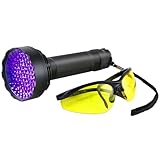
- 2-in-1 design: A/C leak detector tool kit helps to check out automotive air conditioner freon leak locations. Can also helps detect food stains and pet urine stains on rugs, carpets, and clothes that are otherwise invisible to the naked Eye
- UV Flashlight: Professional grade Ultra intensity 385-395 nm with 100 top quality LED uv flashlight helps you to find ac system leak-position EVEN in garage or outdoors
- Durable and Powerful: Ultraviolet flashlight is premium aluminum construction with anti abrasive surface treatment, non-slip textured grip, lanyard useful either to wrap wrist or belt loop. IP44 waterproof & dustproof protection class
- Long Running Time: The lighting time up to 20 hrs (6 x AA batteries NOT INCLUDE). This UV Blacklight Flashlight also covers larger area without weaken the light
- UV Sunglasses: Include UV protective glasses protect your eyes in all directions and help you find leak position easier and efficient
- The vehicle: Include the year, make, model, engine, and—where relevant—the VIN.
- The refrigerant: Confirm whether the system uses R-134a, R-1234yf, or another specified refrigerant.
- The service type: Ask whether the price is for diagnosis, a top-off, or a full recovery, evacuation, and recharge.
- The refrigerant quantity and unit price: The vehicle may require a specified measured charge rather than an arbitrary amount.
- Leak testing: Find out whether it is included, what method will be used, and whether it is billed separately.
- Fees: Ask whether recovery, environmental fees, taxes, and shop supplies are included.
- Parts and labor: If a component failed, the estimate should name the component and separately identify parts, labor, evacuation, recharge, and post-repair testing.
- Warranty: Ask what is covered, for how long, and whether the warranty applies to the part, labor, or both.
- Technician credentials: Confirm that the shop or technician is properly certified for motor-vehicle A/C service.
Be skeptical of a quote that promises a permanent fix from a recharge alone when the vehicle repeatedly loses refrigerant. Federal rules do not require leak repair before charging a vehicle under all circumstances, but state or local rules may differ. More importantly, recurring refrigerant loss means the underlying problem remains unresolved.
Independent reader supportYour contribution helps us test, update, and keep practical guides available for everyone.Ways to control the cost without gambling on the repair
Get diagnosis before authorizing major parts
A diagnostic charge can be cheaper than replacing a compressor or evaporator based on a guess. Ask what the technician observed, what test confirmed the diagnosis, and whether the quoted repair includes the final evacuation, recharge, and performance test.
Compare the scope, not just the total
An unusually low quote may be for a top-off while another shop’s higher quote includes recovery, evacuation, leak testing, and the correct measured charge. Comparing only the headline price can make equivalent services appear different—or different services appear equivalent.
Check warranty and service-campaign coverage
Before paying for a major repair, check whether the vehicle has remaining factory coverage, an extended warranty, or a manufacturer service campaign that applies to the A/C system. Coverage depends on the vehicle, mileage, date, and campaign terms, so verify it with the manufacturer or an authorized dealer.
Compare an independent shop with a dealer when appropriate
An independent repair shop may be a useful alternative, while a dealer may be important for warranty questions, model-specific campaigns, or specialized equipment. Neither shop type is always cheaper or automatically better. Compare certification, diagnostic evidence, parts quality, warranty terms, and total scope.
Use a vehicle-specific repair manual for specifications
A vehicle-specific automotive service manual can help confirm refrigerant capacity, oil type, component procedures, and access requirements. It is a reference resource, not a replacement for training, recovery equipment, or regulated service.
When should you stop driving and seek help?
Warm air by itself is usually a comfort problem, but stop experimenting and arrange professional service if the compressor is making grinding or knocking noises, the A/C belt or pulley is damaged, there is an obvious oily residue around an A/C component, the system has been filled with an unknown refrigerant, or the engine is overheating while the A/C is operating. Do not deliberately release refrigerant or continue adding cans when the system’s refrigerant type and condition are unknown.
Best Value

- High-intensity true ultraviolet leak detection penlight and AAA batteries
- Works with all types of UV leak detection dyes
- Includes yellow-tinted protective glasses
Bottom line
Budget approximately $282–$366 for an average U.S. A/C recharge, while recognizing that some surveyed quotes run closer to $400–$550. If the system needs only a measured recharge, that may be the end of the job. If it is leaking or a major component has failed, expect the cost to move from hundreds into four figures: about $827–$970 for a condenser, $1,038–$1,383 for a compressor, or $1,341–$1,880 for an evaporator in the cited RepairPal estimates.
The best cost decision is not automatically the cheapest recharge. Confirm the refrigerant, ask what the service includes, obtain a diagnosis before approving major parts, and make sure the estimate covers the repair, evacuation, recharge, and testing needed to restore reliable cooling.
Frequently Asked Questions
How much does it cost to recharge a car A/C?
Current U.S. estimates put an automotive A/C recharge at about $282–$366 on average. A ConsumerAffairs sample reported quotes averaging approximately $430–$521. Location, vehicle, refrigerant type, shop, and whether the service includes recovery, evacuation, leak testing, and a measured recharge can change the total.
Does an A/C recharge fix a leak?
No. A recharge replaces lost refrigerant but does not repair a leaking hose, seal, condenser, compressor, evaporator, or service valve. If the system repeatedly loses refrigerant, ask for leak diagnosis and a written repair estimate.
The Tool Desk
Outbyte Driver Updater FREEScan for outdated or missing drivers - takes under a minuteDriver Scan →Outbyte PC Repair FREERepair Windows errors before they cause bigger problemsFix Now →Is R-134a the same as R-1234yf?
No. They are different refrigerants with different specifications and environmental characteristics. Use the refrigerant listed on the vehicle’s under-hood label and in its service information. Do not select a product based only on the word “Freon” or a generic online listing.
Is it legal to recharge car A/C at home?
U.S. rules include a limited exception for certain small cans of non-ozone-depleting substitute refrigerants with required fittings and self-sealing valves. That does not make every product legal or compatible. Paid or bartered motor-vehicle A/C service requires Section 609 certification and approved equipment, and intentional venting is prohibited.
Why does an evaporator replacement cost more than a recharge?
The evaporator is often located inside the HVAC housing behind the dashboard or other interior components. RepairPal’s cited estimate includes approximately $907–$1,330 in labor, producing an average total estimate of about $1,341–$1,880.
The Bottom Line
Plan on a few hundred dollars for a recharge, but do not confuse that service with a permanent repair. Repeated refrigerant loss, a leak, or a failed compressor, condenser, or evaporator can push the bill well above $800 and into four figures. Compare written estimates by scope—not just by price—and verify the vehicle’s exact refrigerant before any service.
Crashes, No Sound, or Screen Glitches?
Random freezes, missing sound and display glitches usually trace back to one bad driver. Find and replace yours safely.Free scan · under a minutePC Slower Than It Used to Be?
A free scan shows the junk files, broken settings and background clutter dragging Windows down - then fixes them in one click.Free scan · Windows 10 & 11Quick Recap
Product prices and availability are accurate as of the date/time indicated and are subject to change. Any price and availability information displayed on Amazon at the time of purchase will apply.




