The 1990s brought an unusually diverse lineup of Japanese performance cars: turbocharged all-wheel-drive coupes, rotary-powered sports cars, rally-bred sedans and a mid-engine supercar. Their lasting appeal comes from more than headline power figures. Competition success, distinctive engineering and later appearances in games and films helped make these cars enduring icons.
What made the 1990s a golden era for Japanese sports cars?
“Golden era” is a useful description of the decade’s Japanese sports-car boom, not a formal label used uniformly by manufacturers. The period stands out for the breadth of its performance lineup and for the fact that its cars did not follow a single engineering formula. Nissan, Toyota, Mazda, Honda, Mitsubishi and Subaru each offered distinctive approaches, from road cars developed alongside competition programs to technically ambitious sports cars.
The range extended beyond a few famous coupes. Enthusiasts could look to nameplates including the Honda Civic and Integra, Mitsubishi GTO and FTO, and Nissan Fairlady Z and Silvia, though not every version of those models was a high-performance variant. The decade’s high-profile cars also covered different layouts, engines and intended roles rather than forming a direct, standardized set of rivals.
Which cars defined the era?
Nissan Skyline GT-R: technology backed by racing results
The R32 Skyline GT-R returned in 1989 after a 16-year gap in the GT-R name. Although it arrived just before the 1990s, it became one of the decade’s defining cars. Nissan describes its 2.6-liter RB26DETT inline-six with twin turbochargers, ATTESA E-TS electronically controlled torque-split four-wheel drive and four-wheel multilink suspension. Nissan USA’s history page describes the R32 as having all-wheel drive and an RB26DETT that “pumped out 280 horsepower” (Nissan USA’s GT-R history).
#1 Best Overall

- Relive the pinnacle of 1990s automotive history with this beautifully designed supercar replica. The architectural model faithfully recreates the classic flip-up headlights, sleek aerodynamic curves, and distinctive rear taillight bar of legendary cross-country racers, providing an immersive project for collectors.
- Comprising 1300 premium, precision-engineered interlocking components, this sophisticated construction set offers hours of focused engagement. Every durable ABS piece is manufactured under strict tolerances to ensure exceptional structural stability and perfect alignment for experienced builders.
- Elevate your living environment or workstation with a lasting creative statement. This completed vintage automotive masterpiece is engineered strictly as an upscale exhibition item, fitting perfectly on executive desks, studio shelves, library bookcases, or showroom cabinets.
- Presented in premium, eye-catching packaging, this complex vehicle building kit serves as an exceptional present for historical automobile fans and mechanical hobbyists. It provides a rare combination of hands-on concentration and technical appreciation that complements a mature lifestyle.
- Enjoy the structural splendor of heritage automotive design without the need for delicate handling. This exquisite display piece retains its striking colors and geometric perfection indefinitely, serving as a timeless, conversation-starting sculpture that adds a refined aesthetic to any room.
Its competition record is a central part of its reputation. Nissan’s Heritage Collection records 29 wins in 29 Japan Touring Car Championship races across four seasons, from 1990 through 1993 (Nissan Heritage Collection: 240 Skyline GT-R). Later R33 V-spec equipment included Brembo brakes and 17-inch BBS wheels. The R34 GT-R arrived in January 1999, at the decade’s close.
Toyota Supra: a sports coupe with a lasting screen presence
The 1990s Supra went on sale in May 1993, according to Nippon.com’s overview of Japanese sports cars. Its later prominence in The Fast and the Furious helped introduce the model to audiences beyond car enthusiasts and contributed to the era’s ongoing visibility in popular culture.
Rank #2

- Tamiya Nissan Skyline
- GT-R R34 V-Spec Model Set
- Scale 1:24
- Plastic model kit
Mazda RX-7: a rotary-powered alternative
Mazda’s RX-7 launched in October 1991. Its Wankel rotary engine made it a clear departure from the piston-engine formula used by many performance rivals. That distinctive powerplant is one reason the RX-7 remains closely associated with the period.
Honda NSX: a mid-engine sports car with aluminum construction
Launched in September 1990, the NSX combined a mid-engine layout with an all-aluminum body, as described in Nippon.com’s overview. In the United States it was marketed as the Acura NSX. Its construction and layout set it apart from the more common front-engine coupes and rally-influenced sedans of the decade.
Recommended Free Tools
Rank #3

- 1: 24 scale
- Glue and Paint sold separately
- Plastic Model Kit-Assembly Required
- TAM24123
Mitsubishi Lancer Evolution: rally influence in a road car
The Lancer Evolution launched in September 1992 and developed through repeated model changes. The nameplate’s connection to rally competition helped define its identity as a performance sedan. Mitsubishi discontinued the Evolution X in 2015, according to Nippon.com.
Subaru Impreza: a rally program with championship success
Subaru launched the Impreza in November 1992, and the model debuted in the World Rally Championship in 1993. The overview from Nippon.com credits the Impreza with three consecutive titles beginning in 1995. Its rally association helped make the nameplate a defining part of the decade’s performance-car culture.
Rank #4
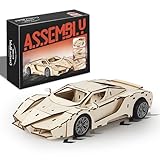
- CLASSIC ROADSTER DESIGN – Build a stunning replica of a classic sports car with authentic details. This 87-piece 3D wooden puzzle features realistic design elements and delivers an engaging, hands-on assembly experience perfect for beginners and enthusiasts alike.
- EASY & ENJOYABLE ASSEMBLY – With 87 laser-cut wooden pieces, this model kit is designed for a smooth and satisfying build. Follow the clear instructions and have your roadster ready in just 2–3 hours! Required glue (not include), use glue to make the sports car more durable.
- PULL-BACK & GO ACTION – Fun doesn’t stop after building! Pull the car back to power it up and watch it race forward—up to 20 feet. A rewarding feature that brings your creation to life.
- HIGH-QUALITY & SAFE MATERIALS – Crafted from premium poplar plywood, this puzzle is eco-friendly, splinter-free, and has no strong odor. Each piece is laser-cut for perfect precision, ensuring a snug fit and durable finished model. Suitable for ages 14 and up.
- PERFECT GIFT FOR ALL AGES – Whether for a hobbyist, car lover, or someone who enjoys DIY projects, this 3D puzzle makes a unique and memorable gift. Great for birthdays, holidays, or just a relaxing creative challenge. Decorate or paint it to make it truly one-of-a-kind!
How the cars differed
These models are best understood through their different engineering and cultural roles, not an unsupported ranking. The documented contrasts are substantial:
| Model | Distinctive documented feature | Competition or cultural association |
|---|---|---|
| Nissan Skyline GT-R R32 | 2.6-liter twin-turbo inline-six; electronically controlled torque-split four-wheel drive | Nissan records 29 JTC wins in 29 races from 1990–1993 |
| Mazda RX-7 | Wankel rotary engine | Distinctive engine approach among the decade’s sports cars |
| Honda NSX | Mid-engine layout; all-aluminum body | Marketed as Acura NSX in the United States |
| Mitsubishi Lancer Evolution | Performance sedan developed through successive model changes | Rally-influenced identity |
| Subaru Impreza | Road-car nameplate associated with a WRC program | WRC debut in 1993; three consecutive titles from 1995, as reported by Nippon.com |
| Toyota Supra | Not stated in the cited overview | Later prominence in The Fast and the Furious |
The sources do not provide a standardized head-to-head road test, so this is a comparison of documented differences rather than a verdict on which car was fastest or best.
Quick wins for a faster PC:
Repair Windows errors before they cause bigger problemsFix Now →Scan for outdated or missing drivers - takes under a minuteDriver Scan →Clear out junk files and repair common Windows errorsFree Scan →Best Value

- BRE RACING HERITAGE INSPIRED DESIGN – Build a 1975 Datsun Pickup inspired by BRE’s legendary Datsun race cars, featuring aggressive wide-body flares and track-ready stance.
- BUILD IT RACE OR STOCK – Choose a full BRE-style wide-body racer with wide tires, side pipes, and roll bar, or create a factory-style stock pickup with standard wheels and tires.
- HIGHLY DETAILED PERFORMANCE PARTS – Includes detailed L20B engine with Weber intakes, custom seats, and optional tonneau cover for a realistic, performance-focused build.
- PREMIUM PARTS & ALL-NEW DECALS – Comes with chrome-plated rims, vinyl tires, clear and transparent red parts, plus an expanded water slide decal sheet with authentic BRE graphics in two color options.
- FOR EXPERIENCED MODELERS & COLLECTORS – Skill Level 2 kit with 129 parts, detailed instructions, and stunning box art by Ethan Kreiger. Recommended for ages 10+.
Why did 1990s Japanese cars become global icons?
Competition gave the cars credible stories
Racing and rally results helped connect road-car names to visible achievements. Nissan’s R32 record and the Impreza’s championship run gave fans concrete reasons to associate Japanese performance cars with competition success, not just styling or specifications.
Games and films introduced them to new audiences
The first Gran Turismo game went on sale in 1997, and the first Fast and the Furious film arrived in 2001, according to Nippon.com. The game series and films helped carry Japanese performance cars into popular culture. The films’ customized cars also helped shape the JDM custom-car category in the United States.
Enthusiast tuning became part of the legacy
A 1995 revision to Japan’s Road Transport Vehicle Act and deregulation of auto parts were turning points for enthusiast tuning, as described by Nippon.com. The source characterizes tuning as “almost completely legalized,” not as an unqualified change that made every modification legal.
What does “JDM” mean?
JDM originally means “Japanese domestic market”: vehicles or parts intended for sale in Japan. In later U.S. usage, the term is also often applied to Japanese-spec compact sports cars that are imported and customized. The distinction matters because a Japanese-market specification is not automatically the same as a model sold new in another country, and “JDM” is not a synonym for every Japanese car.
Why the era still matters
The decade’s appeal rests on variety as much as nostalgia. A Skyline GT-R combined turbocharging and electronically controlled four-wheel drive; the RX-7 used a rotary engine; the NSX took a mid-engine, all-aluminum approach; and the Evolution and Impreza drew identity from rally competition. Games, films and tuning culture then gave these different cars a shared cultural afterlife. Together, those threads explain why the 1990s remain a reference point for Japanese performance-car enthusiasts.
Quick Recap
Product prices and availability are accurate as of the date/time indicated and are subject to change. Any price and availability information displayed on Amazon at the time of purchase will apply.




