Jaguar’s most memorable sports cars trace a line from the postwar XK120 to the modern F-TYPE, with several of the marque’s defining competition machines along the way. This is a curated selection, not an official ranking: it includes road cars, race cars and one road-going race-car conversion, each chosen for its design, engineering or record on the track.
What makes these Jaguar sports cars classics?
Jaguar’s story is not a simple procession of road-going sports cars. The C-Type and D-Type were built for competition; the XKSS adapted the D-Type for road use; and the XJ-S was a grand tourer rather than a focused two-seat sports car. Those distinctions matter, but they also show how Jaguar’s road cars and racing program influenced one another.

The nine cars below are grouped by their place in that history. Dates and performance figures are attributed to Jaguar or the Jaguar Daimler Heritage Trust, whose records sometimes use different contexts for the same model.
Which Jaguar sports cars are classics?
1. Jaguar XK120 (1948–1954)
The XK120 was Jaguar’s postwar breakthrough sports car. Jaguar’s heritage timeline dates its launch to 1948, credits its design to founder Sir William Lyons, and says it reached 133 mph, making it the world’s fastest production car at the time. That is Jaguar’s historical account; a separate Jaguar Racing DNA entry for the XK120 racing car lists 124.6 mph, a 3,442 cc engine and 160 bhp. The figures refer to different source contexts and should not be treated as one specification.
What’s actually slowing this PC down?
Pick the symptom - the matching free tool is one click away.
#1 Best Overall
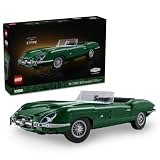
- JAGUAR CAR MODEL FOR ADULTS – Recreate a legend of automotive innovation with the LEGO Icons Jaguar E-Type (11381) building set for adults ages 18 and up, which offers a rewarding creative experience for sports car fans
- AUTHENTIC DETAILS – This highly detailed replica captures the E-Type’s sleek silhouette and elegant curves, with a classic green body and wire-style rims
- REALISTIC VEHICLE FUNCTIONS – This set features a fold-back textile roof, a detailed cockpit with working steering, an opening trunk, doors and hood, plus an authentic re-creation of the iconic inline-6 engine
- PREMIUM SPORTS CAR DECOR – Enjoy constructing a captivating display that's sure to brighten up your home or office with this collectible vehicle model
- GIFT IDEA FOR CAR LOVERS – Thrill an adult classic car enthusiast with this thoughtful gift idea, perfect for birthdays, holidays or any special occasion
The XK120’s importance extends beyond its speed. It gave Jaguar a new sports-car identity and provided the basis for the competition-focused C-Type.
2. Jaguar C-Type (1951–1953)
Originally called XK120C, the C-Type was a racing development of the XK120. The Jaguar Daimler Heritage Trust explains that the “C” stood for “Competition.” Its exhibition describes a tubular steel spaceframe and aluminium body; Jaguar says its aerodynamic approach made the car 25% lighter than the XK120.
The C-Type won Le Mans on its debut in 1951 and again in 1953, according to Jaguar’s heritage and motorsport histories. Jaguar’s Racing DNA entry lists a 144 mph top speed, 3,442 cc and 207 bhp for the C-Type. Those are manufacturer-listed figures, not an independently verified comparison with the XK120.
Rank #2

- Package dimensions (L x W x H): 10.6 cm x 11.6 cm x 24.0 cm
- Package Weight: 360g
- Country of origin: China
- Number of packs: 1
3. Jaguar D-Type (1954–1957)
The D-Type carried Jaguar’s racing development further, winning the 24 Hours of Le Mans in 1955, 1956 and 1957. Jaguar describes its central structure and Malcolm Sayer-designed stabilizing fin; the Heritage Trust explains it as an evolution of the C-Type, with a central tub joined to a front spaceframe and hinged body sections.
Quick wins for a faster PC:
Clear out junk files and repair common Windows errorsFree Scan →Fix the driver behind crashes, sound loss and screen glitchesFind Drivers →Its engineering was part of its identity: the D-Type was not merely a fast car with a famous race record, but a purpose-built competition machine whose structure and aerodynamic form were closely linked.
4. Jaguar XKSS (1957)
The XKSS brought D-Type racing technology to the road. Jaguar describes it as a road-going conversion of the 1956 Le Mans-winning D-Type, while the Heritage Trust lists it as a 1957 model. It is therefore best understood not as a conventional new sports-car line but as a road-focused counterpart to Jaguar’s successful racer.
Rank #3
Jaguar calls the XKSS “often referred to as the world’s first supercar.” That is the marque’s characterization, not a universally settled classification.
5. Jaguar E-Type (1961–1974)
Introduced in 1961, the E-Type became one of Jaguar’s most recognizable road cars. Jaguar’s heritage page attributes the phrase “the most beautiful car ever made” to Enzo Ferrari, but does not provide a dated primary source or context for the alleged remark. It is safest to treat it as a famous attribution repeated by Jaguar, rather than independently verified testimony.
The E-Type’s engineering also connected road and track. The Heritage Trust’s exhibition describes its structure as developing from Jaguar’s racing history, including the C-Type and D-Type. The Trust dates E-Type production through 1974. Its model archive gives ranges for the 3.8-litre Series 1 (1961–1964), 4.2-litre Series 1 (1964–1968), Series 2 (1968–1970) and Series 3 (1971–1975); the archive’s final range and the exhibition’s production-end date use different framings, so the overall production end date here follows the exhibition.
Rank #4

- Brand new box, Comes in a blister pack.
- Real rubber tires, Authentic detail.
- Detailed interior, Exterior.
- Authentic Paint & Graphics
- Die-cast metal body and chassis
6. Jaguar XJ-S / XJS (1975–1996)
The XJ-S, also written XJS, belongs on a list of iconic Jaguar performance cars with a qualification: Jaguar describes it as a grand tourer, offered as a coupé and convertible, rather than a pure sports car. Its V12-powered presence and long production life made it a distinctive part of the marque’s history.
It also built a competition record. Jaguar’s motorsport history dates the XJS to 1975–1996 and describes TWR-backed racing successes, including the 1984 European Touring Car Championship drivers’ title and a Spa 24 Hours win.
7. Jaguar F-TYPE (early X152 archive record: 2012–2013)
The F-TYPE represents a return to Jaguar’s two-seat sports-car tradition in the modern era. The Heritage Trust’s model archive lists an early X152 record covering 2012–2013. That is a model-certificate listing, not a complete production timeline, so it should not be read as the full span of F-TYPE production.
The Tool Desk
Outbyte PC Repair FREEClear out junk files and repair common Windows errorsFree Scan →Outbyte Driver Updater FREEFix the driver behind crashes, sound loss and screen glitchesFind Drivers →Best Value
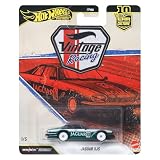
- Premium Collectible Model: Hot Wheels Jaguar XJS from the Car Culture Premium 2026 Vintage Racing Series featuring authentic die cast metal construction
- Authentic Scale Replica: 1:64 scale collectible die cast metal toy car model with precise detailing and craftsmanship
- Real Riders Rubber Tires: Equipped with premium rubber Real Riders wheels for enhanced realism and display quality
- Limited Series Edition: Part 1 of 5 in the exclusive Vintage Racing Series collection for dedicated Hot Wheels enthusiasts
- Classic Jaguar Design: Features the iconic Jaguar XJS sports car styling with accurate proportions and vintage racing livery
8. Jaguar C-Type, remembered as a racing landmark
The C-Type earns a second place in this selection for a different reason: beyond its role as the XK120’s competition derivative, it marked Jaguar’s arrival as a Le Mans winner. Its 1951 debut victory and 1953 return win made aerodynamic and structural experimentation part of the brand’s sporting identity, rather than a footnote to its road cars.
9. Jaguar D-Type, remembered for its Le Mans run
The D-Type also merits recognition for a distinct legacy: three consecutive Le Mans victories from 1955 through 1957. Its central structure and stabilizing fin show how Jaguar developed the C-Type’s competition ideas into a new generation of racer. These final two entries highlight enduring contributions rather than introduce additional models; the list’s nine places are an editorial selection, not nine different nameplates.
Independent reader supportYour contribution helps us test, update, and keep practical guides available for everyone.What made the Jaguar E-Type famous?
The E-Type brought together a striking shape, a road-car structure influenced by Jaguar’s racing experience and a place in the marque’s long-running sports-car story. Its 1961 debut and production through 1974 gave it lasting visibility across multiple series. The familiar Ferrari attribution adds to its legend, but the available Jaguar heritage page does not document the quotation’s original date or context.
How did Jaguar’s road cars and racers influence each other?
The XK120 led directly to the C-Type, a competition car developed from its foundations. The C-Type’s structural and aerodynamic ideas informed the D-Type, while the XKSS adapted the D-Type for road use. The Heritage Trust likewise traces the E-Type’s structure to Jaguar’s earlier racing designs. These links make the cars more than a list of isolated icons: they show a continuing exchange between Jaguar’s competition engineering and its road-car identity.
Free tools Windows power users keep installed
One-click scans. No signup required.
Not every car fits the same label. The C-Type and D-Type were competition cars; the XKSS was a road-going D-Type conversion; and the XJ-S was a grand tourer. The XK120, E-Type and F-TYPE are the clearest road-car sports-car entries in this selection.
Quick Recap
Product prices and availability are accurate as of the date/time indicated and are subject to change. Any price and availability information displayed on Amazon at the time of purchase will apply.




