The Honda K24 is the best overall engine to put in a Miata for most builders, but it is not the best choice for every goal. Choose the GM 2.4L Ecotec LE5 for practical torque, a GM LS3-based V8 for extreme power, Ford’s 2.3L EcoBoost for a modern turbo project, or a Mazda 13B rotary for unmatched Mazda character.
The important distinction is between an engine that can physically fit and a swap path that is documented, supported, serviceable, compatible with the chassis, and legal where you drive.


As an Amazon Associate I earn from qualifying purchases.
For most Mazda Miata engine-swap projects, the Honda K24 is the best overall choice because it combines useful power, a broad torque curve, high-rpm character, reasonable size, and the strongest documented support. The GM 2.4L Ecotec LE5 is the more practical torque-focused alternative for an NA or NB. Choose a GM LS3-based V8 for maximum power and drama, a Ford 2.3L EcoBoost for a modern turbocharged fabrication project, or a Mazda 13B rotary when sound, character, and Mazda heritage matter more than cost and simplicity.
What’s actually slowing this PC down?
Pick the symptom - the matching free tool is one click away.
The right answer depends heavily on the Miata generation. NA, NB, NC, and ND cars differ in engine-bay packaging, electronics, transmissions, subframes, steering clearance, emissions equipment, and drivetrain layout. A physically installable engine is not automatically a sensible, supported, reliable, or street-legal swap.
#1 Best Overall
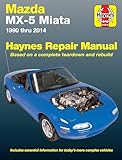
- Step-by-step procedures written from a complete teardown and rebuild, giving you the confidence to tackle repairs at any skill level.
- Over 700+ clear photos and diagrams that simplify complex systems, helping you complete jobs faster and with fewer mistakes.
- Comprehensive troubleshooting and fault-finding guides to quickly diagnose problems and reduce costly downtime.
Which engine is best for your Miata?
| Engine | Best use | Why choose it | Biggest concern |
|---|---|---|---|
| Honda K24 | Best all-around NA, NB, or NC build | Strong naturally aspirated power, high-rpm character, extensive aftermarket, and documented Miata-specific packages | Wiring, donor condition, drivetrain limits, and total package cost |
| GM 2.4L Ecotec LE5 | Affordable torque-oriented NA or NB street car | Displacement, accessible donors, broad torque, and a dedicated Miata-transmission swap path | Custom electronics, donor variation, and dependence on current vendor support |
| GM LS3-based V8 | Maximum power and V8 character | 6.2 liters, huge aftermarket, abundant torque, and commercial conversion systems | Traction, cooling, driveline strength, legality, cost, and chassis integration |
| Ford 2.3L EcoBoost | Modern turbocharged competition or advanced custom project | Factory turbocharging, rear-drive-oriented origins, and strong torque in a compact four-cylinder | Direct injection, electronics, packaging, heat, and Ford’s off-road-use warning |
| Mazda 13B rotary | Unique Mazda-focused street or race car | Compact dimensions, low reciprocating mass, high-rpm character, and an unmistakable sound | Heat, oiling, tuning, fuel use, donor scarcity, and rotary-specific maintenance |
For context, the 2025 U.S.-market MX-5 uses a 2.0-liter Skyactiv-G four-cylinder rated at 181 hp and 151 lb-ft, with a 7,500-rpm limit. That is already enough performance for a lightweight sports car. Most swaps therefore pursue a different power curve, more displacement, forced-induction potential, or a distinctive driving experience rather than simply fixing an inadequate stock engine.
Before buying an engine: define the car you are building
An engine swap is a systems project. The engine, mounts, oil pan, transmission, clutch, driveshaft, differential, ECU, wiring, cooling system, exhaust, brakes, suspension, and legal paperwork all have to work together. Buying a cheap long-block first is one of the fastest ways to turn a weekend project into an immobilized Miata.
1. Identify the chassis
- NA, 1990–1997: The simplest electronics of the four generations, but age, rust, original drivetrain condition, and limited transmission or differential capacity can dominate the project.
- NB, 1998–2005: Similar basic architecture to the NA, with different electronics and chassis details. Do not assume an NA package, harness, or exhaust arrangement transfers without checking.
- NC, 2006–2015: More modern electronics and a different engine bay, transmission arrangement, and power-plant-frame relationship. NC-specific hardware is essential.
- ND, 2016–present: The most electronically integrated and packaging-sensitive generation. A supplier advertising an NA, NB, or NC system is not evidence that the same parts fit an ND.
KPower Industries’ separate NA/NB and NC K-series offerings illustrate the point: even one engine family needs chassis-specific mounts, oil-pan solutions, wiring, and drivetrain planning.
Quick wins for a faster PC:
Fix the driver behind crashes, sound loss and screen glitchesFind Drivers →Clear out junk files and repair common Windows errorsFree Scan →Scan for outdated or missing drivers - takes under a minuteDriver Scan →2. Decide what you want the car to feel like
Do you want a responsive naturally aspirated track car, a stronger street car with midrange torque, a high-power roll-racing or drag project, a modern turbo experiment, or a rotary-powered Mazda curiosity? These goals lead to different answers. A 500-hp V8 is not a superior version of a 220-whp K24; it is a different vehicle with different traction, thermal, braking, and driver-skill requirements.
3. Buy information and measuring tools before parts
A Miata repair manual can be useful during teardown, wiring, cooling-system work, and troubleshooting, but choose one for the exact chassis. No single manual covers every NA, NB, NC, and ND detail equally well, and a repair manual is not a substitute for the swap manufacturer’s instructions.
For a DIY installation, plan for an engine hoist and engine stand that are rated for the assembly you are handling. A digital torque wrench and automotive multimeter are similarly unglamorous but important: incorrect fastener torque and an unverified electrical assumption can damage an engine or create a difficult intermittent fault.
1. Honda K24: the best overall Miata engine swap
The Honda K24 is the strongest recommendation for most builders who want substantially more naturally aspirated performance without moving to a V8. It is a 2.4-liter inline-four with a broad aftermarket, strong high-rpm character, useful midrange torque, and extensive support for mounts, oil pans, exhaust, clutch systems, engine management, and wiring.
Windows Errors? Fix Them Before They Spread
Repair common Windows errors and clear accumulated junk for a smoother, more stable PC - no reinstall needed.Free scan · no reinstallCrashes, No Sound, or Screen Glitches?
Random freezes, missing sound and display glitches usually trace back to one bad driver. Find and replace yours safely.Free scan · under a minuteKPower Industries identifies the 2004–2008 Acura TSX K24A2 as a preferred starting point. Its documented supported Miata combinations can produce approximately 220–230 whp and more than 180 lb-ft at the wheels with the necessary supporting upgrades. Those are vendor-documented examples, not a guaranteed result from installing an untouched donor engine. Actual output depends on the engine’s condition, intake and exhaust systems, ECU calibration, fuel, and dyno.
Why the K24 works
- Power without a large V8 penalty: It can deliver a major increase in output while retaining the basic packaging advantages of an inline-four.
- Useful naturally aspirated behavior: The engine suits a driver who values throttle response and revs rather than only peak boost torque.
- Deep aftermarket: Replacement parts, performance parts, sensors, engine-management solutions, and tuning knowledge are easier to find than for many unusual swap candidates.
- Documented chassis-specific hardware: KPower documents packages for NA/NB and NC cars rather than treating every Miata as identical.
For an NA or NB naturally aspirated build, KPower recommends the native Miata transmission in supported applications. Some turbo configurations use different BMW transmission options, so the transmission decision should be made with the intended power level and gear ratios in mind—not after the engine is already installed.
The NC path is particularly attractive for a refined street or track car. KPower says its NC package retains the factory NC transmission, power steering, factory mounting locations, and the transmission position associated with the factory power-plant frame. That does not make the project bolt-in, but it can preserve more of the original car’s integration than a one-off conversion.
For readers who want a packaged route rather than assembling every interface themselves, K24 Miata swap package is the relevant supplier category to investigate. Confirm that the exact package supports your generation, transmission, steering equipment, intended induction system, and current parts availability before ordering.
Free tools Windows power users keep installed
One-click scans. No signup required.
K24 drawbacks
The engine itself is only the beginning. A builder still needs to verify compression and leak-down condition, select the oil-pump and oil-pan configuration, solve wiring and ECU control, route the exhaust, size the cooling system, choose the clutch, and evaluate the transmission and differential. A cheap K24 donor can become expensive if it arrives with unknown wear, missing sensors, damaged wiring, or incompatible accessories.
Rank #2

- Hundreds of photographs
- Step-by-step instructions
- Written from actual experience
Choose the K24 if: you want the best balance of performance, weight, support, and usable street or track behavior. It is the default recommendation for a serious NA, NB, or NC four-cylinder swap.
2. GM 2.4L Ecotec LE5: the practical torque-focused choice
The GM 2.4L Ecotec LE5 is less fashionable than a K-series, but it makes a compelling NA or NB street-car swap. Its extra displacement gives the lightweight Miata a broader torque curve, and the engine has been available in a range of common GM applications, which can make donor hunting less difficult than finding a desirable Honda performance engine.
EcotecMiata sells a dedicated complete swap kit built around the Miata transmission and specifically recommends the LE5 for its broad torque delivery. The vendor presents the combination as a way to approach the response and performance of a mildly supercharged 1.8 or basic turbo build without taking on the same forced-induction heat and hardware demands. That is a positioning statement, not a universal performance guarantee.
The Tool Desk
Outbyte PC Repair FREEClear out junk files and repair common Windows errorsFree Scan →Outbyte Driver Updater FREEScan for outdated or missing drivers - takes under a minuteDriver Scan →The current complete kit is described as including an oil-pan kit, engine mounts, transmission adapter, cooling-system parts, air-intake components, and sensor adapters. The engine itself is not included. EcotecMiata also offers provisions intended to retain Miata power steering and air conditioning, which makes this route more compatible with a usable street car than a stripped race-only conversion.
For an NA or NB owner pursuing this route, the EcotecMiata complete swap kit is the obvious starting point for checking the current parts list, supported engine variants, lead time, and installation requirements. Do not confuse a complete interface kit with a complete running drivetrain: the donor engine, ECU and harness solution, exhaust, fuel-system work, clutch, cooling verification, and tuning still need to be planned.
Why choose the LE5?
- Torque-focused character: The extra displacement makes the engine a natural fit for drivers who want stronger pull in normal street use.
- Miata transmission strategy: A dedicated adapter-based path can avoid designing an entirely unrelated transmission installation.
- Street-car features: The ability to retain power steering and air conditioning is valuable for a daily-driven project.
- Potentially accessible donors: Availability varies by region and donor condition, but the LE5 can be a practical alternative to more fashionable engines.
Ecotec cautions
Do not assume every 2.4L Ecotec is the same as an LE5. Verify the engine code, accessories, sensors, ECU strategy, and donor wiring before purchase. The swap still requires careful electrical integration, fuel planning, cooling-system testing, exhaust fabrication, and a realistic assessment of the transmission and differential.
Choose the LE5 if: you want affordable displacement and street-friendly torque in an NA or NB, and you value a defined Miata-transmission kit more than maximum aftermarket prestige or peak-rpm drama.
3. GM LS3-based V8: the maximum-power option
The LS3 is the most dramatic mainstream swap on this list. A 6.2-liter LS3-based engine can give a Miata enormous torque, a deep V8 sound, and a power ceiling far beyond what the original chassis was designed to exploit. It is the right answer for a high-power project—not the right answer simply because the engine is available.
Chevrolet Performance lists LS3-based crate variants including the LS376/525, rated at 525 hp and 486 lb-ft. Those figures describe the crate engine, generally at the engine rather than at the wheels; they are not the output of a completed Miata. Accessories, exhaust, calibration, transmission, cooling, and drivetrain losses all affect the finished car.
V8 Roadsters currently advertises LS V8 conversion systems for NA, NB, NC, and ND Miatas. That establishes that commercial hardware exists across multiple generations, but it does not mean that one package fits all four. The chassis-specific subframe or mounts, headers, steering clearance, transmission, driveshaft, differential, cooling system, and electrical integration must be confirmed for the exact car.
A LS3 crate engine can be a reasonable starting point for a builder who has already solved the rest of the project. The crate engine is not a complete Miata installation package, and its published horsepower should not be used to promise a particular wheel-power result.
Recommended Free Tools
What an LS Miata must address
- Packaging: Engine mounts, oil-pan clearance, steering-rack space, headers, and accessory-drive placement can determine whether the installation is practical.
- Driveline strength: The clutch, transmission, driveshaft, differential, axles, and mounts all need a power and traction plan.
- Thermal management: A larger radiator, appropriate fans, exhaust heat shielding, oil cooling, and careful airflow management may be necessary.
- Chassis systems: Brakes, suspension, tires, alignment, and structural condition must match the new performance envelope.
- Traction: A light rear-drive car can overwhelm its tires easily. More power can make the car less usable, not more entertaining, if the chassis cannot deploy it.
Flyin’ Miata confirms that it built LSx-converted Miatas from 2008 through 2019, but it discontinued its V8 conversion service and parts program because of federal-legality concerns and limited company resources. That history demonstrates both the feasibility of the swap and the danger of assuming that a previously famous kit is still available or legal for road use.
Before shopping for parts, read the current requirements for a LS V8 Miata conversion package and compare them with the brakes, differential, transmission, cooling system, and registration status of your car. Supplier availability and legal status can change.
Choose the LS3 if: maximum power, V8 character, and a major fabrication project are the point. Do not choose it expecting the light, balanced feel of a conventional Miata to remain unchanged.
4. Ford 2.3L EcoBoost: the modern turbocharged experiment
The Ford 2.3L EcoBoost is a credible modern turbocharged candidate, especially for a Ford-oriented builder or competition car. Ford developed the engine for a rear-drive Mustang application, and the compact four-cylinder format is attractive for a Miata. It is less directly documented for Miata use than the K24 or LE5, however, so treat it as an advanced fabrication and electronics project rather than a conventional off-the-shelf conversion.
Ford Performance’s 2024 Mustang 2.3L EcoBoost crate-engine kit is listed at 315 hp and 350 lb-ft. Ford lists the engine at 309 lb without the FEAD and flexplate. The package includes the engine, production turbocharger, starter, and mounting hardware, while Ford identifies a control pack as available separately for installation support.
That specification is useful for evaluating the concept, but it does not prove that the engine will fit a particular Miata or that the finished car will make those numbers. The builder must solve direct-injection fuel-system control, ECU and immobilizer integration, sensors, intercooling, charge piping, exhaust routing, oil-pan and subframe clearance, transmission adaptation, cooling, and calibration.
Ford’s own crate-engine warning says the package is intended for competition or off-highway use and may violate emissions laws when installed in a road vehicle. That warning should be treated as a central project constraint, not fine print. A car that runs well on a private track may not be registrable, insurable, or legal for street use in your jurisdiction.
For a technically ambitious competition build, the Ford 2.3L EcoBoost crate engine and its separately identified control-pack requirements are worth researching. Confirm control-pack compatibility, transmission strategy, immobilizer behavior, harness requirements, and the rules governing the intended use before spending on the engine.
Choose the EcoBoost if: modern turbo torque, Ford parts familiarity, and the engineering challenge are more important than having a well-established Miata-specific installation path.
5. Mazda 13B rotary: the best choice for Mazda character
The Mazda 13B is the most brand-authentic option here and the least forgiving recommendation. It offers compact external dimensions, low reciprocating mass, a high-rpm personality, and a sound that no piston engine can reproduce. It also demands a builder who understands rotary oiling, heat, sealing, fuel consumption, and tuning.
Mazda documents the 13B as a two-rotor engine family that evolved through RX-7 applications and ultimately included the 13B-MSP RENESIS used in the RX-8, which was discontinued in 2012. Mazda Motorsports has also documented a 13B-powered Miata race-car build, confirming that the concept is more than theoretical.
However, 13B is a family name, not a statement that every version is interchangeable. A naturally aspirated engine, an FC turbo engine, an FD 13B-REW, and an RX-8 RENESIS have different induction systems, electronics, exhaust requirements, oiling arrangements, and tuning considerations. Choose the exact engine variant before designing mounts or wiring.
Do these 3 things before closing this tab:
1Scan for outdated or missing drivers - takes under a minute2Repair Windows errors before they cause bigger problems3Fix the driver behind crashes, sound loss and screen glitchesWhat the rotary requires
- Mounts and packaging: An NA or NB conversion can require custom engine mounts or subframe work, along with careful attention to steering and exhaust clearance.
- Cooling and heat control: Radiator capacity, airflow, exhaust routing, heat shielding, and oil cooling deserve more attention than the engine bay’s small size might suggest.
- Electrical integration: The ECU, harness, sensors, ignition, fuel system, gauges, and factory transmission strategy all need a coherent plan.
- Oiling and maintenance: Rotary-specific oil-metering and lubrication decisions, seal condition, compression testing, and tuning quality affect ownership more than a generic piston-engine swap checklist suggests.
- Donor condition: Good engines and suitable electronics can be difficult to find, and rebuilding a questionable donor can consume the budget advantage before the car drives.
Dedicated 13B-to-NA/NB swap documentation describes the need for mounts or subframe work, wiring, cooling, exhaust fabrication, and a method of retaining or adapting the factory transmission arrangement. It also makes the practical warning clear: if the only goal is horsepower, a turbocharged LS or Honda K-series build is generally a better value.
Choose the 13B if: you want a distinctly Mazda project, accept higher fabrication and maintenance demands, and value sound and mechanical character over cost efficiency or easy ownership.
Independent reader supportYour contribution helps us test, update, and keep practical guides available for everyone.How to plan the rest of the swap
Engine and donor condition
Ask for the engine code, donor year, mileage, compression information, accessory list, ECU, key or immobilizer components, and complete harness before buying. For a used engine, a compression or leak-down assessment is cheaper than discovering internal wear after the engine is installed. The most desirable swap candidate is a complete, documented donor—not a bare engine with unknown sensors and missing brackets.
Mounts, oil pan, steering, and subframe clearance
Check the engine’s physical position before committing to an intake, exhaust, or accessory package. The oil pan must clear the crossmember and steering components. The crank centerline, engine height, firewall clearance, hood clearance, and shifter position affect everything from driveline angles to serviceability. A mount that physically holds the engine is not necessarily a mount that places it correctly for the transmission, driveshaft, cooling, and weight distribution.
Transmission, clutch, driveshaft, differential, and axles
Power and torque ratings are only part of the equation. Tire grip, launch behavior, track use, forced induction, and driver habits determine drivetrain stress. Verify the bellhousing or adapter, flywheel, clutch, starter position, shifter location, driveshaft length, differential ratio, axle compatibility, and mount locations as one system. The native Miata transmission may be appropriate for one K24 application and a poor choice for a high-torque turbo build.
ECU, wiring, immobilizer, and gauges
List every sensor and module the replacement engine expects, then decide whether the car will use the donor ECU, an aftermarket ECU, a conversion harness, or a supplier-specific control solution. Immobilizer pairing, CAN-bus communication, tachometer and speedometer signals, cooling-fan control, alternator wiring, fuel-pump control, air conditioning, and diagnostic access can consume more time than the mechanical installation.
Fuel, cooling, intercooling, exhaust, and heat shielding
Calculate the fuel-system requirements for the engine’s intended output rather than copying the stock setup. Turbocharged engines add intercooler, charge-pipe, wastegate, blow-off or bypass-valve, and exhaust-routing decisions. Every engine needs a verified radiator and fan strategy, and a compact Miata engine bay leaves little room for poor heat management. Keep wiring, brake components, steering components, and plastic systems away from exhaust heat wherever possible.
Brakes, suspension, tires, and chassis condition
Engine power does not make an old chassis safer. Inspect rust, subframe condition, suspension bushings, wheel bearings, brake lines, brake hardware, and tire age before increasing output. A high-power swap may justify spring and damper changes, better tires, brake upgrades, alignment work, and chassis reinforcement. These upgrades are part of the swap, not optional decorations after the engine runs.
The Tool Desk
Outbyte Driver Updater FREEFix the driver behind crashes, sound loss and screen glitchesFind Drivers →Outbyte PC Repair FREEClear out junk files and repair common Windows errorsFree Scan →When no documented package covers the exact combination, budget for custom fabrication, ECU tuning, cooling, driveline, and brake suppliers. No single universal kit can account for every engine variant, chassis year, power target, transmission, regional emissions rule, and intended use.
Street legality, inspection, and insurance
There is no universal answer to whether a Miata engine swap is street legal. Requirements vary by country, state, province, and sometimes county. Some jurisdictions inspect the emissions equipment and engine year; others require certification, an emissions referee, or a replacement engine that is the same year or newer than the chassis. A competition-use warning from an engine manufacturer can make a road registration especially difficult.
Before removing the original engine, contact the relevant inspection or registration authority and ask about engine swaps by chassis year, emissions equipment, catalytic converters, OBD requirements, noise, engine identification, and documentation. Also ask your insurer whether the modified vehicle must be declared or appraised. A supplier’s ability to sell hardware does not establish road legality.
Final ranking by use case
- Best all-around: Honda K24.
- Best affordable torque-oriented four-cylinder: GM 2.4L Ecotec LE5.
- Best maximum-power option: GM LS3-based V8.
- Best modern turbo experiment: Ford 2.3L EcoBoost.
- Best Mazda-specific character: Mazda 13B rotary.
The K24 is the sensible default because it delivers the strongest combination of performance and documented support. The LE5 makes more sense when usable torque and a practical NA/NB street build matter most. The LS3 is for a deliberately extreme car, the EcoBoost is for an advanced electronics-and-fabrication project, and the 13B is for someone who wants the experience of a rotary-powered Mazda more than the cheapest route to horsepower.
Do these 3 things before closing this tab:
1Scan for outdated or missing drivers - takes under a minute2Clear out junk files and repair common Windows errors3Fix the driver behind crashes, sound loss and screen glitchesFrequently Asked Questions
Is an engine swap necessary to make a Miata fast?
Usually not. The current 2025 U.S. MX-5 already makes 181 hp and 151 lb-ft from its 2.0-liter Skyactiv-G engine. A swap makes sense when you want a different torque curve, more displacement, forced-induction potential, or a specific engine character. It also introduces substantial cost, wiring, cooling, driveline, and legal work.
What is the easiest high-performance Miata engine swap?
The K24 has the clearest documented balance of power, weight, aftermarket support, and Miata-specific hardware. KPower documents NA/NB and NC packages, but the exact mounts, oil-pan configuration, transmission, wiring, and accessories still depend on the chassis and intended power level.
Can an engine-swapped Miata be street legal?
Not automatically. A commercial kit or a manufacturer’s crate-engine rating does not establish road legality. Check your local emissions, inspection, registration, noise, and insurance requirements before starting. Ford’s 2.3L EcoBoost crate package is specifically accompanied by an off-road or competition-use warning.
The Bottom Line
Bottom line: Start with the Honda K24 unless your project has a specific reason to be different. Confirm the exact Miata generation, transmission and differential limits, electronics plan, cooling requirements, and local legality before buying any engine. The best swap is the one whose complete system you can support—not merely the engine with the biggest advertised number.
What’s actually slowing this PC down?
Pick the symptom - the matching free tool is one click away.
Quick Recap
Product prices and availability are accurate as of the date/time indicated and are subject to change. Any price and availability information displayed on Amazon at the time of purchase will apply.




