Crashes, No Sound, or Screen Glitches?
Random freezes, missing sound and display glitches usually trace back to one bad driver. Find and replace yours safely.Free scan · under a minutePC Slower Than It Used to Be?
A free scan shows the junk files, broken settings and background clutter dragging Windows down - then fixes them in one click.Free scan · Windows 10 & 11The 5.0L Coyote is a durable and widely used Ford V8, but “Coyote engine problems” is too broad to be a useful diagnosis. Some ticks and knocks are documented operating characteristics, some symptoms apply only to specific model years and build dates, and oil-pump concerns become more significant in boosted, high-rpm, or track applications. The exact vehicle, symptom, maintenance history, and modifications determine the risk.
The short answer
The 5.0L Coyote is not a single engine with one universal list of defects. It is a family of Ford overhead-cam, 90-degree V8 engines that changed substantially between generations and applications. A Mustang 5.0L and an F-150 5.0L can have different calibrations, oil capacities, accessory drives, cooling systems, emissions equipment, and service procedures.
As an Amazon Associate I earn from qualifying purchases.
Several noises associated with the Coyote are documented operating characteristics, including specific warm-idle typewriter ticks and certain idle knocks. Other symptoms are tied to narrowly defined Ford service bulletins, such as excessive oil consumption on some 2018 F-150s, a warm-idle timing-chain-tensioner chirp on some 2018–2019 vehicles, and a tip-in or tip-out rattle on some 2018 F-150s. Performance use adds a separate concern: stock oil-pump gears deserve closer attention when an engine is boosted, repeatedly operated at high rpm, raced, or subjected to severe crankshaft-speed changes.
The right way to assess a Coyote is to identify the exact vehicle, model year, build date, mileage, engine generation, modifications, maintenance history, and symptom. Do not diagnose an engine from the word tick alone.
#1 Best Overall

- Mixable with all commercially available motor oils
- Stable even under high thermal and dynamic permanent loads
- No deposits and absolutely compatible with all commonly used filter systems
- Resists extremely high and low temperatures
Quick triage: how serious is the noise or symptom?
| What you observe | Best first response |
|---|---|
| A light, consistent warm-idle tick that matches Ford SSM 49761, with no warning lights, misfire, oil-pressure concern, or worsening behavior | Document it and monitor it rather than assuming the engine needs parts |
| A qualifying warm-idle chirp from the upper front cover, unexplained oil consumption, or a repeatable 2018 F-150 tip-in/tip-out rattle | Schedule a proper diagnosis and check the vehicle against the applicable Ford bulletin by VIN or build date |
| A severe or rapidly worsening knock, oil-pressure warning, flashing check-engine light, major misfire, loss of power, overheating, visible oil loss, or metal in the oil | Stop driving and arrange immediate professional assessment |
This table is safety-oriented triage, not a diagnosis. The same broad description—such as ticking or knocking—can refer to a harmless operating characteristic, an accessory problem, a timing-system issue, or internal engine damage.
What the 5.0 Coyote engine is—and why application matters
Ford uses the Coyote name for a 5.0L Ti-VCT V8 family found in multiple Mustang and F-150 generations as well as performance applications. Ford Performance’s technical reference separates Gen 1, Gen 2, and Gen 3 engines, with changes to fuel injection, compression ratio, cam-phaser design, valve dimensions, oil-pan capacity, intake-manifold design, and output. Ford’s parts catalog also covers later-generation Coyote components.
That means a statement such as “the Coyote holds this much oil” or “all Coyotes use this part” is incomplete without the vehicle and model year. As one example of application-specific specifications, Ford lists the 2024 F-150 5.0L Ti-VCT V8 at 400 horsepower and 410 lb-ft of torque. A Mustang specification should not be substituted for that truck specification.
Oil grade, fill quantity, filter specification, and maintenance timing should come from the applicable owner’s manual. Ford’s Intelligent Oil-Life Monitor calculates service timing using use, operating conditions, and elapsed time, so a generic mileage interval copied from another Coyote application can be wrong.
1. The Coyote typewriter tick
Ford SSM 49761 covers a tick, tap, or typewriter-like noise that may occur at idle after an oil change on 2011–2021 Mustang and F-150 5.0L vehicles. In the condition described by Ford, the noise can become audible after the engine reaches approximately 150°F (65°C), may be heard from idle to roughly 1,700 rpm, and is often localized near the bellhousing or oil-pan area.
Ford characterizes that particular noise as an operating characteristic with no short- or long-term effect on engine function or durability. For the condition covered by the message, Ford says repairs should not be attempted.
That does not mean that every Coyote tick is harmless. Treat the sound as a different diagnostic case if it is accompanied by any of the following:
Free tools Windows power users keep installed
One-click scans. No signup required.
- An oil-pressure warning or confirmed low mechanical oil pressure
- A flashing malfunction indicator light or significant misfire
- Metallic debris in the oil or filter
- Smoke, overheating, or major oil loss
- Severe power loss
- A heavy, load-dependent knock
- A sound that is rapidly becoming louder or changing character
Before taking the vehicle to a shop, record whether the noise occurs cold, hot, or both; the engine speed range; whether it changes during acceleration or deceleration; and which side or area of the engine seems loudest. A phone recording can help a technician understand the complaint, but it cannot replace inspection and testing.
2. Excessive oil consumption on some 2018 F-150 5.0L trucks
Ford TSB 19-2133 identifies excessive oil consumption without visible leaks on some 2018 F-150 trucks equipped with the 5.0L engine. This is an application-specific bulletin—not proof that every 2018 F-150 5.0L burns oil.
The bulletin’s service process includes checking for external leaks, replacing the PCV valve, changing the engine oil and filter, marking the dipstick, and recording the oil level at return visits. For vehicles that meet the bulletin’s conditions, the parts and labor information includes a long-block replacement procedure.
Rank #2

- Reduces friction by approximately 60% compared to conventional engines, by forming an ultra-low friction film on top of the Diamond Nano-coating. Oil additive for car engine, and oil treatment for car and truck engines.
- Safe & Effective to use for any type of vehicle, gasoline and diesel engines. Use in motorcycles, cars, classic cars, race cars, commercial trucks, and everything in between.
- More Concentrated High-Pressure Diamond Nano Engine Treatment Formula. Helps to reduce oil changes and engine noise. Returns power and life to high mileage vehicles. Superior Heat Resistance maintains lubrication integrity up to 1,800°F (982°C), outperforming conventional PTFE-based additives. Universal Compatibility is effective in gasoline, diesel, hybrid, and racing engines across all platforms.
- Use one bottle for every 5 quarts of oil; it is best if used at every oil change. Dual-Action Formula combines cleaning detergents with protective additives to: Remove existing sludge, Prevent new deposit formation, and neutralizes acidic oil breakdown. Restore your engine easily with BestLine Racing Diamond Nano Lube, a metal surface treatment.
- Extreme Heat Resistance and Boundary Layer Protection and Surface Polishing & Friction Reduction The nanoparticles (5-10nm size) act like microscopic ball bearings between moving parts. That fills microscopic grooves in cylinder walls and bearing surfaces, polishes metal surfaces to mirror-like smoothness through mechanical action, and reduces friction by up to 60% compared to conventional oils.
For an owner or used-truck buyer, the important question is not whether the dipstick was low once. It is whether oil use has been measured consistently and whether the cause and repair are documented. A sensible process is:
- Check the oil using the vehicle’s exact owner’s-manual procedure and record the mileage.
- Look for external leaks around the engine, filter, drain plug, front cover, and other applicable areas.
- Record every quart or liter added and the mileage at which it was added.
- Ask whether a Ford oil-consumption test was completed and request the measurements.
- Check whether the PCV service, repeat measurements, or long-block replacement was documented.
Do not turn the bulletin into a universal acceptable-consumption allowance for every Mustang and F-150. Oil specifications and fill quantities vary by application, and a qualified shop should follow the correct Ford procedure for the VIN and vehicle.
3. Timing-chain-tensioner chirp at warm idle
Ford TSB 19-2140 covers some 2018–2019 F-150 and Mustang 5.0L vehicles built on or before April 30, 2019. The reported symptom is a chirping noise from the upper front-cover area at warm or hot idle. It can sound similar to a chirp from the front accessory drive.
For the bulletin condition, Ford attributes the noise to the oil-pressure-relief valve in a primary timing-chain tensioner. The prescribed repair, after confirming that the sound is not coming from the accessory drive, is replacement of both primary timing-chain tensioners.
This is not a good parts-swapping exercise. Timing-cover work is labor-intensive, and the same general area contains accessory-drive components that can produce similar sounds. A shop should confirm the noise source, check bulletin applicability by VIN and build date, and use the applicable workshop procedure before replacing tensioners.
4. Rattle during throttle tip-in or tip-out
Ford TSB 18-2354 describes an engine rattle on some 2018 F-150 5.0L trucks during specific throttle transitions:
- Deceleration tip-out from approximately 1,500 rpm to 800 rpm
- Acceleration tip-in around 2,000 rpm
This is more useful information than simply reporting an “engine rattle.” When diagnosing it, note the engine temperature, gear, rpm, throttle movement, road load, and whether the noise also occurs in Park or Neutral.
Only reproduce the symptom when it can be done safely. Do not repeatedly provoke a severe rattle, and stop driving if the noise is accompanied by an oil-pressure warning, flashing check-engine light, major misfire, or loss of power. A repeatable symptom on a qualifying truck should be compared with the service procedure in the applicable bulletin rather than diagnosed from an online sound clip.
5. A documented idle knock on some 2018–2019 vehicles
Ford TSB 19-2144 describes a light-to-moderate knocking-type noise at approximately 600–700 rpm on some 2018–2019 F-150 and Mustang 5.0L vehicles. Ford says the noise may resemble a quiet diesel sound, may be more noticeable toward the passenger-side rear of the engine, and may increase slightly as the engine reaches operating temperature.
For the narrowly defined bulletin condition, Ford calls the sound an operating characteristic with no short- or long-term durability effect and says no repair should be attempted.
Rank #3
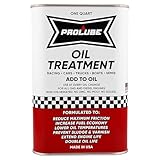
- POWER UP ENGINE, CUT THE NOISE: Maximize your engine’s overall performance with Prolube oil additive. It increases horsepower, reduces engine noise, smooths vibrations, and ensures your engine runs quieter and more efficiently under daily driving or heavy-duty conditions.
- SAVE ON FUEL COST: Reduce fuel consumption and improve efficiency with Prolube oil treatment. Its advanced formula decreases friction between engine components, optimizes performance, prevents overheating, and allows your engine to run smoother while saving on fuel over time.
- EXTEND ENGINE LIFESPAN: Protect your engine and extend its life with this powerful engine oil treatment. It reduces engine wear by up to 45%, strengthens lubrication, preserves component condition, minimizes friction damage, and keeps your engine performing at its best for years to come.
- READY FOR ANY ENGINE TYPE: This versatile oil additive for car engine is compatible with gasoline and diesel engines, as well as transmissions. Its easy-to-use formula blends seamlessly with both synthetic and conventional oils, providing reliable protection and enhanced performance without any hassle.
- VERSATILITY YOU CAN COUNT ON: Designed to suit nearly any engine, oil treatment for cars offers precise mixing ratios: 1 oz per quart for standard engines and 2 oz per quart for heavy-duty or high-mileage engines. Perfect for cars, trucks, SUVs, and industrial machinery for consistent protection and performance.
The scope matters. This bulletin is not a blanket explanation for any knock from any Coyote. A knock that follows engine speed throughout the rev range, becomes pronounced under load, occurs with low oil pressure, or appears alongside metal contamination or a misfire needs a real diagnosis. The bulletin should prevent unnecessary panic about a documented characteristic—not encourage an owner to ignore a dangerous noise.
6. The 2016 F-150 warm-engine knock message
Ford SSM 46871 addresses some 2016 F-150 5.0L engines built from January 13 through July 16, 2016. It describes an audible knock after the engine reaches normal operating temperature and between approximately 1,500 and 2,500 rpm.
Ford’s diagnostic message says that if canceling cylinder 5 eliminates the noise, the sound may be a characteristic and that engineering found no long-term durability concern for that diagnosed condition.
Do these 3 things before closing this tab:
1Clear out junk files and repair common Windows errors2Scan for outdated or missing drivers - takes under a minute3Repair Windows errors before they cause bigger problemsThis is a narrow, professional diagnostic condition. Owners should not attempt improvised cylinder-deactivation tests or use an unapproved method to cancel a cylinder. A technician with the appropriate scan tool, equipment, and procedure should perform that part of the diagnosis.
7. Oil-pump gears: mainly a performance-use concern
Stock Coyote oil-pump gears are a recurring concern in performance-engine discussions, particularly when the engine is boosted, operated repeatedly at high rpm, used on a road course or drag strip, or subjected to abrupt engine-speed changes and traction events. Technical coverage of the Coyote has described the stock powdered-metal gears as vulnerable under those conditions. If an oil-pump gear fails, oil pressure can be lost suddenly.
That does not mean every unmodified street Coyote is about to destroy its oil-pump gears. The more accurate conclusion is that risk rises as rpm, power, boost, harmonics, traction loading, and crankshaft stress move beyond ordinary street use.
Owners planning forced induction, aggressive rev limits, frequent track use, or a major rebuild should discuss the oil-pump gears, crankshaft timing sprocket, harmonic damper, timing components, and calibration as a complete system with an experienced builder. A 5.0 Coyote billet oil pump gear kit can be a sensible parts category for the appropriate modified or high-rpm application, but it is not universal preventive maintenance for every stock Mustang or F-150.
Recommended Free Tools
Fitment must be verified by Coyote generation and vehicle application. Installation requires timing-cover access and correct assembly procedure, and the gear kit should not be treated as a standalone guarantee against oil-pressure failure. The builder should also consider the crank sprocket, damper condition, rev limiter, tune, oiling system, and intended use.
Other areas worth inspecting on an aging or modified Coyote
Not every problem found on a Coyote represents a unique design defect. Age, mileage, maintenance, calibration, and modifications can change the practical risk profile substantially. Areas worth checking include:
- External oil leaks: Look for fresh oil around the filter, drain plug, front cover, and other engine sealing points. A low oil level and an internal-consumption problem are not the same diagnosis.
- Ignition-coil-related misfires: A misfire can feel like an engine problem and may illuminate the check-engine light. Scan the vehicle and diagnose the affected cylinder rather than assuming a mechanical failure.
- Timing-system noise: Tensioner or cam-drive sounds can vary with temperature and rpm. The 2018–2019 chirp bulletin is one specific example, not a diagnosis for every timing noise.
- Oil-pump stress: High-rpm and modified engines need a more conservative assessment than stock street vehicles.
- Evidence of tuning or forced induction: Aftermarket superchargers, turbochargers, aggressive calibrations, raised rev limits, track use, and repeated limiter events are relevant to how the engine should be evaluated.
There is no defensible universal Coyote failure rate, mileage threshold, or single “best generation” without a defined dataset. Owner forums and isolated failure stories can establish that something happens; they cannot establish how often it happens. Service history and test results are more valuable than reputation alone.
Rank #4
- Lubricates all internal parts to minimize wear in any engine
- Eliminates the noise, emissions and oil consumption associated with worn engine
Used-vehicle inspection checklist
Use this checklist when inspecting a Mustang or F-150 with a 5.0L Coyote, especially when the seller describes the vehicle as modified or when the engine makes an unexplained noise.
What’s actually slowing this PC down?
Pick the symptom - the matching free tool is one click away.
- Identify the exact vehicle. Record Mustang or F-150, model year, VIN, mileage, transmission, build date if available, and engine generation if known.
- Ask about usage. Find out whether the engine is stock, tuned, supercharged, turbocharged, raced, used for towing, or repeatedly operated near the rev limiter.
- Review the records. Look for oil-change documentation, oil-consumption measurements, PCV service, timing work, engine replacement, tuning, and major performance modifications.
- Start it cold. Listen for startup rattle, rough running, extended cranking, smoke, and warning lights. Do not confuse a brief sound with the distinct warm-idle conditions described in Ford’s messages.
- Listen again at hot idle. Note whether the noise is a light lower-engine or bellhousing-area tick, an upper-front-cover chirp, a diesel-like idle knock, or something heavier and irregular.
- Perform a controlled light-throttle check. If safe, note whether the noise occurs during tip-in or tip-out, at what rpm, in which gear, and under what load. Do not abuse the engine to reproduce a serious noise.
- Check the oil correctly. Follow the vehicle-specific manual procedure, verify the level, inspect for leaks, and look for evidence of neglected oil changes.
- Scan for diagnostic trouble codes. A Bluetooth OBD2 scanner can help retrieve codes and basic data, but a clean scan does not prove that the engine is mechanically healthy and cannot replace oil-pressure or internal-engine testing.
- Measure oil pressure when indicated. If there is an oil-pressure warning, a low-pressure reading, severe ticking, or an internal-noise concern, request a mechanical oil-pressure test rather than relying only on the dashboard or scan tool.
- Use compression or leak-down testing when appropriate. Persistent misfire, low power, smoke, or suspected internal damage justifies more than a code scan.
- Check Ford documentation by VIN. Ask a Ford dealer or a qualified Ford performance-engine specialist to confirm whether a service bulletin, build-date condition, or applicable recall record matches the vehicle. A technical service bulletin supplements repair information; it does not automatically mean every vehicle is covered free of charge.
For a vehicle with a possible timing-cover repair, oil-consumption problem, low oil pressure, or long-block decision, obtain written test results before authorizing expensive parts or labor.
How to describe the symptom to a technician
Good symptom information saves diagnostic time. Instead of saying only that the engine “ticks,” provide:
- Cold, warm, or both
- Idle, a specific rpm range, acceleration, deceleration, or steady cruise
- Whether the sound changes with engine load
- Approximate location: upper front cover, passenger-side rear, lower engine, bellhousing, or accessory drive
- Whether it follows engine rpm
- Whether there is a misfire, warning light, smoke, oil loss, overheating, or power loss
- The vehicle’s model year, build date, mileage, VIN, and modifications
For example, “warm idle, upper front cover, 2018 Mustang built before April 30, 2019” points toward a different diagnostic path than “heavy knock under load with low oil pressure.” Precision is more useful than the label Coyote tick.
What not to do
- Do not assume all Coyote engines share the same oil specification, oil capacity, calibration, or service interval.
- Do not call every warm-idle tick an imminent bottom-end failure.
- Do not dismiss every knock because Ford documents a few narrow operating characteristics.
- Do not buy timing parts based only on an online sound recording.
- Do not treat a clean diagnostic scan as proof that the engine is mechanically sound.
- Do not install billet oil-pump gears without confirming generation-specific fitment and the condition of related timing and damper components.
- Do not continue driving through an oil-pressure warning, severe knock, flashing malfunction indicator, major misfire, overheating, or rapidly worsening noise.
Bottom line
The 5.0 Coyote deserves neither blanket praise nor blanket condemnation. Its documented issues fall into three different groups: normal operating characteristics, model-year- and symptom-specific Ford service information, and vulnerabilities that become more important in modified or high-rpm use.
Quick wins for a faster PC:
Repair Windows errors before they cause bigger problemsFix Now →Scan for outdated or missing drivers - takes under a minuteDriver Scan →For a stock street vehicle, prioritize correct oil level, maintenance records, symptom documentation, and VIN-specific bulletin checks. For a 2018 F-150, verify oil consumption carefully. For a 2018–2019 vehicle with a warm-idle upper-front-cover chirp, investigate the timing-tensioner bulletin. For a boosted, high-rpm, or track-driven engine, discuss oil-pump gears and the rest of the timing and oiling system with a qualified builder. Test first and replace parts second.
Frequently Asked Questions
Is the Coyote tick normal?
Sometimes. Ford SSM 49761 identifies a specific warm-idle tick or typewriter noise on 2011–2021 Mustang and F-150 5.0L vehicles as an operating characteristic with no stated durability effect. That guidance applies only when the noise matches the described conditions. A tick with low oil pressure, misfire, metal in the oil, smoke, power loss, or rapid worsening requires diagnosis.
Do all 2018 F-150 5.0 engines burn oil?
No. Ford TSB 19-2133 applies to excessive oil consumption without visible leaks on some 2018 F-150 5.0L trucks. It does not establish that every 2018 F-150 or every Mustang has the problem. Check oil level correctly, measure consumption, inspect for leaks, and review repair records.
Does every Coyote need billet oil-pump gears?
Not necessarily. A billet oil-pump gear kit is most relevant to boosted, high-rpm, track-used, aggressively calibrated, or extensively modified engines. It is not a universal requirement for every stock street Coyote. Fitment, related timing components, the crank sprocket, damper, and calibration should be reviewed together.
The Tool Desk
Outbyte PC Repair FREERepair Windows errors before they cause bigger problemsFix Now →Outbyte Driver Updater FREEFix the driver behind crashes, sound loss and screen glitchesFind Drivers →Which Coyote generation is the most reliable?
Ford documents several narrowly defined noise conditions, but there is no single best generation for every buyer without defining the vehicle, use, maintenance history, and modification level. A documented service history and pre-purchase testing are more useful than a blanket generation ranking.
The Bottom Line
The most important Coyote question is not whether it ticks; it is which noise occurs, on which application, under which conditions. Document the symptom, verify oil use and pressure when indicated, check Ford information by VIN, and treat billet oil-pump gears as a performance-build decision—not a mandatory upgrade for every stock engine.
Quick Recap
Product prices and availability are accurate as of the date/time indicated and are subject to change. Any price and availability information displayed on Amazon at the time of purchase will apply.




