PC Slower Than It Used to Be?
A free scan shows the junk files, broken settings and background clutter dragging Windows down - then fixes them in one click.Free scan · Windows 10 & 11Outdated Drivers Are Slowing You Down
One free scan finds every outdated or missing driver and matches the right update for your exact hardware.Free scan · exact hardware matchThe 2026 Nissan LEAF is the lower-priced choice, while the Chevrolet Equinox EV offers more EPA-estimated range in its front-wheel-drive configuration and a larger stated maximum cargo capacity. Nissan lists the LEAF S+ at $29,990 and 303 miles of range; Chevrolet lists the Equinox EV LT 1 at $34,995 and 319 miles for FWD or 307 miles for AWD. Those are manufacturer figures, not dealer quotes or independent test results. The better buy depends on the exact trim, local price, charging access and whether the LEAF’s smaller footprint or the Equinox EV’s extra range and cargo room better fits your use.
2026 Nissan LEAF vs. Chevrolet Equinox EV at a glance
| Factor | 2026 Nissan LEAF | 2026 Chevrolet Equinox EV |
|---|---|---|
| Manufacturer-listed starting trims and prices | S+ $29,990; SV+ $34,230; Platinum+ $38,990 | LT 1 $34,995; LT 2 $41,795; RS $44,095 |
| EPA-estimated range listed by manufacturer | S+ 303 mi; SV+ 288 mi; Platinum+ 259 mi | FWD 319 mi; AWD 307 mi |
| Battery and DC charging | 75 kWh battery; 150 kW DC port; Nissan estimates 20–80% in about 30 minutes | 85 kWh battery; up to 150 kW DC; Chevrolet estimates 10–80% in about 42 minutes |
| Rear cargo capacity | 20.0 cu. ft. with rear seats up; 55.5 cu. ft. folded | 57.2 cu. ft. maximum |
| Phone projection | Trim-by-trim Apple CarPlay and Android Auto details are not established here | Chevrolet says Apple CarPlay and Android Auto are not included; Google built-in compatibility is offered instead |
| Battery warranty information confirmed here | 8 years/100,000 miles, whichever comes first, limited battery warranty | Comparable term not verified in the cited Chevrolet information |
Prices and specifications above are manufacturer-published for the 2026 model year. They can change and do not include buyer-specific costs; confirm the exact vehicle, local offer and current availability. Nissan’s 2026 LEAF specifications and Chevrolet’s 2026 Equinox EV information are the primary references.
As an Amazon Associate I earn from qualifying purchases.
Which one is cheaper?
The LEAF S+ has the lower manufacturer-listed entry price: $29,990, compared with $34,995 for the Equinox EV LT 1. That is a $5,005 difference between these advertised starting trims, before taxes, fees, options, dealer pricing, incentives or other buyer-specific costs. It is not a guarantee that a particular LEAF will cost that much less at a dealership.
Recommended Free Tools
The price gap narrows when comparing Nissan’s SV+ at $34,230 with Chevrolet’s LT 1 at $34,995: Nissan’s listed price is $765 lower. At the higher end, the Platinum+ is listed at $38,990 and the Equinox EV RS at $44,095, but these are not necessarily equivalent equipment packages. Compare the actual window stickers and dealer offers for the trims you would buy rather than treating the starting prices as a like-for-like comparison.
#1 Best Overall

- Made to Measure: For 2024-2027 Chevrolet Equinox EV models. Compatible with your vehicle’s factory floor anchors.
- Maximum Coverage: Get peace of mind with TuxMat’s maximum tailored coverage for your vehicle’s interior.
- All-Weather Protection: Best summer and winter car mats that shield your vehicle’s interior against rain, snow, salt, mud and spills.
- Easy Installation and Cleaning: We made sure TuxMat floor liners are not only quick to install, but dirt and debris can be easily removed, so you can spend more time driving and less time cleaning.
- Warranty and Service: Backed by TuxMat’s Lifetime Limited Warranty. Please let us know if you run into any issues, we will do our best to make it right.
The trim ladder matters because a shopper who moves up from the LEAF S+ to the SV+ or Platinum+ is no longer comparing the same price gap or range. The listed LEAF prices rise by $4,240 from S+ to SV+ and by $4,760 from SV+ to Platinum+. Its corresponding EPA estimates move down from 303 to 288 to 259 miles. Chevrolet’s listed prices similarly rise from LT 1 to LT 2 to RS, but the supplied range figures are organized by drivetrain—319 miles for FWD and 307 for AWD—not by those trim names. Confirm the drivetrain and range of the exact Equinox EV you are pricing rather than assuming every trim has the same figure.
These are manufacturer starting prices, not out-the-door totals or a local affordability calculation. Incentives, inventory and transaction prices can vary by location and date. A useful comparison is the written price for each specific vehicle, with the same treatment of taxes, fees, options and any incentive eligibility. If you are comparing monthly payments, make sure the term, down payment, trade-in value and financing assumptions are also comparable; a monthly figure alone can conceal differences in total cost.
Which has more range?
On the listed EPA-estimated figures, the Equinox EV FWD has the highest range at 319 miles. That is 16 miles more than the LEAF S+’s 303-mile estimate. The Equinox EV AWD is listed at 307 miles, 4 miles above the LEAF S+ figure. These comparisons change with trim and drivetrain: Nissan lists 288 miles for the LEAF SV+ and 259 miles for the Platinum+.
Quick wins for a faster PC:
Fix the driver behind crashes, sound loss and screen glitchesFind Drivers →Repair Windows errors before they cause bigger problemsFix Now →| Vehicle configuration | Manufacturer-listed EPA-estimated range |
|---|---|
| Nissan LEAF S+ | 303 mi |
| Nissan LEAF SV+ | 288 mi |
| Nissan LEAF Platinum+ | 259 mi |
| Chevrolet Equinox EV FWD | 319 mi |
| Chevrolet Equinox EV AWD | 307 mi |
EPA estimates are useful for comparing configurations, but they are not promises of the distance a driver will cover on every trip. Actual range varies with conditions and use. There is no directly comparable independent real-world test established for these vehicles here, so the figures should be read as manufacturer-reported estimates, not observed results.
For a daily commute with home charging, a small difference in rated range may matter less than your parking and charging routine. For frequent longer drives, consider your usual route, the locations and reliability of compatible fast chargers, and the range buffer you prefer. Choose by the exact trim you are considering: the LEAF’s range falls from 303 miles on S+ to 259 miles on Platinum+ in the listed figures.
The range comparison is not a simple vehicle-wide win for one model. The Equinox EV FWD leads the LEAF S+ by 16 miles on the listed estimates, but its AWD figure is 4 miles above the S+ estimate, while the LEAF’s SV+ and Platinum+ have lower listed figures. If AWD is important to you, compare that specific Equinox configuration with the LEAF trim and price you would actually buy. If you need to make regular trips close to a vehicle’s rated range, plan around charging opportunities and a reserve rather than treating the EPA number as a route guarantee.
The battery figures—75 kWh for the LEAF and 85 kWh for the Equinox EV—describe battery capacity, not a direct measure of how many miles a particular driver will get or how much a charge will cost. The available information does not provide energy-consumption figures or a controlled efficiency comparison, so it would be misleading to infer which vehicle uses less electricity per mile from battery size or range alone.
Rank #2

- 【Custom Fit】Fit for Chevrolet Equinox EV 2024 2025 2026, state-of-the-art 3D laser scanning technology ensures the custom fit for your 2024-2026 SUV. LASFIT floor mats & Cargo Liner are precisely tailored for your vehicle-specific floor carpets.
- 【Firm Yet Flexible】These durable floor liners for Chevy Equinox EV raised edges all the way around and have been upgraded to the use of innovative material, allowing our car floor mats to last long, and way more durable that they won't curl or end up buckling.
- 【Durable & Safe Material】LASFIT all weather floor mats for Equinox EV use the Recyclable TPE material for a soft touch and exquisite finish. It's skid-proof and easy to clean in just a few minutes.
- 【All Weather Protection】The car mats full set shield your floor from dirt, mud, salt, rain, snow, and even hot summer temperatures. Cleaning up daily wear and tear off our car mats is a breeze.
- 【Custom Support】Enjoy more professional after-sales service from LASFIT's Service Team in California. LASFIT provide 24/7 online customer service. Pls confirm that these car floor liners are compatible with your vehicle before purchase.
Which is better for passengers and cargo?
Chevrolet lists a maximum of 57.2 cubic feet of cargo volume for the Equinox EV. Nissan lists 55.5 cubic feet for the LEAF with the rear seat folded and 20.0 cubic feet with it up. The Equinox EV’s stated maximum is 1.7 cubic feet greater than the LEAF’s folded figure, but the available figures do not establish that both manufacturers measured cargo space under identical conditions. Treat them as published specifications, not a matched cargo test.
The LEAF’s seats-up figure is useful if you often carry passengers and luggage together. The Equinox EV’s maximum may matter when you fold the rear seat for larger loads. The supplied comparison does not give a matching seats-up cargo number for the Equinox EV, so it cannot settle which one is roomier when all seats are in use. Before choosing, bring a child seat, stroller, mobility aid or the usual bulky item to a test drive and check the actual fit, rear-seat access and visibility. A headline cargo maximum cannot tell you whether a specific object fits through the opening or works with your passenger setup.
Think about how you use the rear seats, not only the maximum volume with them folded. A family that regularly carries passengers and bags at the same time may value seats-up space and easy access more than maximum cargo volume. Someone who often transports a large item may care more about the folded-seat configuration and the size of the load opening. The available specifications provide useful starting points, but an in-person fit check is the practical test.
Nissan describes the 2026 LEAF as a fully electric subcompact crossover SUV. If a smaller footprint is a priority, evaluate each vehicle in the parking spaces and streets you use regularly rather than inferring its maneuverability from cargo figures alone. Nissan’s LEAF FAQ provides its classification.
How do charging times and home charging compare?
The LEAF has a listed 75 kWh battery and a 150 kW DC port; Nissan estimates a 20–80% charge in about 30 minutes. Chevrolet lists an 85 kWh battery and DC charging up to 150 kW, estimating about 42 minutes for a 10–80% charge. Those times are not an apples-to-apples comparison: the charging windows differ, and actual charging speed and elapsed time depend on conditions and the charger’s output. Neither estimate should be treated as a guaranteed stop time.
The percentages describe different starting and ending points. Nissan’s figure covers a 60-percentage-point window, from 20% to 80%; Chevrolet’s covers a 70-point window, from 10% to 80%. That difference, as well as vehicle and charger conditions, means the 30- and 42-minute estimates cannot establish that one vehicle is faster to charge in a controlled comparison. Both manufacturers list a DC charging rating of up to 150 kW, but the rating alone does not determine the time for a specific stop.
For home charging, Nissan estimates about 6.5 hours for a 20–80% charge using 240V AC and says a mobile charge cord is included. Chevrolet describes available Level 2 charging and home charging, but the cited product information does not establish a directly comparable home-charge time. Home charging convenience depends on where you park, electrical capacity, equipment and installation. Nissan’s charging information and Chevrolet’s charging information describe their respective options.
Rank #3
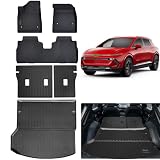
- 【🚗Custom Fit for 2024 2025 2026 Chevy Equinox EV version (Non Fuel)】Floor Mats with Trunk Mat With Backrest Mat protection.The ASINRI Trunk Mat is high-precision laser measured, which means that our customized fit will provide the best coverage range, looking like the mat included with your car.
- 【🚗SAFE AND COMFORTABLE MATERIALS】 The accessory pad for 2024 2025 2026 Chevy Equinox EV made of TPE, free of latex and PVC, 100% recyclable, and odorless.ASINRI mat is both soft and durable. More importantly, they can withstand extreme weather conditions, so you don't have to worry about cracking, curling, or mat damage.
- 【🚗HIGH WALL DESIGN】Beveled edges prevent wall bending. The high wall design can prevent any debris inside the lining and on the Trunk Mat. High grooves and ridges are designed for drainage.
- 【🚗EASY TO CLEAN】The garden hose gun can easily clean the Floor Mats & Trunk Mat & Backrest Mat for 2024 2025 Chevy Equinox EV. There is also a damp cloth and some tap water available. Daily maintenance is really easy.
- 【🚗SINCERE SERVICE】We know that you want to choose the best for your car, and the ASINRI mat is perfect for your vehicle and provides protection. This is what ASINRI has done for you. If you have any questions, please feel free to contact us, and our after-sales team is willing to serve you.
A 240V Level 2 charger is a relevant accessory category if you plan to charge at home, but choosing equipment starts with your specific parking and electrical setup—not a generic product recommendation. Nissan says its mobile charge cord is included and describes a marketplace for home charger purchase and installation. Chevrolet describes an available Level 2 charger. Confirm what is included or available for the vehicle you are buying, whether any equipment needs to be purchased separately, and what installation would require at your home.
Check your home setup before buying
- Confirm that you have a regular parking spot where charging equipment can reach the vehicle.
- Ask a qualified electrician to assess the electrical capacity and installation requirements for a 240V Level 2 setup.
- Check charger and vehicle connector compatibility, installation costs and applicable local code. Nissan describes a marketplace for home charger purchase and installation, while Chevrolet describes an available Level 2 charger; exact equipment and availability should be confirmed for the vehicle and location.
- Compare the vehicle’s charging schedule with your daily driving. If you cannot charge at home, identify nearby public chargers and check their access requirements before deciding.
Installation cost is not included in the manufacturers’ vehicle starting prices and will depend on your home and location; no typical price is specified. Request a site-specific estimate before treating home charging as a settled part of your budget. Check local code and electrical capacity rather than assuming that a standard outlet or existing circuit can support the charging setup you want.
Will public charging work for your routes?
Nissan specifies J1772 for Level 1 and Level 2 charging and NACS for DC fast charging. Chevrolet describes public charging and says a GM-approved NACS DC adapter can provide access to Tesla Superchargers. A connector alone does not establish that every station is available to every vehicle: adapter approval, network eligibility, station status and route coverage matter. These details can change, so confirm the exact vehicle’s compatibility and access rules when planning a purchase or trip. Nissan’s charging page and Chevrolet’s charging page set out their charging information.
Before relying on public charging, map the stations on routes you actually drive and check whether the vehicle can use them with its included equipment or an approved adapter. Pay particular attention to longer trips and to the distance between usable stops. Network access and station availability are ownership details to verify, not permanent guarantees from a range figure.
Check the connector and network details for the specific car rather than relying on a broad brand-level assumption. For the LEAF, distinguish its J1772 Level 1/2 connection from its NACS DC fast-charging connection. For the Equinox EV, ask which GM-approved adapter is appropriate and what access conditions apply to the Tesla Supercharger network. Route planning should account for stations you can actually use, not simply the presence of a charger symbol on a map.
What’s actually slowing this PC down?
Pick the symptom - the matching free tool is one click away.
What should you know about the infotainment systems?
Chevrolet says the Equinox EV does not include Apple CarPlay or Android Auto and instead offers Google built-in compatibility. Drivers who depend on projecting a phone interface should check the system in person and verify the exact trim and connected services that matter to them before signing. The available information does not establish trim-by-trim phone projection details for the LEAF, so do not assume either that every LEAF trim supports a particular feature or that its setup matches Chevrolet’s.
During a test drive, try your normal navigation, music and calling routine. Check how the interface behaves with your phone and whether the built-in options meet your needs; a feature list alone may not answer how you prefer to use it. If phone projection is a deciding factor, verify it directly in the specific LEAF you are considering instead of treating the lack of Chevrolet support as proof of what Nissan offers. Chevrolet’s Equinox EV product information describes its infotainment approach.
Rank #4
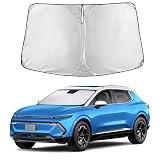
- Compatible for Chevrolet Equinox EV 2024-2026 Windshield Sun Shade: Precisely designed windshield sunshade fit for Chevrolet Equinox EV - 2024 2025 2026 to provide full windshield coverage with 100% light blocker.
- Maximum Heat & UV Blocking Windshield Sunshade: Reflective windshield sun shade with a 4-layer cover blocks 99.89% of UVA & 99.95% of UVB and offers SPF 100 & UPF 80+ protection, reducing harmful UV rays and extreme heat, keeping the car’s interior cooler while protecting the dashboard, seats, and steering wheel.
- Premium Insulated Sunshade Material: High-density 280T front windshield sunshade with multi-layer reflective insulation effectively deflects sunlight and reduces interior heat buildup during hot summer days.
- Quick Install Folding Windshield Sun Shade: Foldable Front Window shade installs in seconds and stores easily in the glove box or door pocket when not in use.
- Durable Long-Lasting Windshield Sunshade: Reinforced stitched edges prevent warping, bending, or tearing, making the sun shade ideal for daily windshield protection and long-term use.
How do warranties and ownership costs affect the decision?
Nissan’s 2026 LEAF brochure lists a limited battery warranty of 8 years or 100,000 miles, whichever comes first. A comparable Chevrolet battery-warranty term is not established by the cited information, so the available figures do not support calling either vehicle the warranty winner. Check the current warranty booklet for the exact vehicle and confirm which components, limits, exclusions and transfer rules apply. Nissan’s 2026 LEAF brochure contains the stated LEAF term.
MSRP and EPA range do not settle total ownership cost. Dealer offers, available incentives, electricity rates, insurance, home-charger installation and your charging mix can alter the comparison. Since those costs depend on the buyer’s location and circumstances, request insurance quotes, check current incentive eligibility and compare any installation estimate alongside the written vehicle prices.
Do these 3 things before closing this tab:
1Clear out junk files and repair common Windows errors2Scan for outdated or missing drivers - takes under a minute3Repair Windows errors before they cause bigger problemsThere is no location-specific cost calculation in the available information: it does not provide your utility rate, insurance profile, dealer offer, incentive eligibility or home installation estimate. A fair comparison should therefore be a buyer-specific worksheet, not a claim that one model is always cheaper to own. Start with the actual out-the-door quote for each car, then add any equipment and installation you need and investigate the costs that apply where you live. Verify incentives at the time of purchase; availability and eligibility can change.
Also keep the limits of the warranty comparison clear. The Nissan figure is a limited battery warranty, not a promise that all vehicle repairs are covered for that length of time. The cited information does not verify an equivalent Chevrolet term. Review both current warranty documents before deciding that warranty coverage makes one vehicle the safer financial choice.
Independent reader supportYour contribution helps us test, update, and keep practical guides available for everyone.Which one should you buy?
Choose the LEAF if the lower listed entry price matters most
The LEAF S+ is the starting-price choice among these listed configurations at $29,990, with a manufacturer-listed 303-mile EPA estimate. It also has a smaller stated footprint category and published cargo figures of 20.0 cubic feet with the rear seats up and 55.5 folded. Check the range and price of the exact LEAF trim, because Nissan’s listed range declines across the S+, SV+ and Platinum+ versions.
For a shopper focused on minimizing the advertised starting price, the LEAF S+ is the clearest case: its listed price is $5,005 below the Equinox EV LT 1. That difference is a useful starting point, not a final savings estimate. Whether it remains the better value depends on the dealer quote, equipment, incentives and the features you need. The SV+ is listed only $765 below the LT 1, so shoppers moving up from the base trim should revisit the comparison instead of assuming the same price advantage.
Choose the Equinox EV if you value its FWD range or cargo maximum
The Equinox EV FWD’s listed 319-mile EPA estimate is the highest of the compared configurations, and Chevrolet lists 57.2 cubic feet of maximum cargo volume. Its starting LT 1 price is higher than the LEAF S+ price, while the AWD version’s listed range is 307 miles. Consider the Equinox EV if those advantages fit your driving and carrying needs, and make sure its infotainment approach works for you.
Best Value
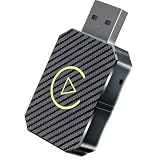
- 【Applicable Models】: For Chevrolet Equinox EV (2024-2025). Please note before ordering: Available for cars with wired CarPlay or wired Android Auto.
- 【Compact And Durable】: This CarPlay adapter uses a mini USB design, which is 50% smaller in size, eliminating tangled cables and saying goodbye to clutter. Paired with a stylish metal shell design, it not only enhances the space's fashion sense, but also improves the heat dissipation of the shell, protecting the car's USB port from overheating.
- 【Stable Connection】: The reinforced USB port improves the stability of the connection. After multiple plug-in and pull-out vibration tests, CarPlay can maintain a good connection even on rough roads. Say goodbye to cable shaking, connection lag, and manual reconnection.
- 【Micro Stylish Design】: Enjoy all the features of CarPlay and Android Auto, including navigation, music, Siri, and phone calls, via voice control, steering wheel buttons, the touchscreen, or rotary knobs. Enhance your driving experience with safer and smarter connectivity.
- 【Satisfied Service】: If you have any questions, please feel free to contact us, we will reply to you within 24 hours and give you a satisfactory answer.
The Equinox EV is not automatically the best pick simply because its FWD range and maximum cargo figure are larger. Those numbers are most relevant if you will use the extra rated range or need the folded-seat cargo maximum, and they should be weighed against its price and the vehicle’s fit for your passengers. If you depend on Apple CarPlay or Android Auto, Chevrolet’s stated lack of those features may be a deciding drawback.
Make the decision with a vehicle-specific quote and routine
- Identify the actual trims and drivetrains you would buy, then get current written prices from local dealers.
- Compare the EPA-estimated range for those configurations against your regular commute and longer routes.
- Test cargo and passenger fit with the people and items you routinely carry.
- Verify home-charging feasibility or map public charging that the exact vehicle can access.
- Check current warranty terms, local incentives, insurance quotes and installation costs before choosing on price alone.
For most buyers, the decision comes down to how the difference in purchase price trades against range, cargo use and charging routine. The LEAF S+ is the lower-cost listed starting point; the Equinox EV FWD has a 16-mile listed range advantage over it and a slightly higher stated maximum cargo volume than the LEAF’s folded figure. Neither manufacturer specification answers whether a particular car is the better buy for your household. Get exact quotes, verify the features and access you need, and decide against your own daily routes and carrying needs.
Frequently Asked Questions
Is the Nissan LEAF cheaper than the Chevrolet Equinox EV?
At the manufacturer-listed starting prices, yes. The 2026 LEAF S+ is $29,990 and the Equinox EV LT 1 is $34,995, a $5,005 difference. The LEAF SV+ is listed at $34,230, only $765 below the LT 1. These are starting prices, not dealer quotes or out-the-door totals; local offers, options, fees and incentives can change the comparison.
The Tool Desk
Outbyte Driver Updater FREEFix the driver behind crashes, sound loss and screen glitchesFind Drivers →Outbyte PC Repair FREERepair Windows errors before they cause bigger problemsFix Now →Which has more range, the Nissan LEAF or Equinox EV?
The Equinox EV FWD has the highest listed EPA estimate at 319 miles, compared with 303 miles for the LEAF S+. The Equinox EV AWD is listed at 307 miles. Nissan lists 288 miles for the LEAF SV+ and 259 miles for the Platinum+, so the answer depends on the exact trim and drivetrain.
How long does it take to fast-charge each one?
Nissan estimates about 30 minutes for the LEAF to charge from 20% to 80%; Chevrolet estimates about 42 minutes for the Equinox EV to charge from 10% to 80%. Because the charge windows differ, these are not directly comparable test times. Actual time depends on conditions and charger output.
Can I charge either vehicle at home?
Both manufacturers describe home charging. Nissan estimates about 6.5 hours for a 20–80% charge using 240V AC and says a mobile charge cord is included. Chevrolet describes available Level 2 charging, but the cited information does not provide a comparable home-charge time. Confirm the equipment, electrical capacity, installation requirements and local code for your home.
Does the Equinox EV have Apple CarPlay or Android Auto?
Chevrolet says the Equinox EV does not include Apple CarPlay or Android Auto and instead offers Google built-in compatibility. The information used here does not establish trim-by-trim phone-projection details for the LEAF, so verify the specific vehicle and test the interface before buying.
Which one has more cargo space?
Chevrolet lists 57.2 cubic feet maximum for the Equinox EV. Nissan lists 55.5 cubic feet for the LEAF with the rear seat folded and 20.0 cubic feet with it up. The figures are not a matched test, and a comparable Equinox EV seats-up figure is not established here. Test the fit of the passengers and items you regularly carry.
The Bottom Line
For the lower listed starting price, choose the 2026 Nissan LEAF S+; for the highest listed FWD range and larger stated maximum cargo volume, consider the Chevrolet Equinox EV. The LEAF S+ starts at $29,990 with 303 miles of EPA-estimated range, while the Equinox EV LT 1 starts at $34,995 and is listed at 319 miles FWD or 307 miles AWD. Before deciding, compare exact local quotes and trims, verify charging access and home-installation needs, and check warranty terms and infotainment in person. The better buy depends on your household and local costs, not MSRP or range alone.
Quick Recap
Product prices and availability are accurate as of the date/time indicated and are subject to change. Any price and availability information displayed on Amazon at the time of purchase will apply.




