Before buying a 2006–2011 Honda Civic, check its records and VIN, watch for cooling-system symptoms, test-drive it, and pay for an independent pre-purchase inspection. Honda documented a possible engine-block coolant leak in some 2006–2008 Civics and early-production 2009 examples—not every car from those years. Treat the individual vehicle’s condition and repair history as decisive.
Before you meet the seller
- Request the VIN, maintenance records, title status, and receipts for major repairs.
- Run the VIN through NHTSA’s recall lookup to see whether safety recalls remain unrepaired. Recall status is specific to the vehicle; a model-year search cannot confirm a particular car’s repair history.
- For a 2006–2008 Civic or early-production 2009 example, ask whether the engine block was repaired or replaced and request the paperwork.
- Ask whether the seller will allow an independent mechanic to inspect the car. Choose someone experienced with used-car inspections and, where practical, this vehicle.
Check for the documented engine-block coolant leak
American Honda’s Service Bulletin 10-048, revision 5, dated December 9, 2014, says: “On some 2006–08 and early production 2009 Civics, the engine (cylinder) block may leak engine coolant, resulting in engine overheating.” The bulletin’s affected-vehicle table includes VIN qualifications, and it directs dealers to check eligibility by VIN status inquiry. The model year alone does not establish that a car is affected. Read Honda’s bulletin.
Honda described a historical engine-block warranty extension of ten years from the original purchase date, with no mileage limit, subject to eligibility and exclusions. The bulletin also excludes certain branded, salvage, or total-loss histories. Because these cars are now old, do not assume the extension is still available: ask a Honda dealer to check the VIN and repair record. If coolant is disappearing or the engine has overheated, have the cause diagnosed rather than assuming the block is responsible.
Inspect the car in person
Start it cold, if possible
Ask to see the car before it has been warmed up. Notice whether it starts readily, idles consistently, and displays warning lamps that remain on. Watch and listen for unusual noises, visible fluid leaks, or exhaust smoke. These are general used-car checks, not proof of a Civic-specific defect.
Recommended Free Tools
#1 Best Overall
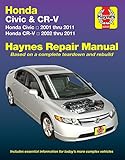
- Step-by-step procedures written from a complete teardown and rebuild, giving you the confidence to tackle repairs at any skill level.
- Over 700+ clear photos and diagrams that simplify complex systems, helping you complete jobs faster and with fewer mistakes.
- Comprehensive troubleshooting and fault-finding guides to quickly diagnose problems and reduce costly downtime.
Look over routine wear items
Check tire pressure and tread, including uneven wear; examine brake condition; and test the exterior lights and wipers. Honda’s current general Civic maintenance guidance includes these inspection items, but it is not a 2006–2011-specific fault list. Honda maintenance guidance.
Drive it safely
On a safe route, check that the car accelerates, steers, shifts, and brakes as expected. Note any warning lights, overheating, vibration, or abnormal sounds and report them to the mechanic. A code scan can be an optional diagnostic input, but it is not a substitute for a professional inspection or a complete assessment of the car.
Rank #2

- Step-by-step procedures written from a complete teardown and rebuild, giving you the confidence to tackle repairs at any skill level.
- Over 700+ clear photos and diagrams that simplify complex systems, helping you complete jobs faster and with fewer mistakes.
- Comprehensive troubleshooting and fault-finding guides to quickly diagnose problems and reduce costly downtime.
Use the inspection to decide what to pay
Ask the mechanic for a written assessment separating safety concerns, deferred maintenance, and diagnosed repairs. Use that report, documented service history, recall completion, and the vehicle’s actual condition to compare candidates. Base any price adjustment on repairs identified for that specific car, not an assumed generation-wide repair bill.
If the seller’s recall or engine-block repair paperwork is incomplete, follow up with a Honda dealer about the vehicle’s records. Recheck NHTSA’s VIN lookup near the purchase, since the result is vehicle-specific and can change when a repair is recorded.
What’s actually slowing this PC down?
Pick the symptom - the matching free tool is one click away.
Rank #3

- Complete Vehicle Coverage: Covers Honda Civic Sedan, Coupe, and Hatchback gasoline models from 2016–2022, including FC/FK platform vehicles equipped with 1.5L and 2.0L gasoline engines.
- Step-by-Step Repairs: Detailed instructions for routine maintenance, troubleshooting, and major component repairs.
- Online Wiring Diagrams Included: Access vehicle-specific wiring diagrams and additional online repair information.
- Hands-On Workshop Procedures: Developed from complete vehicle teardown with clear photos, illustrations, torque specs, and service data.
- Trusted DIY Repair Guide: Haynes manuals are relied on worldwide by DIYers and technicians for accurate repair and maintenance information.
There is no reliable generation-wide failure-rate statistic or year/trim ranking established here. Once the safety and mechanical checks are satisfactory, compare body style, trim, transmission, mileage, and equipment according to your needs.
Quick Recap
Rank #4

- Step-by-step procedures written from a complete teardown and rebuild, giving you the confidence to tackle repairs at any skill level.
- Over 700+ clear photos and diagrams that simplify complex systems, helping you complete jobs faster and with fewer mistakes.
- Comprehensive troubleshooting and fault-finding guides to quickly diagnose problems and reduce costly downtime.
Product prices and availability are accurate as of the date/time indicated and are subject to change. Any price and availability information displayed on Amazon at the time of purchase will apply.