Short answer: Most of these cars were not permanently outlawed. They were foreign-market or modified vehicles that lacked U.S. certification, making ordinary permanent importation difficult or impossible while they were newer than 25 years. Some eventually became importable through a federal eligibility decision, some qualified for Show or Display, and many can now enter under the 25-year safety exemption.
That exemption is not a universal “everything is legal now” button. The vehicle’s actual manufacture date, EPA emissions status, import paperwork, and the destination state’s titling rules still matter. The famous cars below were “banned” mainly in the enthusiast sense: America could not freely receive them when they were new.
What “banned” meant for these cars
The United States does not maintain one simple federal list of beloved cars that are illegal to own. The usual problem was that a car was nonconforming: it was not originally certified to the Federal Motor Vehicle Safety Standards, or FMVSS, that applied to vehicles sold in the United States.
As a general rule, a nonconforming vehicle that is less than 25 years old cannot be permanently imported for normal road use unless the National Highway Traffic Safety Administration has determined that it is eligible and the import is handled through the Registered Importer process. Other routes include Show or Display, temporary importation, racing, and certain nonresident exceptions.
Quick wins for a faster PC:
Fix the driver behind crashes, sound loss and screen glitchesFind Drivers →Clear out junk files and repair common Windows errorsFree Scan →Scan for outdated or missing drivers - takes under a minuteDriver Scan →#1 Best Overall
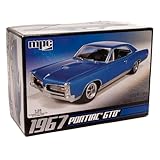
- V8 POWER: The model features a 400 cubic inch V8 engine, reflecting the muscle and power that defined the GTO's reputation.
- DETAILED SUSPENSION & EXHAUST: The kit incorporates separate rear suspension and exhaust detailing, adding to the realism of the model.
- BUCKET SEATS & CONSOLE: The model's interior features bucket seats and a floor shifter with a console, capturing the iconic look and feel of the GTO.
- OPTIONAL SUPERCHARGER: For those seeking more power, the kit offers an optional supercharger, allowing you to customize your model.
- CLEAR & COMPREHENSIVE INSTRUCTIONS: The included instructions are clear and user-friendly, making the kit accessible to modelers of different skill levels, from beginners to experienced hobbyists.
The important age rule is measured from the vehicle’s date of manufacture, not simply its model year or the name of the generation. Once a vehicle is at least 25 years old, it may generally be imported without regard to applicable FMVSS compliance. That is a safety exemption, however—not a blanket exemption from every U.S. law.
At a glance
| Car | Why it was restricted | Current federal headline |
|---|---|---|
| Porsche 959 | Nonconforming supercar; early special import attempt was denied | Legal now by age; Show or Display was historically important |
| Nissan Skyline R34 GT-R | Never certified for ordinary U.S. sale | Early examples began reaching the 25-year threshold in 2024 |
| Mexican-market Volkswagen Beetle | Later foreign-market cars were not automatically U.S.-certified | Depends on the exact build date; some later cars remain younger than 25 years |
| Jaguar XJ220 | Very low production volume made normal certification impractical | Safety restrictions have largely aged out |
| Lamborghini Diablo Strosek | Modified lighting, mirrors, bumpers, and bodywork could be noncompliant | Modified-specification issue; donor-car age does not validate every alteration |
| Fiat 126P | Non-U.S.-market car facing safety and emissions barriers | Old examples are easier under the 25-year safety rule |
| BMW E30 M3 Evolution III | European homologation special not exported as a U.S.-certified model | Legal now by age for federal safety purposes |
| Mazda Eunos Cosmo | Japan-market, non-U.S.-certified luxury coupe | Early examples clear the safety age threshold; emissions still matter |
| Rover Mini | Later Rover-era versions were not certified for U.S. sale | Many examples now qualify by age |
| Alfa Romeo 8C Spider | Import eligibility was tied up in a certification dispute | 2008–2010 cars received a formal NHTSA eligibility decision in 2016 |
| Porsche 964 Carrera RS | European track-focused derivative was not U.S.-certified | Older examples generally qualify by age |
| Pagani Zonda | Tiny production run and unusual construction made ordinary federalization impractical | Show or Display was the pre-25-year route; age now changes the analysis for older cars |
The 12 cars
1. Porsche 959
Status: Legal now by age; exception historically required.
The Porsche 959 became the archetypal restricted gray-market supercar because it was technologically extraordinary, extremely rare, and not built as a U.S.-certified production car. An early attempt to bring one into the country for display was denied under the post-1988 import regime: the car was nonconforming and did not qualify for the requested route at that time.
The Tool Desk
Outbyte PC Repair FREEClear out junk files and repair common Windows errorsFree Scan →Outbyte Driver Updater FREEScan for outdated or missing drivers - takes under a minuteDriver Scan →That did not amount to a permanent ban on every 959. Later, the Show or Display rules created a limited pathway for historically or technologically significant vehicles. An approved Show or Display car is generally limited to 2,500 miles of public-road use during a 12-month period. The 959 is also now old enough for the 25-year safety exemption, so an individual example no longer needs to rely on the same exceptional route merely because it is a 959.
The practical lesson is that the 959 was once blocked from ordinary U.S. road use, not forever outlawed. Its age can resolve the federal FMVSS issue, but EPA compliance, customs documentation, and state registration remain separate questions.
2. Nissan Skyline R34 GT-R
Status: Legal now by age for qualifying examples; not every R34 is automatically legal.
The R34 GT-R was never certified for ordinary U.S. sale. While individual examples were younger than 25 years, importing one for permanent road use generally required a qualifying federal pathway rather than simply shipping the car to an American port.
What’s actually slowing this PC down?
Pick the symptom - the matching free tool is one click away.
Early R34s began reaching the 25-year threshold in 2024. That does not make the phrase “R34s are legal now” precise enough. A 1999-built car reaches the exemption on the corresponding date in 2024; a car manufactured in 2002 does not reach it until the corresponding date in 2027. The VIN, production date, configuration, import paperwork, emissions requirements, and state rules all matter.
NHTSA’s separate decisions involving Skyline generations also show why enthusiasts should be wary of broad claims. Import eligibility can apply only to specific generations, production dates, and configurations. An earlier R33 decision, for example, covered certain vehicles manufactured from January 1, 1996, through June 30, 1998—not every R33 ever built.
For readers who want a display piece rather than an import-compliance project, a Nissan Skyline GT-R model car is a straightforward way to celebrate the R34. It is a collectible, not a substitute for owning or legally importing the real car. Some product links on this page may be affiliate links.
3. Volkswagen Type 1 Beetle—especially later Mexican-market cars
Status: Older cars are generally legal by age; later Mexican-market examples require an exact-date check.
Rank #2

- 1:18 Special Edition. Detailed die-cast precision model. Large - approx 9.5" replica.
- Die-cast metal body. Opening doors and engine compartment.
- Full functioning steering. Four-wheel suspension.
- Detailed chassis with separate exhaust system.
- Mounted on plastic stand.
The classic Volkswagen Beetle was sold in the United States for decades, so describing “the Beetle” as banned is misleading. The regulatory issue concerns later foreign-market versions, particularly cars built in Mexico after regular U.S. sales had ended.
The final Mexican production continued into 2004. Those cars were not automatically interchangeable with an older U.S.-market Beetle simply because they shared the Type 1 name and familiar shape. A Mexican-built example younger than 25 years could face the standard nonconforming-vehicle import barrier. A car built in 2004 reaches the federal safety age threshold in 2029; the relevant date for an individual vehicle is its actual manufacture date.
Once old enough, a Mexican Beetle can generally benefit from the FMVSS exemption. That still does not answer emissions or state-title questions, and a seller’s description of a car as a “classic Beetle” is not proof of its market origin or import eligibility.
4. Jaguar XJ220
Status: Legal now by age for the federal safety issue; EPA and state checks remain.
Jaguar’s XJ220 was produced in such small numbers that full U.S. certification would have been difficult to justify economically. It was therefore associated with Show or Display imports before the 25-year exemption became available.
The XJ220 dates from the early 1990s, so ordinary federal safety restrictions have now largely aged out for individual cars. In other words, the same vehicle that once needed an exceptional import strategy may now qualify under the age-based safety rule.
That does not erase every hurdle. The EPA emissions question remains separate, as do customs documents and the rules of the state where the car will be titled. A rare car can be federally admissible and still become an expensive problem if the buyer verifies only the NHTSA side of the transaction.
5. Lamborghini Diablo Strosek
Status: Modified-specification issue—not a blanket ban on the Lamborghini Diablo.
The standard Lamborghini Diablo was sold in the United States. The Strosek version is a different compliance story because the conversion altered factory lighting, mirrors, bumpers, and other bodywork. Those changes could cause the car to fail U.S. equipment requirements even when the underlying Diablo donor car was a recognized model.
This distinction matters. The federal government did not simply outlaw every Diablo by name; a particular modified specification could be noncompliant. The car’s age may now remove the FMVSS obstacle for importation, but that does not automatically certify every modification for state inspection, registration, or road use.
Before buying one, document exactly what was changed and whether the car has been returned to a configuration that can be supported by its paperwork. A foreign-market conversion should not be treated as equivalent to an unmodified U.S.-market Diablo merely because both wear the same badge.
Rank #3

- AUTHENTIC REPLICA: Die-cast metal 1:43 scale model of the 1953 Cadillac Series 62, featuring detailed exterior finish and classic vintage styling.
- FUNCTIONAL FEATURES : Working doors that open and close , plus pull-back action mechanism for interactive play.
- QUALITY CONSTRUCTION : Built with die-cast metal body , rubber tires, and precise plastic components for durability and authentic look.
- PERFECT SIZE : Measures 5 inches in length , making it ideal for display or play while maintaining impressive detail.
- REALISTIC DETAILS : Features authentic chrome trim accents, detailed interior, and period-correct wheel designs true to the original 1953 Cadillac.
6. Fiat 126P
Status: Legal now by age for old examples, subject to emissions and state rules.
The Polish-built Fiat 126P was not a normal U.S.-market model. A newer example would have faced the familiar combination of safety and emissions barriers that applies to a non-U.S.-certified vehicle.
Some retellings claim that the 126P was specifically rejected because of its engine. The safer conclusion is narrower: its engine and emissions characteristics would have been likely compliance obstacles, but that should not be presented as a documented model-specific federal prohibition without a specific agency record supporting it.
Old 126Ps are now much easier to analyze under the 25-year safety rule. The exemption can remove the FMVSS barrier, but the unusual powertrain may still prompt EPA and state-registration questions. Confirm the car’s build date and its emissions documentation rather than assuming that small size or low output makes it exempt.
7. BMW M3 Sport Evolution III, or E30 M3 Evolution III
Status: Legal now by age for federal safety purposes.
Free tools Windows power users keep installed
One-click scans. No signup required.
The Evolution III was a limited-production European-market homologation special. BMW did not export it as a U.S.-certified model, so America did not receive the car when it was new. Import law then kept most examples out until they became old enough to use the age exemption.
The restriction was not a statute naming the Evolution III as forbidden. It was the ordinary consequence of trying to permanently import a nonconforming vehicle younger than 25 years. Today, an individual car manufactured more than 25 years ago can generally enter without regard to FMVSS compliance.
Buyers should still verify the build date and identity of the car. An ordinary E30 M3, a U.S.-market M3, and an Evolution III conversion are not automatically the same thing for provenance, value, or paperwork. EPA and state requirements remain independent of the safety exemption.
8. Mazda Eunos Cosmo
Status: Older examples are legal now by age for the federal safety issue.
Recommended Free Tools
The Eunos Cosmo was a Japan-market luxury coupe that never became a regular U.S.-market vehicle. Its most famous feature was the available three-rotor, twin-turbo engine, an exotic powertrain that made the car especially attractive to enthusiasts and especially unfamiliar to American regulators and service networks.
When younger than 25 years, it faced the same general barrier as other non-U.S.-certified gray-market cars: it was not automatically eligible for permanent road importation simply because it could be registered in Japan. Early examples are now old enough for the federal safety exemption.
Rank #4

- Pullback Action: Experience realistic racing with the pullback action feature.
- Opening Doors: Explore the intricate interior details with the opening door feature.
- 1:38 Scale: Enjoy a detailed 1:38 scale die-cast model (approx. 5 inches long).
- Authentic Design: Modeled after the iconic 1967 Ford Shelby Mustang GT500.
- Display Piece: A must-have collectible for car enthusiasts and model collectors.
The rotary engine makes the remaining diligence more important, not less. EPA emissions treatment, documentation of the exact engine and exhaust configuration, parts availability, and state registration can all affect whether a particular Cosmo is practical to own. “Over 25” addresses one federal safety question; it does not guarantee a clean title or trouble-free registration.
9. Rover Mini
Status: Many later examples now qualify by age; state rules vary.
Crashes, No Sound, or Screen Glitches?
Random freezes, missing sound and display glitches usually trace back to one bad driver. Find and replace yours safely.Free scan · under a minuteWindows Errors? Fix Them Before They Spread
Repair common Windows errors and clear accumulated junk for a smoother, more stable PC - no reinstall needed.Free scan · no reinstallOlder Minis had been sold in the United States, but Rover-era Minis were not certified for U.S. sale in the same way. A younger nonconforming Rover Mini therefore could not simply be permanently imported without an eligibility determination and the appropriate Registered Importer process or another exception.
Most later Rover Minis are now old enough to qualify under the 25-year safety rule, but “Rover Mini” covers a long production period. A specific car’s manufacture date controls. State titling and emissions rules can also differ, particularly where a state applies its own inspection or equipment standards.
Right-hand drive was not itself the federal ban. The problem was the vehicle’s certification and import status. A left- or right-hand-drive car still needs the correct federal import pathway, and a 25-year-old car still needs acceptable paperwork before a DMV will necessarily issue a title.
10. Alfa Romeo 8C Spider
Status: Formal NHTSA eligibility decision.
The Alfa Romeo 8C Spider is the clearest example here of a car that was temporarily trapped by a certification dispute and then received a specific federal resolution. In March 2016, NHTSA announced that 2008–2010 8C Spider cars were eligible for importation.
Do these 3 things before closing this tab:
1Repair Windows errors before they cause bigger problems2Fix the driver behind crashes, sound loss and screen glitches3Clear out junk files and repair common Windows errorsThe reasoning differed by year. The 2008 and 2009 cars were considered substantially similar to U.S.-certified versions. The 2010 cars were eligible because their safety features complied with the applicable requirements or could be altered to comply.
That decision was not a permanent ban being lifted on the entire Alfa Romeo brand. It was a model- and year-specific eligibility determination. An importer still needs to follow the required process, and NHTSA safety eligibility does not by itself settle EPA emissions compliance or state registration.
11. Porsche 964 Carrera RS
Status: Legal now by age for older examples.
The European Porsche 964 Carrera RS was a stripped-down, track-oriented derivative that Porsche did not certify for normal U.S. sale. The U.S.-market RS America was not identical to the European Carrera RS, so an RS America should not be treated as proof that the European car was already approved.
While younger than 25 years, a European Carrera RS faced the standard nonconforming-vehicle import barrier. Cars manufactured more than 25 years ago can generally enter without regard to FMVSS compliance under the age exemption.
Do these 3 things before closing this tab:
1Fix the driver behind crashes, sound loss and screen glitches2Repair Windows errors before they cause bigger problems3Scan for outdated or missing drivers - takes under a minuteAs with the E30 Evolution III, identity and provenance matter. A genuine European Carrera RS, a U.S.-market RS America, and a modified regular 964 may look related but have different documentation and compliance histories. Confirm the VIN, build date, market specification, and emissions treatment before treating an advertised car as an easy import.
Best Value
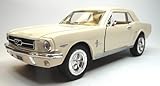
- Authentic 1:36 Scale: Meticulously crafted 1964 1/2 Ford Mustang model car with impressive 5-inch length.
- Realistic Details: Die-cast metal body with opening doors and eye-catching blue finish.
- Interactive Play: Engaging pull-back action for thrilling motion across smooth surfaces.
- Collectible Quality: Ideal for model car enthusiasts and collectors seeking miniature automotive replicas.
- Brand: KiNSMART, a trusted name in die-cast vehicle models and toys.
12. Pagani Zonda
Status: Show or Display historically; older examples may now qualify by age.
The Pagani Zonda’s tiny production run, unusual construction, and lack of ordinary U.S. federalization made normal importation impractical when the car was new. For a qualifying example younger than 25 years, Show or Display was the relevant potential pathway.
Show or Display is not automatic. The vehicle must have unusual historical or technological significance, and NHTSA generally limits public-road use to 2,500 miles per 12-month period. EPA compliance is still required for road use, so a Show or Display approval does not function as a universal emissions waiver.
Quick wins for a faster PC:
Repair Windows errors before they cause bigger problemsFix Now →Fix the driver behind crashes, sound loss and screen glitchesFind Drivers →A Zonda that reaches the 25-year threshold may instead benefit from the safety exemption, depending on its manufacture date. That changes the NHTSA analysis but does not eliminate EPA, customs, insurance, or state-registration questions. With a car this rare, the identity and provenance of the exact chassis are as important as the model name.
Independent reader supportYour contribution helps us test, update, and keep practical guides available for everyone.Before you buy or ship one
- Find the actual manufacture date. Do not rely only on the model year, registration year, or generation name. The 25-year calculation is tied to when that vehicle was manufactured.
- Identify the federal route. Is the car old enough for the FMVSS exemption? If not, does NHTSA list that exact model, year, configuration, and production range as eligible? If the proposed route is Show or Display, confirm approval and the 2,500-mile annual-use restriction.
- Check EPA emissions separately. A safety exemption does not automatically make an engine, catalytic-converter system, ECU, or exhaust configuration acceptable under EPA rules.
- Audit the import documents. Keep the vehicle identity, purchase records, customs documents, NHTSA paperwork, and EPA paperwork consistent. A title from another state or a seller’s claim that a car is “legal” is not a substitute for the underlying records.
- Ask the destination DMV before payment. Federal import legality does not guarantee that the state where you live will title, inspect, or register the car. Get the state’s requirements in writing when possible.
- Inspect modifications. This is essential for cars such as the Strosek Diablo. A compliant donor car can become a different regulatory problem after lighting, mirrors, bumpers, emissions equipment, or other systems are altered.
- Do not confuse diagnostics with compliance. An automotive OBD2 scanner can help read fault codes on a compatible modern imported car, but many cars in this list predate OBD-II, and no scanner can prove that a vehicle is legally importable or registerable.
What these cars do not prove
- There was no universal federal ban on all right-hand-drive cars.
- The government did not permanently outlaw the Skyline, Beetle, Mini, or every other foreign-market nameplate in this list.
- Being younger than 25 did not make every import impossible; Registered Importer, Show or Display, temporary, racing, and other narrowly defined routes existed.
- Being at least 25 years old does not automatically solve EPA emissions, customs, insurance, inspection, or state-title issues.
The better description is that these were cars America could not freely import in their younger years without certification, an eligibility decision, or an exception. Their stories are less about a blacklist than about the difference between a desirable car and a car that has completed the required federal and state paperwork.
Frequently Asked Questions
Can I import any Nissan R34 GT-R into the United States now?
No. Early R34 examples began reaching the 25-year safety threshold in 2024, but eligibility depends on the vehicle’s actual manufacture date. You must also verify EPA emissions requirements, customs paperwork, and the rules of the state where you plan to register it.
Does the 25-year rule make a foreign car completely legal?
No. The rule generally removes the federal FMVSS barrier for a vehicle at least 25 years old. EPA emissions compliance is separate, and a state DMV may have additional title, inspection, or equipment requirements.
Was it illegal to own a right-hand-drive car in the USA?
Right-hand drive was not itself a universal federal ban. The usual issue was whether the vehicle was certified for U.S. standards or had entered through an approved import route. State registration and equipment rules can still vary.
What is the Show or Display exception?
Show or Display is a limited NHTSA pathway for vehicles with unusual historical or technological significance. Approval is not automatic, and public-road use is generally limited to 2,500 miles during a 12-month period. EPA requirements still apply.
Why is a Mexican Beetle different from an older U.S.-market Beetle?
The classic Beetle sold in the United States was not automatically equivalent to a later Mexican-market car. The later car may lack U.S. certification and must be evaluated by its actual manufacture date, import route, emissions status, and state-registration requirements.
The Bottom Line
Bottom line: “Banned” is usually shorthand for “not normally importable when new.” The Porsche 959, R34 GT-R, XJ220, Eunos Cosmo, Rover Mini, and other cars above became famous because U.S. safety certification, emissions rules, limited production, or unusual modifications kept them out. Today, age has opened the door for many examples—but only after checking the exact build date, NHTSA route, EPA status, import documents, and state DMV requirements.
Quick Recap
Product prices and availability are accurate as of the date/time indicated and are subject to change. Any price and availability information displayed on Amazon at the time of purchase will apply.




