Do these 3 things before closing this tab:
1Repair Windows errors before they cause bigger problems2Scan for outdated or missing drivers - takes under a minute3Clear out junk files and repair common Windows errorsThe modern Dodge Dart R/T is one of those cars everyone swears they remember, yet nobody can actually buy. That’s because, despite the badge showing up in photos, auto show coverage, and endless online listings, Dodge never sold a true production Dart R/T to the public. What existed instead was a carefully staged performance promise that never cleared the corporate, financial, and engineering hurdles needed to reach dealership floors.
This confusion isn’t accidental. Dodge let the R/T idea live just long enough to lodge itself into enthusiast memory, then quietly walked away before committing to a full production run. The result is a phantom trim level that still haunts Craigslist ads and forum debates more than a decade later.
The R/T That Everyone Saw Was a Concept, Not a Showroom Car
Dodge officially unveiled the Dart R/T as a concept during the early 2010s, most notably at the 2012 North American International Auto Show. It wore aggressive bodywork, larger wheels, red-accented interior trim, and the sacred R/T badge that had previously lived on Chargers, Challengers, and classic big-block muscle. Under the hood was the 2.4-liter Tigershark MultiAir four-cylinder, rated at 184 HP, paired with a sport-tuned suspension and visual cues meant to imply a legitimate performance trim.
What it did not have was a finalized production bill of materials, federal certification paperwork, or a VIN series. In OEM terms, that means it was a design and marketing exercise, not a sellable vehicle. Automakers do this all the time to test reaction, and Dodge was gauging whether buyers would pay real money for a sport-compact R/T in a post-Neon world.
PC Slower Than It Used to Be?
A free scan shows the junk files, broken settings and background clutter dragging Windows down - then fixes them in one click.Free scan · Windows 10 & 11Crashes, No Sound, or Screen Glitches?
Random freezes, missing sound and display glitches usually trace back to one bad driver. Find and replace yours safely.Free scan · under a minute#1 Best Overall
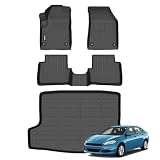
- 【Precise Fit】Wailtnb foot mats are specially tailored for Dodge Dart 2013 2014 2015 2016, using advanced 3D laser scanning technology to ensure perfect fit.The original car data is precisely scanned to guarantee that the mats fully cover your vehicle's floor, fitting like a glove.
- 【Better Material】Wailtnb Dodge Dart floor liner is made of high-quality TPE material, which is healthier, safer, and has high elasticity.Formed as a single piece, they eliminate concerns about wrinkles caused by transportation. Simply place them in a warm area (or use a hairdryer) to restore their custom shape.
- 【Extra Durable】Wailtnb Dodge Dart car mats are designed to withstand all weather conditions. They are tough, resilient, heat and cold resistant, long-lasting, and wear-resistant. Rigorous testing has proven that mats do not crack, curl, or break easily, providing excellent all-weather protection.
- 【Easy to Clean】 Cleaning the Wailtnb Dodge Dart automotive mats is a breeze. Just wipe them with a wet cloth or remove them from the vehicle to rinse and dry. With Wailtnb floor liner surrounding high edge design ensures that even during heavy rain or snowstorms, water won't flow into your car.
- 【Quality Assured】Wailtnb floor mats and cargo mat provide all-weather protection for your vehicle.We strive to satisfy every customer. If you have any questions or doubts, or if you are unsure if the floor mat is suitable for your car, don't hesitate to ask before purchasing
Platform Reality Got in the Way
The modern Dart rode on the CUSW platform, a widened derivative of Alfa Romeo’s Giulietta architecture. While fundamentally competent, with good torsional rigidity and European ride tuning, it was never engineered for the kind of power escalation the R/T badge traditionally implies. Anything beyond the Tigershark’s output would have required significant cooling, drivetrain, and durability upgrades that FCA couldn’t justify financially for a slow-selling compact.
A true R/T would have needed either a turbocharged engine or a high-output naturally aspirated variant, plus stronger transmissions and revised crash certification. That investment made little sense once sales projections flattened and internal resources shifted toward crossovers and the next wave of Hellcat-era halo cars.
Why Dodge Let the Myth Continue
Dodge never aggressively corrected the public narrative, and that silence did a lot of damage to clarity. Press outlets continued referencing the Dart R/T as “cancelled” rather than “never produced,” which implies it once existed in dealer order banks. Add in Mopar appearance packages, aftermarket R/T decals, and poorly informed dealer listings, and the legend took on a life of its own.
Even today, you’ll see used Darts advertised as R/T models, often nothing more than SXT or GT trims with cosmetic add-ons. The R/T badge carried enough historical weight that people wanted to believe it was real, and Dodge’s marketing flirtation gave them just enough evidence to do so.
Recommended Free Tools
R/T Meant Something Very Different by the 2010s
Historically, R/T stood for Road/Track, signaling meaningful mechanical upgrades, not just visual aggression. By the time the modern Dart arrived, Dodge was already wrestling with how to protect that legacy while expanding into lower segments. Slapping R/T on a compact sedan with sub-200 HP risked diluting the badge, especially when V8-powered Chargers and Challengers were defining the brand’s modern identity.
Internally, the Dart R/T concept was less about building a muscle compact and more about keeping Dodge performance-relevant in a shrinking sedan market. Once it became clear the Dart itself wasn’t a long-term player, the R/T idea quietly died without ever officially being born.
2. How the Alfa Romeo–Derived Compact US Wide Platform Shaped (and Limited) the Dart R/T Vision
If the Dart R/T was ever going to be real, it would live or die by its bones. Those bones were FCA’s Compact US Wide platform, an Americanized evolution of Alfa Romeo’s Giulietta architecture. It brought European chassis DNA to a Dodge badge, but it also carried baked-in constraints that made a true R/T far harder than enthusiasts realized.
This wasn’t a clean-sheet Mopar performance platform. It was a global compromise, designed to satisfy emissions, crash standards, and cost targets across multiple brands and markets before performance was ever a priority.
From Alfa Giulietta to Dodge Dart: A Platform With a Split Personality
At its core, Compact US Wide was front-wheel-drive, transverse-engine, and optimized for efficiency and packaging. The Giulietta origins meant a stiff unibody, a sophisticated rear multi-link suspension, and excellent torsional rigidity for a compact sedan. On paper, that sounded promising for a sport-oriented Dart.
The problem was scale and intent. The platform was engineered around four-cylinder powertrains making 140 to 170 HP, not sustained high-output use. Everything from subframe mounting points to half-shaft sizing reflected that original mission.
Why Front-Wheel Drive Was the First R/T Roadblock
FWD alone didn’t doom the Dart R/T, but it raised the engineering bar significantly. To handle real R/T-level torque, the platform would have needed reinforced front axles, a more robust differential, and serious torque-steer mitigation. None of that was part of the original Compact US Wide cost structure.
Even the available six-speed manual and automatic transmissions were marginal beyond the Tigershark’s output. Scaling them up for turbocharged torque would have required revalidation for durability, heat management, and warranty exposure FCA wasn’t eager to absorb.
Cooling, Packaging, and the Turbo Problem
Enthusiasts often point to the 1.4-liter MultiAir turbo as proof FCA had a ready-made solution. In reality, that engine was calibrated for efficiency and midrange torque, not sustained high-load performance. In the Dart’s tighter engine bay, cooling margins were already thin.
A true R/T would have demanded larger intercoolers, upgraded radiators, and revised airflow management. That cascades into crash structure changes, which means re-certification, one of the most expensive words in modern automotive development.
Chassis Potential That the Budget Never Unlocked
Ironically, the Dart’s chassis was one of its strongest assets. The rear multi-link setup offered better ride and handling balance than most compact sedans in its class. With proper dampers, bushings, and wider rubber, it could have supported genuinely engaging dynamics.
But those upgrades add cost quickly, and Dodge couldn’t justify them for a car already struggling to find buyers. Without a volume business case, the platform’s latent performance potential stayed theoretical, never validated by production hardware.
Quick wins for a faster PC:
Scan for outdated or missing drivers - takes under a minuteDriver Scan →Repair Windows errors before they cause bigger problemsFix Now →Fix the driver behind crashes, sound loss and screen glitchesFind Drivers →Why the Platform Locked the Dart Out of Dodge’s Performance Hierarchy
Perhaps the biggest limitation was strategic, not mechanical. Compact US Wide sat far below the LX and later LA platforms that underpinned Dodge’s real performance cars. There was no parts commonality with Chargers or Challengers that could offset development costs.
That isolation made the Dart R/T an orphan before it ever existed. Without shared engines, transmissions, or driveline components, every performance upgrade had to be paid for by the Dart alone, and the math never worked in its favor.
In the end, the Alfa-derived platform gave the Dart sophistication, but not the headroom an R/T demanded. It shaped the vision, set the ceiling, and quietly ensured that the R/T badge would remain an idea rather than a build code.
3. The R/T Badge’s Internal Role at Chrysler: Marketing Placeholder vs. Engineering Reality
By the time the Dart program was deep into development, the R/T badge had already taken on a dual personality inside Chrysler. Publicly, it still meant Road/Track, a shorthand for performance credibility. Internally, however, R/T had quietly evolved into a flexible marketing lever, one that didn’t always guarantee hard mechanical upgrades.
Free tools Windows power users keep installed
One-click scans. No signup required.
This distinction matters because the Dart lived right at the fault line between what R/T used to represent and what it had become in the FCA era. Understanding that internal shift explains why the Dart R/T existed in presentations, discussions, and even early planning documents, but never crossed the line into a full engineering commitment.
R/T as a Brand Signal, Not a Build Sheet
Within Chrysler product planning, R/T was no longer a single, fixed specification. On vehicles like the Charger and Challenger, it still aligned with meaningful upgrades: bigger engines, stronger transmissions, cooling improvements, and chassis tuning validated through durability testing.
Rank #2

- 【Custom Fit】Wayhigh floor mats custom fit for Dodge Dart 2013 2014 2015 2016, 3D laser scanning, completely consistent with the original car data, accurately covers your car floor and protects it
- 【All Weather Mats】Wayhigh custom car liner mats for Dodge Dart 2013-2016 can be used in all weather (rain, fog, salt, snow, etc.), Car floor mats remain flexible in extreme cold weather of -58°F, not easily deformed in high temperature of 167°F, The custom fit design of the all weather mats and reinforced raised edges prevent spillage of liquids and debris
- 【Easy to Clean】Routine maintenance are really easy for Dodge Dart 2013-2016, simply rinse and wipe with clean water to refresh the car custom trunk mat. The snap-on design makes it easy to remove car mat without any tools
- 【TPE Material】Wayhigh for Dodge Dart 2013-2016 car floor mats are made of TPE material, TPE material not only provides excellent feel and abrasion resistance, but also remains flexible even in hot and cold weather, ensuring safety. TPE is a recyclable and environmentally friendly material, bring it to your family for a safer and more comfortable indoor environment
- 【Anti-Slip Design】The Dodge Dart 2013-2016 car floor mats are fixed with original car buckles on the back, Dodge Dart 2013-2016 floor mats always stay in place, providing more traction and comfort for your feet. Wayhigh floor mats bring you a safer and comfortable driving experience
On smaller or lower-margin vehicles, R/T increasingly functioned as a trim-level concept. It could denote sportier appearance packages, revised calibrations, or modest suspension tweaks without triggering a full performance development cycle. The Dart fell squarely into this second category from day one.
Why Dart R/T Never Graduated Past the Concept Stage
Early internal conversations did include a Dart R/T positioned above the GT and Limited trims. But crucially, it was framed as a brand extension exercise, not a clean-sheet performance variant. There was no dedicated engine program, no transmission upgrade path beyond existing gearboxes, and no mandate for higher thermal or track durability.
Once engineers ran the numbers, the gap became obvious. Delivering an R/T that lived up to Dodge’s historical standards would have required investments the program simply didn’t have. At that point, the badge stopped being a promise and became a liability.
The Internal Risk of Diluting R/T
Chrysler was acutely aware of badge dilution by the early 2010s. SRT had already been spun off as a separate performance authority, precisely because R/T alone was no longer enough to anchor brand credibility. Slapping R/T on a mildly warmed-over compact sedan risked undermining the very performance narrative Dodge was rebuilding.
For executives, the danger wasn’t that enthusiasts would want more from a Dart R/T. It was that they would immediately see through it. In that light, killing the Dart R/T wasn’t a failure of ambition; it was a defensive move to protect what R/T still meant on higher-tier cars.
What the Dart R/T Actually Was Internally
Inside Chrysler, the Dart R/T was best understood as a placeholder, a name reserved in case market conditions shifted. If fuel prices spiked, if competitors stumbled, or if a shared powertrain suddenly became available, the badge was ready. But it was never backed by frozen hardware, validated prototypes, or supplier contracts.
That’s why no true pre-production Dart R/Ts ever surfaced. What enthusiasts interpreted as secrecy was, in reality, absence. The badge existed in spreadsheets and strategy decks, not in dyno cells or proving grounds.
Why the Myth Persisted Anyway
The Dart’s visual aggression, wide stance, and Alfa-derived chassis created the illusion of suppressed performance. Add Dodge’s long history of sleeper R/Ts, and the assumption felt natural. If the platform could handle it, surely the badge was coming.
But inside FCA, the decision had already been made. The Dart would wear sporty trims, not performance badges with engineering consequences. And in that quiet internal distinction between marketing intent and mechanical reality, the modern Dodge Dart R/T effectively ended without ever beginning.
4. Engines Dodge Considered for a Dart R/T (Including the Turbo and Pentastar Options That Died on Paper)
Once the Dart R/T badge existed internally, the next question was obvious: what would actually power it? This is where the myth and the engineering reality finally diverged. Dodge didn’t lack ideas, but every plausible engine came with packaging, cost, or brand conflicts that quietly killed the program before metal was ever cut.
What’s actually slowing this PC down?
Pick the symptom - the matching free tool is one click away.
The 1.4L MultiAir Turbo: The Obvious Starting Point
The most realistic candidate was the 1.4-liter MultiAir turbo already used in the Dart Aero and Fiat 500 Abarth. In Abarth tune, it made up to 160 HP and 170 lb-ft of torque, numbers that looked respectable on paper for a compact sedan. Engineers explored higher-output calibrations using stronger internals and revised boost control.
The problem wasn’t power alone. Heat management, long-term durability, and the Dart’s heavier curb weight pushed the engine past its comfort zone without expensive upgrades. At that point, it stopped being a low-cost R/T solution and started looking like a niche powertrain FCA couldn’t justify certifying.
The 2.4L Tigershark Turbo That Never Left CAD
Less known outside FCA circles was internal discussion around turbocharging the 2.4-liter Tigershark. With MultiAir II and forced induction, output projections landed in the 230–260 HP range, squarely where an R/T would need to be. On paper, it would have transformed the Dart into a genuine GTI competitor.
But the Tigershark was never designed for boost. Reinforcing the bottom end, reworking oiling, and meeting emissions across global markets drove costs sharply upward. FCA leadership ultimately concluded it would create an engine exclusive to a low-volume car with no clear future, and the idea died before a prototype was commissioned.
The Pentastar V6 Fantasy—and Why It Was Never Real
Yes, the 3.6-liter Pentastar was discussed, and no, it was never remotely viable. The Dart’s CUSW platform was transverse-engine only, and fitting the Pentastar would have required extensive structural changes to the front subframe, cooling system, and crash structure. Weight distribution would have been compromised, undoing the chassis balance enthusiasts praised.
More importantly, a V6 Dart would have overlapped dangerously with the Charger in spirit, if not in size. Internally, it was seen as a branding and hierarchy violation. The Pentastar-powered Dart R/T remains the purest example of an enthusiast fantasy that engineering, finance, and marketing all rejected immediately.
The Transmission Bottleneck Nobody Talks About
Even if the perfect engine had appeared, the Dart’s transmission options imposed hard limits. The six-speed manual was torque-capped, and the dual-clutch automatic had unresolved drivability and durability issues even at stock outputs. Developing a stronger gearbox for one trim level would have required supplier commitments FCA wasn’t willing to make.
That reality sealed the fate of every higher-output engine proposal. Without a transmission that could reliably handle real R/T torque, every powertrain discussion ended the same way. The Dart R/T wasn’t killed by a lack of engines; it was undone by the systems that had to support them.
The Tool Desk
Outbyte PC Repair FREEClear out junk files and repair common Windows errorsFree Scan →Outbyte Driver Updater FREEFix the driver behind crashes, sound loss and screen glitchesFind Drivers →5. Suspension, Brakes, and Chassis Upgrades That Were Quietly Prototyped for an R/T-Level Dart
If the powertrain discussions exposed the Dart’s mechanical ceiling, the chassis work showed how seriously engineers still took the idea of an R/T. Long before engines and transmissions became deal-breakers, FCA’s chassis team explored what it would take to make a higher-output Dart drive like a true Mopar sport compact. Much of that work never left internal test fleets, but it was real, deliberate, and far more ambitious than the production GT or Rallye trims suggested.
Lower, Stiffer, and Actually Tuned for Load
The stock Dart already rode on a modified Alfa Romeo Giulietta architecture, and that gave engineers a solid starting point. For an R/T-level car, spring rates were increased significantly, with revised front struts and rear dampers calibrated to manage higher sustained lateral loads rather than ride comfort. Ride height was dropped roughly 10 to 15 millimeters in early mules, improving center of gravity without compromising suspension travel.
Crucially, these weren’t just stiffer springs slapped onto a commuter chassis. Revised jounce bumpers, rebound tuning, and front geometry adjustments were tested to keep the front tires working evenly under hard corner entry. The goal wasn’t track-day brutality, but composure at speeds the production Dart was never tuned to sustain.
Thicker Anti-Roll Bars and a More Neutral Balance
One of the most telling R/T prototypes changes involved sway bar tuning. Engineers tested thicker front bars paired with a substantially larger rear anti-roll bar to dial out the understeer baked into the production setup. This alone transformed the car’s rotation characteristics, especially in mid-speed corners.
Rank #3

- CUSTOM FITMENT | Fits 2013 - 2016 Dodge Dart
- A SOFTER KIND OF STRONG. BUILT TO LAST | ProGard formula delivers the ideal balance of comfort and strength—soft underfoot, yet built to resist cracking, curling, and wear for the long haul.
- FAST CLEANUP. ZERO HASSLE | The ProGard formula releases mud, water, and grime fast—simply pop them out, rinse clean, and move on.
- FAMILY-SAFE. ECO-FRIENDLY | Made with thoughtfully chosen materials - free from latex, PVC, cadmium, lead, and other harmful substances.
- PRECISION FIT. MAXIMUM PROTECTION | Laser-measured FormFit Edge delivers a perfect, edge-to-edge fit for your exact vehicle, staying locked in place while protecting every contour that matters most.
Internal notes from development described the revised balance as “playful but predictable,” language rarely used for mainstream FCA compacts of the era. The rear bar upgrade, in particular, pushed the Dart closer to the feel of a GTI than a typical front-drive Dodge. It was an enthusiast setup hiding in plain sight.
Brake Packages That Never Made the Order Sheet
Braking was another area where the R/T concept quietly diverged from showroom reality. Prototype cars ran larger-diameter front rotors with thicker venting, paired with higher thermal-capacity pads designed for repeated high-speed stops. While caliper designs remained single-piston for cost and packaging reasons, pedal feel and fade resistance were dramatically improved.
The rear brakes were also evaluated with more aggressive biasing to stabilize the car under trail braking. This wasn’t about raw stopping distance numbers; it was about consistency. Engineers knew an R/T badge implied abuse, and the production Dart’s brakes simply weren’t designed for that level of punishment.
Chassis Stiffening That Changed How the Car Felt
Perhaps the least visible but most important work happened underneath. Additional front subframe bracing and localized reinforcement around the suspension pickup points were tested to improve steering response. These changes reduced flex under load, sharpening turn-in and improving feedback through the wheel.
PC Slower Than It Used to Be?
A free scan shows the junk files, broken settings and background clutter dragging Windows down - then fixes them in one click.Free scan · Windows 10 & 11Outdated Drivers Are Slowing You Down
One free scan finds every outdated or missing driver and matches the right update for your exact hardware.Free scan · exact hardware matchNone of this required a full platform redesign, which is what made it so frustrating internally. The Dart could be made to feel legitimately sporty with relatively modest investment. But without a powertrain to justify the expense, those chassis upgrades had nowhere to go.
Why None of It Reached Production
By the time the suspension and brake prototypes were proving themselves, the powertrain dead ends were already becoming obvious. FCA wasn’t willing to sell a dynamically upgraded Dart without the engine and transmission to match the promise. An R/T in name only would have diluted the badge far more than cancelling it outright.
So the chassis work was shelved, not because it failed, but because it succeeded too well for a car that would never exist. The irony is hard to ignore: the Dart was closer to earning an R/T badge dynamically than it ever was mechanically.
6. Why the Dart GT Replaced the R/T Concept — And What It Borrowed From That Abandoned Plan
By the time FCA admitted the R/T concept was going nowhere, the engineering work couldn’t simply be erased. Too much time had been spent refining how the Dart should drive when pushed. The solution wasn’t to launch a compromised R/T, but to quietly redirect that effort into a trim level that could survive corporate reality.
The Tool Desk
Outbyte Driver Updater FREEFix the driver behind crashes, sound loss and screen glitchesFind Drivers →Outbyte PC Repair FREERepair Windows errors before they cause bigger problemsFix Now →That trim became the Dart GT. And while Dodge never marketed it this way, the GT exists largely because the R/T didn’t.
The R/T Badge Problem FCA Couldn’t Solve
Within Dodge, R/T still carried real weight. It wasn’t just a sport appearance package; it implied meaningful gains in output, durability, and dynamic capability. Slapping that badge on a 2.4-liter Tigershark making roughly 184 HP, even with suspension upgrades, was considered brand malpractice.
Transmission options sealed the R/T’s fate. The lack of a manual that could reliably handle forced induction, paired with the cooling limits of the C635 automatic, meant there was no credible way to deliver the performance jump customers expected. Without a step-change in acceleration, the R/T badge was dead on arrival.
Why the GT Was a Corporate Compromise That Worked
The GT designation carried far less historical baggage, which gave Dodge room to maneuver. Instead of promising straight-line dominance, the GT could emphasize balance, response, and everyday usability. That shift lowered internal risk while still allowing engineers to improve the car where it mattered most.
Marketing also played a role. Dodge needed a top-trim Dart that could justify higher pricing and attract enthusiasts without inviting direct comparisons to the Civic Si or Focus ST. The GT could live in that gray area, sporty but not confrontational.
What the GT Quietly Borrowed From the R/T Program
The GT’s tighter suspension tuning wasn’t developed in isolation. Spring and damper calibration drew directly from R/T prototype data, albeit softened to preserve ride quality and component life. Steering mapping was also revised to deliver quicker initial response, a clear descendant of the shelved performance tune.
Chassis bracing was selectively retained as well. While the full subframe reinforcements never made it, localized stiffening around key mounting points improved steering feel and reduced secondary vibrations. Most drivers never noticed the changes, but they felt the difference.
Where the GT Deliberately Stopped Short
The powertrain remained untouched, and that was intentional. No additional cooling, no higher redline, and no torque recalibration meant the GT would never pretend to be something it wasn’t. Dodge chose honesty over hype, even if it disappointed buyers expecting an R/T replacement.
Free tools Windows power users keep installed
One-click scans. No signup required.
Brake upgrades were similarly restrained. The GT benefited from improved pedal tuning and pad material, but not the higher thermal capacity systems tested for the R/T. It was enough for spirited street driving, not sustained abuse.
Why People Still Think the Dart R/T Existed
The confusion stems from how close the GT came to fulfilling the original brief. Visually aggressive, dynamically sharper, and positioned at the top of the lineup, it looked like an R/T in everything but name. Dealer misinformation and early press speculation only cemented the myth.
But the truth is simpler and more interesting. The Dart R/T was a real engineering effort that died for honest reasons, and the GT is its shadow. Not a failure, but a carefully edited version of a car Dodge knew it couldn’t finish properly.
7. Transmission Politics: Why a Manual Performance Dart Was Harder Than It Sounds
By the time the Dart GT emerged as the R/T’s closest public-facing cousin, one core question refused to die: why didn’t Dodge just bolt in a manual and call it done? The short answer is that no suitable manual existed that could survive the R/T’s intended torque, cost targets, and durability requirements at the same time. The long answer reveals how transmission politics quietly strangled the program.
Quick wins for a faster PC:
Fix the driver behind crashes, sound loss and screen glitchesFind Drivers →Repair Windows errors before they cause bigger problemsFix Now →The Wrong Manuals at the Wrong Time
The base Dart manuals were Fiat-derived C510 units, perfectly adequate for the naturally aspirated 2.0 and 2.4 Tigershark engines. They were never designed to handle sustained high torque loads, aggressive launch cycles, or track-level thermal stress. In R/T testing, durability margins collapsed fast.
The stronger C635 six-speed, used with the 1.4T MultiAir in the Dart Aero, looked promising on paper. In practice, its torque ceiling and cooling capacity were already near their limits in stock form. Asking it to handle a higher-output tune with stickier tires and more aggressive gearing pushed it beyond what FCA engineering would sign off on.
Rank #4

- Custom Fit: Jenofa Floor mats precise fit for Dodge Dart 2013-2016.Our 3D laser scanning technology ensures an accurate match with your vehicle's original data. Fits like a glove,won't interfere with any of your car's functions, offering complete protection for your original car floor.
- Premium Material: Jenofa floor liners for Dart are constructed with high-quality Thermoplastic Elastomer (TPE) materials, offering a perfect balance of softness and durability. There is no need to worry about the wrinkles caused by transportation after receipt. Just put the cushion in a warm place (or use a hair dryer), and its customized shape will be restored.
- Count On All Weather Excellence: Jenofa Car mats provide all-weather protection for your Dart. Our floor mats are designed to endure the toughest conditions, resisting heat, cold, and wear. Rigorous testing ensures they stay intact, without cracking or curling. Enjoy long-lasting protection, no matter the weather, play practical accessories for your car.
- Easy To Clean: Jenofa weatherproof mats keeping your Dart clean is a breeze. Rain, snow, mud, leaves,sand, food debris, and liquids? Simply wipe with a wet cloth or remove them for a rinse and dry. With their high-edge design, you won't have to worry about rain or snow seeping into your car during inclement weather.
- Effortless Installation: Jenofa automotive floor liners are designed for easy installation. Their sleek and functional design seamlessly integrates with your car's interior. With black color and minimalist style, they enhance the overall aesthetic while maximizing functionality.
Why the 1.4 Turbo Didn’t Save the R/T
Enthusiasts assumed the turbocharged 1.4 was the obvious R/T engine, but internally it was the most politically complicated choice. That engine-transmission pairing was globally optimized for emissions, fuel economy, and European duty cycles. North American performance abuse was not part of the design brief.
Reengineering the C635 for higher torque meant new internal components, revised lubrication, and fresh validation cycles. That cost couldn’t be amortized across enough global volume to make financial sense. From a product-planning standpoint, it was a dead end.
The Automatic That Wasn’t Enthusiast-Proof Either
The six-speed Aisin automatic offered better torque tolerance and simpler certification, but it introduced its own problems. Shift logic and thermal behavior were tuned for smoothness, not aggressive driving. In early R/T mule testing, repeated hard use triggered heat soak and inconsistent response.
Retuning the automatic for true performance would have required upgraded cooling, revised software, and more robust internals. That pushed the R/T further into pricing territory occupied by better-established sport compacts. The value equation collapsed.
Certification, Cost, and Corporate Reality
Every transmission option required separate EPA and CARB certification with the R/T powertrain. Low projected take rates for a manual performance Dart made that expense hard to justify. FCA leadership had already been burned by niche variants that enthusiasts praised but never bought in volume.
There was also internal competition. The company had no interest in a compact sedan cannibalizing attention from the 500 Abarth or complicating the performance hierarchy beneath Charger and Challenger. The Dart was never supposed to fight its own showroom siblings.
Recommended Free Tools
What the Dart R/T Actually Was, and Wasn’t
The R/T was never a badge swap waiting on a clutch pedal. It was a full-system performance proposal that depended on a transmission solution FCA didn’t have at the time. Without a gearbox that could meet durability, cost, and regulatory demands, the entire concept stalled.
That’s why the GT exists as a carefully limited echo. Dodge didn’t kill the R/T because it lacked ambition; it killed it because the hardware reality refused to cooperate. In the end, the transmission didn’t just limit the Dart R/T—it decided its fate.
Independent reader supportYour contribution helps us test, update, and keep practical guides available for everyone.8. Corporate Timing and the Muscle-Car Renaissance That Worked Against the Dart R/T
By the time the Dart R/T concept was circling the product pipeline, FCA’s priorities had already shifted. The company wasn’t short on performance credibility anymore. In fact, it was drowning in it.
The irony is brutal. Just as Dodge finally had a modern compact platform capable of supporting a real R/T, the corporate spotlight swung hard back to full-size American muscle.
The Hellcat Era Changed Everything
From 2014 onward, the Hellcat program rewired FCA’s performance strategy. Charger and Challenger weren’t just profitable; they were cultural events. Horsepower numbers became marketing weapons, and Dodge leaned into excess because it sold.
Against 707 HP sedans and coupes, a 300 HP compact R/T stopped looking like a headline and started looking like a distraction. Internal resources flowed toward engines, cooling systems, and drivetrains that supported six-figure performance bragging rights. A nuanced, balanced sport compact simply couldn’t compete for oxygen.
Marketing Bandwidth Is a Real Engineering Constraint
This is the part most enthusiasts never see. Product planning isn’t just about what can be built, but what can be explained, marketed, and defended internally. Every performance model requires advertising dollars, dealer training, and a clear place in the brand story.
The Dart R/T would have demanded education. It wasn’t a straight-line monster, and it didn’t fit the modern Dodge stereotype being rebuilt around smoke shows and superchargers. In a world where Dodge was shouting, the Dart R/T spoke in a quieter, more technical voice.
Do these 3 things before closing this tab:
1Fix the driver behind crashes, sound loss and screen glitches2Repair Windows errors before they cause bigger problems3Scan for outdated or missing drivers - takes under a minutePlatform Sharing Limited the Upside
The Dart rode on FCA’s Compact U.S. Wide architecture, heavily related to the Alfa Romeo Giulietta. That gave it strong fundamentals—rigid structure, competent suspension geometry, and good crash performance—but it also imposed limits. Wheelbase, track width, and engine bay dimensions capped how extreme the R/T could realistically become.
Unlike the LX and later LA platforms underpinning Charger and Challenger, there was no long-term performance roadmap baked in. No allowance for larger displacements, no scalable rear-drive variant, and no global motorsport program to amortize development. The Dart was engineered to be good, not legendary.
The R/T Badge Meant Something Different Internally
Historically, R/T stood for Road/Track, not just raw output. Inside FCA, the Dart R/T proposal leaned heavily into chassis tuning, braking upgrades, steering calibration, and thermal durability. It was closer in spirit to a European sport sedan than a traditional Dodge bruiser.
That subtlety worked against it. Dealers expected an R/T to be loud, visually aggressive, and easy to upsell. The Dart R/T’s strengths would have revealed themselves only after a hard drive on a back road, not on a showroom floor.
What’s actually slowing this PC down?
Pick the symptom - the matching free tool is one click away.
Corporate Memory and Risk Aversion
FCA leadership remembered the Caliber SRT4, the Neon SRT4, and other enthusiast favorites that generated buzz but inconsistent volume. The lesson learned wasn’t that those cars were wrong—it was that compact performance was volatile and unforgiving.
With Hellcats printing money and the muscle-car renaissance in full swing, there was no appetite for risk. The Dart R/T arrived at precisely the wrong moment, when Dodge no longer needed a thinking person’s performance car to prove its credibility.
What the Timing Ultimately Cost the Dart R/T
Had the Dart launched five years earlier, or five years later, the outcome might have been different. Earlier, Dodge still needed to rebuild its performance image. Later, the market shifted back toward balanced, efficient sport compacts.
Instead, the Dart R/T landed in the shadow of Dodge’s loudest, most successful era. It wasn’t rejected because it was weak or poorly engineered. It was sidelined because the corporation had already found something louder, simpler, and far more profitable to say.
Best Value
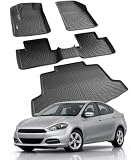
- [CUSTOM FIT] These floor mats and trunk liners are custom-designed to Compatible with Dodge Dart 2013-2016. Using cutting-edge 3D laser scanning technology, we precisely capture your vehicle’s original design to ensure a perfect, full-coverage fit. Special attention is given to critical areas like the throttle and brake, ensuring there’s no interference with your driving experience
- [SAFE & DURABLE] Built from premium TPE material, these mats are engineered for superior durability and wear resistance. TPE is flexible, crack-resistant, and performs well in both extreme heat and cold. This long-lasting material ensures your vehicle’s floor remains protected for years, creating a safer, more comfortable driving environment for you and your family
- [ALL-WEATHER PROTECTION] Designed to withstand all types of weather, these mats feature raised edges and built-in channels that effectively trap dirt, mud, snow, and spills. The anti-slip buckle system ensures they stay securely in place, offering a seamless fit that aligns perfectly with the original design of your vehicle
- [EASY INSTALLATION & CLEANING] Featuring a professional-grade grooved texture, these mats prevent slipping while effectively capturing dirt and moisture. When it’s time to clean, simply remove the mats, rinse them with soap and water, and wipe them dry. It’s quick, easy, and hassle-free
- [3D DESIGN FOR A PERFECT FIT] Unlike standard 2D universal mats, these 3D custom-fit mats are designed with raised edges for added protection and a precise, tailored fit that perfectly conforms to your vehicle’s floor
9. The Public Reveal, Dealer Training Materials, and Media Leaks That Fueled the Myth
By the time the Dart R/T quietly stalled inside Auburn Hills, the myth had already escaped into the wild. What followed was a perfect storm of half-truths, internal artifacts, and misinterpreted intent that made the R/T feel inevitable, even after it was dead. To the public, it didn’t look like a canceled idea. It looked like Dodge losing its nerve.
The Auto Show Problem: Concept Language Without a Concept Car
Dodge never rolled a full Dart R/T concept onto an auto show turntable, but it didn’t need to. Early press briefings used language like “performance-oriented trims,” “future expansion,” and “chassis-ready architecture,” all of which enthusiasts translated as R/T is coming. That phrasing was deliberate, meant to keep the Dart relevant in comparison tests against the Civic Si and Focus ST.
What most people missed was that Dodge was talking about capability, not commitment. The platform could accept stiffer dampers, bigger brakes, and revised steering maps. That does not mean the business case for a full R/T had cleared finance, manufacturing, and emissions.
Dealer Training Slides That Were Never Meant to Leak
The single biggest accelerant was internal dealer training material from 2012–2013. Slides circulated showing trim walk structures, hypothetical R/T positioning, and competitive comparisons that placed a Dart R/T against the GTI and Si. These decks were designed to educate sales staff on where the Dart could go, not what was guaranteed to ship.
Once those slides hit forums, nuance disappeared. A bullet point labeled “R/T – Performance Chassis” became proof of production intent. In reality, it was contingency planning, the same kind OEMs do for dozens of trims that never leave PowerPoint.
Engineering Mules and Test Cars Spotted in the Wild
Spy shots didn’t help. Dart mules running upgraded brakes, different wheels, and aggressive alignment settings were seen around Michigan and Arizona. To enthusiasts, that was an R/T in disguise. Internally, it was durability testing for parts already shared across Fiat and Alfa programs.
FCA engineers routinely over-test hardware combinations that never reach consumers. A Dart wearing larger brakes could just as easily be validating thermal margins for global suppliers as previewing a showroom model. Context vanished once the photos hit the internet.
The R/T Badge as a Placeholder, Not a Promise
Perhaps the most misunderstood element was the badge itself. Inside Dodge, R/T wasn’t always a finished product; it was sometimes a working label for a performance intent package. It allowed planners, engineers, and marketers to speak a common language while evaluating cost, weight, and regulatory impact.
The Tool Desk
Outbyte PC Repair FREEClear out junk files and repair common Windows errorsFree Scan →Outbyte Driver Updater FREEScan for outdated or missing drivers - takes under a minuteDriver Scan →Once that internal shorthand escaped into public view, it took on a life of its own. Fans didn’t imagine a mild, European-flavored sport compact. They imagined a small Charger, turbo torque, loud exhaust, and attitude. That car never existed, but the paper trail made it feel real.
How Media Echo Chambers Locked the Story in Place
Automotive media, especially in the early 2010s, fed on confirmation loops. One outlet cited another, forum speculation became “sources,” and suddenly the Dart R/T was always described as delayed, never canceled. Every refresh cycle reignited the rumor, even as Dodge quietly reduced Dart investment overall.
By the time the Dart was discontinued, the R/T had become automotive folklore. Not because Dodge lied, but because internal planning artifacts were mistaken for broken promises. The myth survived because it felt plausible, and plausibility is often stronger than truth in enthusiast culture.
10. What a Real Dodge Dart R/T Would Have Looked Like — And Why It Still Matters Today
By the time the myth was fully formed, the Dart R/T had become less about what Dodge built and more about what enthusiasts expected. That gap between expectation and reality is exactly where this story ends. To understand why the R/T still matters, you have to picture the car Dodge could have built, not the one rumor mills promised.
Recommended Free Tools
The Most Likely Mechanical Formula
A production Dart R/T was never going to be a mini Hellcat. The most realistic powertrain would have been a tuned version of the 2.4-liter Tigershark, likely pushing 200 to 210 HP with a broader torque curve and revised intake and exhaust tuning.
A turbocharged option, possibly related to the 1.4T MultiAir, was studied but would have struggled with cost, emissions, and long-term durability targets. FCA was already wrestling with calibration complexity across global markets, and adding another boosted variant made little financial sense.
Chassis Upgrades You Never Saw on Dealer Lots
Where a real R/T would have shined was underneath. Engineers evaluated stiffer spring rates, revised damper valving, thicker anti-roll bars, and a more aggressive front knuckle geometry to reduce torque steer and improve turn-in.
Larger brakes were easy because they already existed in the corporate parts bin. The challenge wasn’t engineering them; it was justifying the added cost and weight on a platform already fighting to stay competitive against lighter rivals.
Free tools Windows power users keep installed
One-click scans. No signup required.
Design Intent: Subtle Muscle, Not Boy-Racer
Contrary to fan renderings, a real Dart R/T would have been restrained. Think functional aero tweaks, unique wheels, a slightly lowered stance, and minimal badging rather than wings and vents.
Inside, expect bolstered seats, a thicker steering wheel, and dedicated gauge screens rather than a full interior overhaul. Dodge knew the Dart buyer was older and more practical than the typical hot hatch customer, and the design direction reflected that reality.
Why Corporate Reality Killed the Business Case
The Dart arrived just as FCA pivoted hard toward trucks, SUVs, and higher-margin performance cars. Every dollar spent turning the Dart into a true R/T was a dollar not spent on Chargers, Challengers, or the next Jeep.
Worse, the Dart’s Giorgio-adjacent aspirations never aligned with its Illinois-built cost structure. The platform could handle more performance, but the market wouldn’t pay enough for it, especially as compact sedan sales collapsed mid-decade.
What’s actually slowing this PC down?
Pick the symptom - the matching free tool is one click away.
Why the Dart R/T Still Matters Today
The Dart R/T matters because it represents a moment when Dodge briefly tried to blend European chassis thinking with American performance branding. It was a strategic experiment, not a missed supercar, and understanding that helps separate genuine OEM intent from internet mythology.
For used-car shoppers and Mopar fans, the lesson is clear. Not every canceled badge is a betrayal, and not every prototype hints at a hidden monster. Sometimes, the most interesting cars are the ones that explain why manufacturers choose not to build them.
Final Verdict: A Ghost That Still Teaches
A real Dodge Dart R/T would have been quick, composed, and credible, but never outrageous. Its absence wasn’t cowardice; it was a rational response to timing, economics, and shifting consumer demand.
In that sense, the Dart R/T isn’t a failure. It’s a case study in modern automotive decision-making, and a reminder that performance legends aren’t always forged on the road. Some are born, debated, and quietly retired long before the first key is ever turned.
Quick wins for a faster PC:
Fix the driver behind crashes, sound loss and screen glitchesFind Drivers →Clear out junk files and repair common Windows errorsFree Scan →Scan for outdated or missing drivers - takes under a minuteDriver Scan →



