Recommended Free Tools
JDM means “Japan Domestic Market,” but the term is used in two related ways: strictly for vehicles built or specified for sale in Japan, and more loosely for imported Japan-market cars or export-market cars modified to resemble them. A Japanese brand or Japanese-built car is not automatically JDM; the useful question is which market specification it represents.
1. JDM describes a market before it describes a look
In its strict sense, JDM identifies a vehicle’s intended domestic market: Japan. Enthusiasts outside Japan also use the term for cars imported from that market and for export-market cars modified to emulate Japan-market specifications. Those meanings overlap in conversation, but they are not identical. The Toyota Automobile Museum’s “What’s JDM?” exhibition explains both usages.
2. A Japanese make does not automatically make a car JDM
A Toyota, Honda, or Nissan sold new in another country is an export-market car, even if it was assembled in Japan. Conversely, an imported example originally specified for sale in Japan can be called JDM. When comparing cars, check the original sales destination and market specification rather than relying on the badge, factory, or styling alone.
3. The 1980s and 1990s are a chapter, not the whole story
The Toyota Automobile Museum uses “Rad Era” for the 1980s–90s focus of its special exhibition, which ran from 3 October 2025 to 5 April 2026. That is the museum’s label for this period, not a universal name for all Japanese car history. Its displayed examples reach from the 1980s into 2000, making the period a useful snapshot of compact performance, distinctive design, and rapidly developing technology.
#1 Best Overall

- Plastic model kit-assembly required
- Glue and paint sold separately
- Manufacturer item #: 24258
4. The appeal was never just peak horsepower
High-performance engines and electronic controls matter, but they are only part of the story. The museum also highlights aerodynamics, visibility, safety, and what it calls “functional beauty.” These priorities varied by model; they should not be assumed to describe every Japanese car of the era equally.
5. Design is part of the engineering story
Simple, distinctive styling is one reason period cars remain recognizable, but design also shaped how they worked. The museum connects functional beauty with practical concerns such as aerodynamics and visibility. Looking at a car’s proportions, sightlines, and packaging alongside its powertrain gives a fuller sense of why enthusiasts value it than horsepower figures alone.
Rank #2

- Tamiya Nissan Skyline
- GT-R R34 V-Spec Model Set
- Scale 1:24
- Plastic model kit
6. Compact performance has its own lane
The museum groups five small, performance-oriented cars under the exhibition theme “Compact with High Performance”:
- Daihatsu Mira TR-XX
- Suzuki Cervo Mode
- Honda Beat
- Autozam AZ-1
- Suzuki Cappuccino
The exhibit’s grouping is a useful reminder that JDM interest is not limited to high-powered coupes and sedans. It does not, by itself, establish a particular tax class or technical category for each car.
Free tools Windows power users keep installed
One-click scans. No signup required.
Rank #3

- For ages 10 and up
- Ready to Assemble Precision Static Display Model Kit
- Accurately Reproduced Chassis Undersurface and suspension
- Completely Exterior and Cockpit Detailing
- Solid Synthentic Rubber Slick Racing Tires
7. The famous nameplates are only part of the period
The museum’s display also includes well-known performance cars such as the Nissan Skyline GT-R, Subaru Impreza WRX STi, and Mitsubishi Lancer Evolution VI Tommi Mäkinen Edition. But the same list ranges more widely: it includes the Daihatsu Charade De Tomaso, Toyota Sprinter Trueno, Mazda ɛ̃fini RX-7, Honda Integra Type-R, and Nissan PAO. That mix helps explain why JDM culture encompasses multiple styles and purposes rather than one standard recipe for a desirable car.
8. Overseas enthusiasm has several reported roots
In a 2024 World Forum for Motor Museums report, Derek E. Moore, Curator of Collections at Lane Motor Museum, summarized a survey sent to Japanese-car collectors across the United States. It received 53 responses. Respondents cited style and design, technical features, quality, pop-culture influence, and rarity as reasons for their interest. This is a small, specific collector survey—not a representative measure of all enthusiasts or a definitive ranking of what drives popularity.
Rank #4

- 1: 24 scale
- Glue and Paint sold separately
- Plastic Model Kit-Assembly Required
- TAM24123
9. The culture travelled through screens as well as shipping containers
In the same forum report, Chairman of the Executive Committee Naoaki Nunokaki asked, “How is Japanese car culture perceived around the world?” His opening greeting connected nostalgia to cars appearing in manga, anime, games, and movies. The report’s UK discussion names Fast & Furious and Gran Turismo; its U.S. survey summary names Fast and Furious and Need for Speed. These examples show how media helped make cars visible to overseas audiences, not that any one franchise created the culture.
Independent reader supportYour contribution helps us test, update, and keep practical guides available for everyone.10. The U.S. “25-year rule” is a limited federal exception
A 1997 NHTSA interpretation states that federal motor vehicle safety standards do not apply to vehicles at least 25 years old. The interpretation also describes legal conditions and case-specific treatment; it is not a blanket permission to import or drive any car. Safety-standard treatment is separate from emissions rules, customs requirements, state registration, and road-use requirements. For a specific vehicle, verify current federal and local requirements before arranging an import.
Best Value
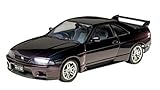
- Plastic Model Kit-Assembly Required
- Glue and Paint sold separately
- Manufacturer Item #: 24145
How to compare two cars described as JDM
Use concrete details rather than the label alone. A useful comparison checks:
- Whether each car is Japan-market specification or an export-market car modified to emulate it.
- Model year and trim, since specifications can differ within a model line.
- Engineering features, design, and packaging relevant to the particular cars.
- Rarity or availability, without treating a general impression as proof of production numbers.
- How enthusiasts encountered each model—through family, events, or media.
The museum’s exhibition and the forum report provide cultural context, but not a complete trim-by-trim specification database. Specific equipment and market differences need to be checked against the individual vehicle and its documentation.
Quick Recap
Product prices and availability are accurate as of the date/time indicated and are subject to change. Any price and availability information displayed on Amazon at the time of purchase will apply.




