Quick wins for a faster PC:
Repair Windows errors before they cause bigger problemsFix Now →Scan for outdated or missing drivers - takes under a minuteDriver Scan →Clear out junk files and repair common Windows errorsFree Scan →There is no authoritative all-time ranking of the most iconic sports cars. This is a curated selection, not a definitive top ten: each car earned its place through a distinctive design, documented competition history, influence on the category, or lasting recognition. The list spans very different ideas of a sports car, from a road-registered racer and a Le Mans prototype to a long-running everyday sports-car lineage and an accessible roadster.
How these cars were selected
“Iconic” is a matter of judgment, so the cars below are not ranked. The selection considers four things: memorable design, motorsport significance, influence on later cars or the sports-car category, and lasting public recognition. The evidence is stronger for some cars than others; where a claim comes from a manufacturer, it is attributed rather than presented as universal consensus.
These cars also serve different purposes. Some were road cars with racing credentials, some became enduring production lineages, and the Ford GT40 was built for competition. Their variety is part of what makes them useful examples of sports-car history.
Ten notable sports cars and what they represent
1. Ferrari 250 GTO (1962)
Presented in 1962, the Ferrari 250 GTO combined road registration with a competition purpose. Ferrari credits it with winning the International Championship for GT Manufacturers in 1962, 1963, and 1964. Those three consecutive titles make its racing record a central part of its reputation; its significance also lies in how it joined performance and design in a single road-registered car. Ferrari’s account is the marque’s own perspective, not an independent ranking of the world’s most iconic cars. Ferrari’s 250 GTO history
#1 Best Overall
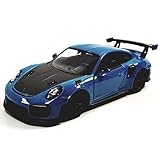
- Doors Open
- Pullback Action
- Die Cast Metal Body
- PULL BACK ACTION WITH FREE ROLLING WHEELS
2. Porsche 911 (introduced 1963)
The 911 represents continuity: rather than a single historic model, it is a sports-car lineage that began in the 901/911 era and has continued across generations. Porsche describes the car’s defining balance as sports-car performance with everyday driveability. The company reported that around 1.2 million 911 sports cars had been made as of May 2023; that is a dated production figure, not a current total. Porsche’s 911 history
3. Lamborghini Miura (public debut 1966)
The Miura’s public debut in 1966 marks a significant moment in the rise of the mid-engine supercar. Lamborghini describes it as a milestone in the automotive landscape. That framing helps explain its place in the story, but the available evidence here does not establish a settled “first supercar” verdict, so the Miura is best understood as an influential symbol of the layout’s emergence rather than as an uncontested first. Lamborghini’s Miura history
Rank #2
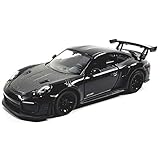
- PREMIUM QUALITY: Constructed with durable die-cast metal body, featuring clear windows, detailed interior, and precision-engineered components
- Pullback Action
- FUNCTIONAL FEATURES: Opening doors and pull-back motor action provide interactive play experience while maintaining collector-grade detail
- PERFECT DISPLAY SIZE: Compact 5-inch length makes it ideal for showcasing, with proportionate dimensions that capture the iconic sports car's essence
- COLLECTIBLE VALUE: Meticulously crafted replica perfect for die-cast car enthusiasts and Porsche fans, suitable for ages 3 and up
4. 1963 Chevrolet Corvette Sting Ray
The 1963 Sting Ray introduced the second-generation Corvette, known as the C2. General Motors’ heritage account presents it as a car ready to challenge the world’s best sports cars. It adds a distinctly American design and performance perspective to a list otherwise rich in European competition and road-car histories. Chevrolet’s C2 Corvette heritage description
5. Jaguar E-Type (introduced 1961)
The E-Type made an immediate impression when Jaguar introduced it at the Geneva Motor Show in 1961. Jaguar Heritage recounts Enzo Ferrari’s praise, describing the car as “the most beautiful car ever made”; that is Jaguar’s secondary retelling of Ferrari’s remark, not a documented universal judgment. A separate measure of its design recognition comes from the Museum of Modern Art, which identifies the E-Type as only the third automobile to enter its design collection. Jaguar Heritage’s E-Type history · MoMA’s E-Type collection record
Outdated Drivers Are Slowing You Down
One free scan finds every outdated or missing driver and matches the right update for your exact hardware.Free scan · exact hardware matchWindows Errors? Fix Them Before They Spread
Repair common Windows errors and clear accumulated junk for a smoother, more stable PC - no reinstall needed.Free scan · no reinstallRank #3
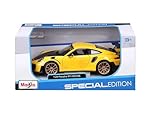
- Die-cast metal body with plastic parts
- Opening doors and engine compartment
- Detailed chassis
- Package Dimensions: 10.6 L x 23.5 H x 11.5 W (centimeters)
6. Ford GT40
The GT40 belongs on this list as a competition icon, not as a stand-in for later road-going Ford GT generations. Ford’s development and competition histories document the car’s campaign against Ferrari at Le Mans. The 1966 race produced Ford’s celebrated 1-2-3 finish, also recorded by Shelby American. The result gives the GT40 a different kind of significance from a road car that later gained racing credentials: competition was its defining purpose. Ford’s GT40 history · Shelby American’s racing history
7. Shelby Cobra
The Cobra represents Carroll Shelby’s sports-car competition and the broader Ford racing program. Shelby American’s history documents the “Cobra years” and the marque’s role in that period. It supports the Cobra’s place in American sports-car and racing history, though it does not provide model-by-model production totals or a complete race record. Shelby American’s history
Rank #4

- Doors Open
- Pullback Action
- Die Cast Metal Body
- Pull Back Action
8. Mazda MX-5 Miata
The MX-5 brings the lightweight roadster tradition into a selection otherwise weighted toward rare, powerful, or competition-focused cars. Mazda’s feature reports the car at number nine in a cited top-ten sports-car ranking. That is one ranking as cited by Mazda, not proof of a universal consensus. Its place here reflects the contrast it offers: a sports-car idea centered on accessible open-top driving rather than elite performance or endurance racing. Mazda’s MX-5 feature
9. A second place for a less-supported candidate?
A credible tenth-place choice requires evidence comparable to the other entries. The documented examples here establish eight strong candidates, but they do not provide a sufficiently sourced case for two more specific cars. Rather than add names on reputation alone or present this as a definitive top ten, this selection leaves that gap explicit. Other cars may have equally strong claims, but choosing them fairly requires comparable historical or museum documentation.
Do these 3 things before closing this tab:
1Repair Windows errors before they cause bigger problems2Fix the driver behind crashes, sound loss and screen glitches3Clear out junk files and repair common Windows errorsBest Value

- [Product Specification] Dimension: L6.0" x W2.4" x H1.6"; Weight: 340g; Color: cement gray.
- [Material] Die-cast model car, mainly made of zinc alloy metal with plastic parts, rubber tires.
- [Function] 1. Pull back function; 2. Press the car or open front door to activate sound & light; 3.Front doors, hood, trunk can be opened.
- [Best gifts toys] This pull back car is detailed interior and outside, suitable for playing. Also great for decoration and collection. Christmas Gifts Ideas: Great toy car for boys men kids children son dad brother teens boy friend. Great stocking stuffers.
- [Gifts for Men] This diecast model car is a fine choice of gift for men, boyfriend, dad and husband, especially when they own a real Civic Type R in life.
Why these cars are difficult to rank against one another
- Road car or racer: The 250 GTO was road-registered and won GT titles; the GT40 was a purpose-built endurance competitor. Their achievements answer different questions about sports-car history.
- One model or a continuing lineage: The Miura, E-Type, and Sting Ray are tied to particular models or generations, while the 911’s significance includes a continuing production lineage.
- Elite performance or accessible experience: The Ferrari and Lamborghini represent high-performance, high-status traditions; the MX-5 represents the lightweight roadster idea.
- Different kinds of recognition: Race results, an enduring model name, a manufacturer’s historical account, and a museum collection record are meaningful but not interchangeable measures.
That is why “most iconic” works better as a conversation than as a strict scorecard. The eight documented cars above show distinct ways of shaping the sports-car category, without implying that one universal ranking can settle their relative importance.
Quick Recap
Product prices and availability are accurate as of the date/time indicated and are subject to change. Any price and availability information displayed on Amazon at the time of purchase will apply.




