The Honda CB1000 Hornet SP is the best all-around choice for most experienced street riders who want liter-bike acceleration without a race-replica riding position. The Suzuki GSX-S1000 is the strongest value-oriented alternative, while the Kawasaki Ninja 1100SX ABS and Suzuki GSX-S1000GT+ make more sense for riders who expect to commute or travel. If you specifically want a traditional superbike, the Honda CBR1000RR is the least extreme choice in this group.
That recommendation needs an important qualification: none of these motorcycles is a beginner bike. A lower seat, adjustable riding mode, or sophisticated traction-control system can make a powerful motorcycle more manageable, but it cannot remove the consequences of an inexperienced throttle hand or a poor decision at speed.
As an Amazon Associate I earn from qualifying purchases.
What makes a liter bike easy to own and ride?
For this guide, liter bike is used broadly for street-performance motorcycles around 1,000cc. That includes a few current machines between 1,043cc and 1,160cc that compete in the same real-world category as 999cc and 1,000cc motorcycles.
“Easy” does not mean slow, inexpensive, risk-free, or beginner-friendly. It means comparatively approachable in the ways that matter during normal ownership:
#1 Best Overall

- FMVSS-218 & DOT Certified – Ensuring Top-Tier Safety with Rigorous Quality Control on Every Helmet Batch.
- Available in S, M, L, XL – Fits Head Circumference 21.3" - 24" (54-61 cm), Ensuring Comfort and a Secure Fit.
- Durable Construction & Comfort – Reinforced ABS Shell, Adjustable Chin Strap, Removable Liner for Easy Cleaning.
- Aerodynamic Shape – Reduces Wind Drag and Noise, Adjustable Sun Visor for Superior Sun Protection and Visibility in Any Condition.
- Versatile Use – Ideal for Adults & Teens in Motorcycle, Biking, ATV, Karting, Skiing & More. Perfect Gift for Family & Friends.
- An upright or moderately relaxed riding position
- A manageable seat height and reasonable reach to the bars
- Predictable throttle response, useful ride modes, and traction control
- Low-speed clutch and throttle assistance
- Comfort and wind protection for everyday riding
- Useful fuel capacity, cruise control, luggage provision, or touring equipment
- Dealer and parts support that suit the intended use
The specifications below are manufacturer-listed figures from U.S.-market model information. Curb weight, wet weight, and road-ready weight are not measured in exactly the same way, so the numbers should be used as orientation rather than as a laboratory ranking. Model years, equipment, colors, prices, and dealer inventory can change; verify the exact motorcycle at the time of purchase.
At a glance: the 10 easiest liter-class motorcycles
| Rank | Motorcycle | Seat height | Listed weight | Best reason to consider it |
|---|---|---|---|---|
| 1 | Honda CB1000 Hornet SP | 31.9 in. | 465 lb curb | Balanced naked-bike ergonomics and street-focused four-cylinder performance |
| 2 | Suzuki GSX-S1000 | 31.9 in. | 472 lb curb | Broad torque with three drive modes, traction control, and low-rpm assistance |
| 3 | Kawasaki Ninja 1100SX ABS | 32.3 in. | 513.8 lb curb | Fairing, cruise control, electronics, and sport-touring practicality |
| 4 | Suzuki GSX-S1000GT+ | 31.9 in. | 498 lb before side cases | Wind protection and touring equipment without abandoning liter-class performance |
| 5 | Yamaha MT-10 | 32.9 in. | 467 lb wet | Upright, everyday-friendly alternative to a fully faired superbike |
| 6 | Triumph Speed Triple 1200 RS | 32.7 in. | About 437 lb wet | Light, premium naked-bike performance with advanced electronics |
| 7 | Honda CBR1000RR | 32.8 in. | 432 lb curb | The most street-manageable traditional superbike in this group |
| 8 | Kawasaki Ninja ZX-10R ABS | 32.5 in. | 463.1 lb curb | Extensive electronic adjustment, although its chassis remains track-biased |
| 9 | Suzuki GSX-R1000R | About 32.5 in. | 445 lb curb | Broad power delivery and adjustable controls for a race-replica motorcycle |
| 10 | BMW S 1000 RR | 32.7 in. standard | 437 lb road-ready | Highly adaptable electronics, but extreme output and premium ownership complexity |
1. Honda CB1000 Hornet SP: easiest all-around naked liter bike
The Honda CB1000 Hornet SP is the strongest overall answer to this question because it avoids the two biggest barriers to everyday liter-bike ownership: an aggressive supersport posture and a powerband designed primarily around track riding.
Honda’s U.S. model has a 31.9-inch seat, a 465-pound curb weight, ABS, a five-inch TFT display, and a quickshifter. Its open handlebar and upright layout are substantially more practical for commuting, urban riding, and ordinary weekend use than clip-ons and a high rear-set riding position. Honda also positions the motorcycle as a more open alternative to hardcore sportbikes.
Free tools Windows power users keep installed
One-click scans. No signup required.
The 1,000cc inline-four is tuned with street midrange in mind rather than being presented only as a peak-rpm weapon. That does not make it mild; it makes the available performance more useful at normal road speeds. The result is a motorcycle that can feel approachable during routine riding while still demanding mature judgment.
Best for: An experienced rider who wants one motorcycle for commuting, back-road riding, and occasional spirited use.
Main trade-off: The upright layout makes it easier to live with, not safer for an inexperienced rider. Wind protection is also more limited than on the sport-tourers below.
2. Suzuki GSX-S1000: best value-oriented naked choice
The Suzuki GSX-S1000 earns second place because its controls directly address the awkward low-speed behavior that can make a powerful motorcycle tiring in daily use.
Do these 3 things before closing this tab:
1Clear out junk files and repair common Windows errors2Scan for outdated or missing drivers - takes under a minute3Repair Windows errors before they cause bigger problemsIts 999cc engine is designed around broad torque, and the bike has three drive modes, five-mode traction control, Easy Start, Low RPM Assist, ABS, and a bidirectional quickshifter. Low RPM Assist is particularly relevant when pulling away, maneuvering in traffic, or recovering from a slow corner because it helps reduce the chance of an abrupt stall or an untidy clutch-throttle moment.
The 31.9-inch seat is among the lowest in this group, although the 472-pound curb weight is not unusually light. The riding position is relaxed compared with a GSX-R or other race-derived superbike, and the electronics let a rider select a gentler response while learning the motorcycle’s behavior.
Best for: Riders who want an uncomplicated naked liter bike with a useful electronic safety net and strong everyday torque.
Main trade-off: It provides less built-in wind and luggage protection than a dedicated sport-tourer. “Value-oriented” here describes the bike’s feature-and-use balance, not a claim about current transaction price or long-term ownership cost.
Quick wins for a faster PC:
Fix the driver behind crashes, sound loss and screen glitchesFind Drivers →Repair Windows errors before they cause bigger problemsFix Now →Scan for outdated or missing drivers - takes under a minuteDriver Scan →3. Kawasaki Ninja 1100SX ABS: best practical sport-tourer
The Kawasaki Ninja 1100SX ABS is the better answer than a naked bike for riders who spend real time commuting, carrying gear, or traveling. Its 1,099cc engine places it slightly above the traditional liter-bike displacement, but it competes directly in the same street-performance class.
The 32.3-inch seat is still reasonable, but the 513.8-pound curb weight is the highest listed here. That weight is the main downside during parking-lot maneuvers, tight U-turns, and backing the motorcycle out of a space. Once moving, the fairing, sport-touring chassis, cruise control, quickshifter, and IMU-based electronic systems work in its favor.
The Ninja 1100SX is not a detuned beginner bike. It is a fast motorcycle designed to cover distance with more comfort and stability than a supersport. The fairing reduces the physical burden of highway riding, while cruise control is useful when covering long, straight stretches. Its electronic package adds cornering-aware assistance without requiring the rider to adopt track-bike ergonomics.
Best for: A rider who wants one fast motorcycle for commuting, weekend trips, and long-distance sport touring.
Main trade-off: Its weight is noticeable at walking pace, especially when loaded. A careful test of low-speed steering effort is essential before buying.
4. Suzuki GSX-S1000GT+: best touring-oriented four-cylinder
The Suzuki GSX-S1000GT+ takes the GSX-S1000’s broad four-cylinder performance and gives it a stronger travel focus. It has a 31.9-inch seat and a listed 498-pound curb weight before side cases, along with a five-gallon tank and touring-oriented equipment.
That combination makes the GT+ particularly attractive to riders who want liter-class acceleration but do not want to add wind protection and luggage one accessory at a time. Heated grips and luggage-oriented accessories are available, though the exact equipment and case package should be confirmed for the specific market and model year.
Rank #2

- [Gifts for Night Riders] Show you care with 3M reflective stickers that keep loved ones safe and stylish. Perfect for cyclists, motorcyclists, and outdoor adventurers, these waterproof and hi-vis stickers are the ultimate stocking stuffer for nighttime safety!
- [Seamless Daytime Aesthetics] - Maintain your gear's sleek look with motorcycle helmet stickers that blend seamlessly during the day, offering a discreet yet stylish appearance. Get ready to bask in a flurry of compliments while enjoying heightened safety levels.
- [Easy & Secure Installation] - Forget the hassle of peeling stickers! Our reflective helmet tape, backed by a tutorial video, ensures a smooth and lasting application. Elevate your safety and style quotient effortlessly.
- [9-Year Durable & Waterproof] - Invest in the unmatched durability of Elos stickers, designed to resist cracking in extreme temperatures and waterproof for 9 long years. Register for our manufacturer warranty for an added peace of mind.
- [Exclusive 1-Year Elos Warranty] Our quality commitment is backed by Elos warranty. Register your black reflective tape for skateboard to ensure peace of mind with your purchase.
The GT+ is more physically substantial than the naked GSX-S1000, but that extra size pays dividends on the highway. The fairing and travel equipment can make daily distance less tiring, while the low seat remains friendly for riders who are concerned about reach.
The Tool Desk
Outbyte PC Repair FREERepair Windows errors before they cause bigger problemsFix Now →Outbyte Driver Updater FREEFix the driver behind crashes, sound loss and screen glitchesFind Drivers →Best for: Commuters and travelers who want a four-cylinder motorcycle with sport-bike performance and practical touring capability.
Main trade-off: Added fairing, equipment, and luggage capacity mean more mass to manage when stationary. Do not assume that a low seat automatically means an easy motorcycle to reverse or push.
5. Yamaha MT-10: easiest Yamaha liter-class street bike
The Yamaha MT-10 is Yamaha’s most usable liter-class street choice in this comparison because its naked-bike layout is friendlier around town than a fully faired, clip-on-equipped superbike.
Yamaha lists a 998cc inline-four, a 32.9-inch seat, a 467-pound wet weight, and a 4.5-gallon tank. ABS and an assist-and-slipper clutch are included among the features that support ordinary street riding. The upright bar position improves leverage at low speed and avoids the wrist and neck loading associated with a traditional supersport riding position.
The MT-10 is still an exceptionally powerful motorcycle. Its upright stance can make the speed feel deceptively accessible, and its performance is not something a new rider should casually “grow into.” It ranks behind the Honda and Suzuki nakeds primarily because its seat is taller and its performance character remains very serious.
Best for: Experienced riders who want an aggressive naked bike with Yamaha character and a practical street posture.
Main trade-off: The 32.9-inch seat may be a meaningful reach difference for shorter riders, and the naked design gives up the touring wind protection available from the Ninja and GT+.
6. Triumph Speed Triple 1200 RS: premium upright performance
The Triumph Speed Triple 1200 RS is one of the physically lightest motorcycles here despite its 1,160cc displacement. It weighs about 437 pounds wet, has a 32.7-inch seat, and combines a powerful triple-cylinder engine with a compact, upright naked-bike package.
Its equipment is unusually comprehensive for a street-focused performance bike: cruise control, five riding modes, cornering ABS and traction control, and a quickshifter. Triumph also states a 10,000-mile or 12-month service interval. That interval is a manufacturer specification, not independent evidence of lower maintenance cost or greater long-term reliability.
The Speed Triple’s low listed weight helps it feel less intimidating when changing direction or moving through a tight road. Its riding position is more approachable than a superbike’s, but the engine and premium suspension are capable of far more than an inexperienced rider should attempt.
Best for: Riders who want a premium, light, upright motorcycle with sophisticated chassis and electronic equipment.
Main trade-off: Purchase price, repair complexity, parts availability, and dealer capability can differ from those of the Japanese alternatives. Check local support before committing.
Windows Errors? Fix Them Before They Spread
Repair common Windows errors and clear accumulated junk for a smoother, more stable PC - no reinstall needed.Free scan · no reinstallOutdated Drivers Are Slowing You Down
One free scan finds every outdated or missing driver and matches the right update for your exact hardware.Free scan · exact hardware match7. Honda CBR1000RR: the most street-manageable traditional superbike
The Honda CBR1000RR is the least extreme recommendation for someone who specifically wants a traditional superbike. Its 432-pound curb weight is the lightest listed in this comparison, and its 32.8-inch seat is moderate for the category. The researched U.S. version is equipped with ABS.
Those numbers make the CBR1000RR easier to move and position than some heavier sport-tourers. Its 999cc inline-four also gives it the familiar liter-superbike formula that many riders are looking for. However, the relatively low weight is not the same thing as low risk or low effort. The motorcycle’s clip-ons, supersport bodywork, and forward-biased ergonomics still make it less comfortable and less forgiving for normal street use than the naked bikes.
Compared with the motorcycles ranked above it, the CBR demands more planning from the rider. The body position can be tiring in traffic, the fairing can make the motorcycle feel specialized, and the available performance is easy to misuse.
Best for: An experienced rider who prioritizes a genuine superbike feel but wants the least physically imposing option among the traditional sportbikes listed here.
What’s actually slowing this PC down?
Pick the symptom - the matching free tool is one click away.
Main trade-off: It is easier to manage physically than some alternatives, but it is not an easy commuter or beginner motorcycle.
Rank #3

- 【All-in-One Storage】: The Forjarn motorcycle helmet rack features a 2-tier storage shelf design, the sturdy lower rods and adjustable hooks are perfect for hanging jackets, gloves, and keys. The hat holder features circular wooden boards designed to store multiple types of helmets, including motorcycle helmets, baseball helmets, football helmets, ski helmets, bicycle helmets, safety helmets and headgear such as cowboy hats and baseball caps
- 【Sturdy and Durable】: The frame and clothing rod of motorcycle helmet holder is made from sturdy metal with a glossy finish for good water and rust resistance. The dividers are made of high quality MDF, which ensures a remarkable weight capacity of 80 lbs while adding aesthetic appeal. The helmet stand has high overall strength and stability
- 【Wide Application】: More than just a Helmet stand! The spacious top shelf ( 10.24"Wx16.35"L) is ideal for shoes. The lower layer shelf ( 9.45"Wx16.35"L) is displaying collectibles like figures. Motorcycle gear rack is ideal for motorcycle riders, police officers, football players, cyclists, motorcycle dealers, bicycle dealers, jacket display enthusiasts and anyone who needs a practical storage solution for their gear. Perfect for families with multiple riders, and motorcycle helmet accessories for men
- 【Maximize Your Wall Space】: Free up floor space and eliminate clutter! Our compact, wall-mounted design is a game-changer for any room. Perfect for garages, entryways, bedrooms, or storage rooms, helmet wall mount keeps your frequently used gear neatly organized and easily accessible, transforming your chaotic space into a tidy and efficient area
- 【Easy Installation】: Get organized in no time! We include all necessary hardware (2 types of expansion screws) suitable for both solid concrete walls and hollow drywalls. No extra tools are needed. Simply follow the instructions, and you can have this sleek storage solution mounted securely on your wall in just a few minutes
8. Kawasaki Ninja ZX-10R: electronics-rich but still track-biased
The 2026 Kawasaki Ninja ZX-10R ABS has one of the most complete electronic packages in the group. Kawasaki lists power modes, traction control, cornering-management functions, engine-brake control, a quickshifter, cruise control, and IMU-enhanced chassis awareness. Its listed ABS curb weight is 463.1 pounds and its seat height is 32.5 inches.
These systems can make the motorcycle more adaptable to changing conditions and rider preferences. They also help an experienced owner manage the transition between ordinary road riding and occasional track use. But electronics do not change the underlying character of the machine: this is a roughly 190-horsepower-class supersport with an aggressive chassis and a race-derived posture.
The ZX-10R ranks below the more relaxed motorcycles because the rider’s body position, steering response, and engine performance impose a higher level of commitment. It is “easy” only in the narrow sense that its electronics provide extensive adjustment and intervention.
Recommended Free Tools
Best for: Experienced sportbike riders who want a road-legal, track-biased motorcycle with extensive electronic control.
Main trade-off: The same performance that makes the ZX-10R exciting leaves less room for mistakes. Do not select it simply because traction control and riding modes are listed on the equipment sheet.
9. Suzuki GSX-R1000R: comparatively friendly superbike ergonomics
The 2025 Suzuki GSX-R1000R is a more usable race-replica than its appearance suggests. Suzuki describes its power delivery as smooth across a broad rpm range, and the motorcycle has traction control, launch control, bidirectional quickshifting, and adjustable controls. Its seat is approximately 32.5 inches, with a listed 445-pound curb weight.
The adjustable controls give riders more opportunity to find a workable relationship between the bars, seat, and footpegs than a fixed setup would. Broad power delivery can also be less demanding than an engine that only feels useful at the top of the tachometer.
The Tool Desk
Outbyte Driver Updater FREEFix the driver behind crashes, sound loss and screen glitchesFind Drivers →Outbyte PC Repair FREEClear out junk files and repair common Windows errorsFree Scan →Nevertheless, the GSX-R1000R remains a supersport. Clip-ons, a full fairing, a forward riding position, and track-oriented systems make it more demanding in traffic and on ordinary roads than the GSX-S1000. Launch control is a track-oriented feature, not a reason for a novice to buy this motorcycle.
Best for: A skilled rider who wants a race-replica motorcycle with relatively accommodating ergonomics and a broad powerband.
Main trade-off: Street comfort, visibility at low speed, insurance, tire usage, and maintenance demands can all be less favorable than with a naked or sport-touring model. Exact costs vary by rider, location, and use.
10. BMW S 1000 RR: easiest to manage electronically, not physically or financially
The BMW S 1000 RR finishes the list because it is exceptionally adaptable electronically but not especially forgiving as a physical or financial ownership proposition.
What’s actually slowing this PC down?
Pick the symptom - the matching free tool is one click away.
BMW lists 205 horsepower, a 32.7-inch standard seat, a 437-pound road-ready weight, and a 6.5-inch TFT. Standard equipment includes riding modes, Dynamic Traction Control, ABS Pro, hill-start control, and Shift Assistant Pro. Those systems can tailor the motorcycle’s response and help an experienced rider use its performance more deliberately.
Yet 205 horsepower places the BMW in a different level of performance seriousness from the street-oriented recommendations at the top. It also uses premium components and an optional-package structure that can make the exact equipment, purchase price, and repair exposure vary considerably between motorcycles.
Best for: An experienced rider who values superbike performance, detailed electronic adjustment, and premium equipment.
Main trade-off: Its electronics make it sophisticated, not beginner-friendly. The forward riding position, high output, premium parts, and package-dependent configuration all deserve careful consideration.
Which liter bike should you choose?
Choose the Honda CB1000 Hornet SP if you want the best overall balance
It has one of the lowest seats here, a manageable naked-bike posture, moderate-for-the-class weight, a street-oriented inline-four, ABS, and useful display and quickshifter equipment. It is the clearest choice when commuting and everyday riding matter as much as acceleration.
Choose the Suzuki GSX-S1000 if low-speed control and value matter most
Low RPM Assist, Easy Start, three drive modes, and five-mode traction control directly support routine riding. It is a particularly sensible choice for someone who wants a powerful four-cylinder motorcycle without committing to a full touring chassis or supersport posture.
Choose the Ninja 1100SX ABS or GSX-S1000GT+ for distance riding
The Ninja 1100SX is the stronger choice when cruise control, fairing protection, and sport-touring design are priorities. The GSX-S1000GT+ is attractive when a 31.9-inch seat, a five-gallon tank, four-cylinder performance, and touring equipment are the desired combination. Compare the actual luggage package, passenger needs, and dealer-installed accessories before choosing between them.
Rank #4
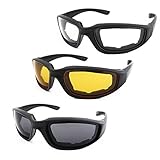
- Comfort to wear: Black frame with soft silicone sponge padded, block off wind and dust
- High Quality Lens: UV400 Protection impact resistant polycarbonate lens, anti-wind, anti-glare, dustproof
- Mainly for outdoors activities, such as Motorcycling, motor bicycling, Climbing, Riding and Motocross
- Light weight proves all day comfortable wearing
- Brand New, Waterproof and High Quality Made
Choose the MT-10 or Speed Triple for a premium-feeling naked bike
The MT-10 offers an upright Yamaha street-bike alternative with a 998cc inline-four. The Speed Triple is lighter on paper and adds premium suspension and electronics. The Triumph deserves a closer check of local service support and ownership costs, while the Yamaha’s taller 32.9-inch seat should be tested rather than assumed acceptable.
Choose the CBR1000RR if you specifically want a superbike
Among the traditional superbikes, the CBR1000RR is the least extreme recommendation here because its 432-pound curb weight and moderate seat height make it comparatively approachable. It is still less comfortable and less forgiving than the naked and sport-touring motorcycles.
Choose the ZX-10R, GSX-R1000R, or S 1000 RR for a track-derived experience
These motorcycles make sense when the buyer actively wants supersport ergonomics, extreme performance, and a higher riding commitment. The ZX-10R and BMW offer extensive electronic assistance, while the GSX-R1000R combines broad power delivery with adjustable controls. None should be mistaken for an easy first motorcycle.
What to check before buying
1. Fit the motorcycle, not just the seat height
Seat height is only the beginning. Compare your inseam reach, seat width, handlebar distance, footpeg position, steering effort, and the ability to place one foot securely while stopped. A 31.9-inch seat can feel less accessible than expected if the seat is wide or the motorcycle is difficult to balance at walking pace.
2. Test the low-speed behavior
With the seller’s permission and in a controlled area, practice clutch-friction-zone starts, smooth stops, slow figure eights, a tight U-turn, and backing the motorcycle into a space. Pay attention to throttle sensitivity, clutch engagement, steering lock, brake feel, and how confidently you can catch the motorcycle with your legs.
Do these 3 things before closing this tab:
1Scan for outdated or missing drivers - takes under a minute2Repair Windows errors before they cause bigger problems3Fix the driver behind crashes, sound loss and screen glitches3. Compare the electronic settings
Ask how the ride modes, traction-control levels, engine-brake settings, and quickshifter work before riding away. A system is useful only if you understand what it changes and how to adjust it. Begin with the least aggressive road setting recommended by the owner’s manual, not with the most powerful mode.
4. Consider heat, wind, passengers, and luggage
Naked bikes generally offer an easier upright posture but less wind protection. Sport-tourers add fairing coverage and luggage potential but weigh more. Supersports may have little passenger comfort and can be tiring in traffic. Sit on the motorcycle in the clothing and riding position you will actually use, and check whether your intended luggage, passenger, or commuting equipment is supported.
5. Get the ownership numbers before signing
Request an insurance quote using the exact model and trim. Compare tire prices and fitment, scheduled service requirements, registration, financing, accessory costs, and the capabilities of nearby dealers. The manufacturer service interval for one model is not proof that it will be cheaper to maintain than another, and this comparison does not establish independent reliability rankings, real-world fuel economy, or long-term maintenance costs.
6. Prepare for storage and travel
For seasonal storage or motorcycles that may sit between rides, a motorcycle battery charger can help maintain the battery, but match the charger’s voltage, connector, and battery-chemistry requirements and follow the motorcycle and charger instructions.
Quick wins for a faster PC:
Scan for outdated or missing drivers - takes under a minuteDriver Scan →Repair Windows errors before they cause bigger problemsFix Now →For a GT+ or Ninja 1100SX road trip, a motorcycle tire plug kit can be a useful contingency tool for a compatible tubeless tire, but it is not a substitute for an inflation source, proper training, or a professional inspection. Check the tire manufacturer’s repair guidance before relying on any roadside repair.
If you use phone navigation, a vibration-damped motorcycle phone mount may be worth considering, but confirm handlebar compatibility, use any required vibration isolation, and set navigation before moving. Do not handle the phone while riding.
Safety matters more than the ranking
Take a formal motorcycle training course before riding any of these machines, even if you already have some two-wheel experience. Use a properly certified helmet, motorcycle-specific jacket and pants or equivalent protective clothing, gloves, and over-the-ankle riding boots. Practice emergency braking and low-speed control on a less powerful motorcycle or in a training environment before exploring the performance available here.
Electronic aids can reduce the likelihood or severity of some mistakes, but they cannot overcome excessive speed, poor road conditions, inadequate tires, or a rider who is not looking through a corner. A lower seat is a fit advantage, not a safety classification.
Model-year and equipment caveat
This list combines researched U.S. model information from different model years, including the 2025 Suzuki GSX-R1000R and 2026 Kawasaki Ninja ZX-10R. The other motorcycles should also be checked against the exact current-year listing because equipment, availability, pricing, colors, accessories, and regional specifications can change. Manufacturer-listed specifications and warranty or service claims are not independent reliability testing.
Frequently Asked Questions
Are any of these liter bikes suitable for a beginner?
No. The Honda CB1000 Hornet SP and Suzuki GSX-S1000 are comparatively approachable, but both have enough acceleration to overwhelm an inexperienced rider. Formal training, protective equipment, and previous experience with motorcycle control are more important than choosing the lowest seat.
Which motorcycle on this list has the lowest seat?
The Honda CB1000 Hornet SP, Suzuki GSX-S1000, and Suzuki GSX-S1000GT+ are listed at 31.9 inches. The Ninja 1100SX is 32.3 inches, while the GSX-R1000R and ZX-10R are approximately 32.5 inches. Seat height alone does not determine how easy a motorcycle is to balance or move.
What is the best liter bike for long-distance riding?
The Kawasaki Ninja 1100SX ABS and Suzuki GSX-S1000GT+ are the strongest choices because their fairings, sport-touring designs, luggage potential, and touring equipment are aimed at distance riding. The Ninja emphasizes cruise control and sport-touring electronics, while the GT+ combines a 31.9-inch seat with a five-gallon tank and touring-oriented equipment.
What is the easiest superbike in this comparison?
The Honda CBR1000RR is the least extreme recommendation among the traditional superbikes because it has a relatively low 432-pound curb weight and a moderate 32.8-inch seat. Its clip-ons, supersport bodywork, and powerful 999cc engine still make it substantially more demanding than the naked and sport-touring motorcycles.
Do riding modes and traction control make a 1,000cc motorcycle safe for a new rider?
No. They can make throttle response and wheel-slip management more adaptable, but they do not eliminate excessive acceleration, poor judgment, bad road conditions, or the physical demands of a fast motorcycle. Electronics are a useful aid for a trained rider, not a replacement for training.
The Bottom Line
Bottom line: Start with the Honda CB1000 Hornet SP for the best all-around street balance, or choose the Suzuki GSX-S1000 for a similarly approachable naked-bike formula with especially useful low-speed aids. Select the Ninja 1100SX ABS or GSX-S1000GT+ when distance and luggage matter. The CBR1000RR, ZX-10R, GSX-R1000R, and BMW S 1000 RR are for experienced riders who specifically want superbike performance—not for someone looking for a forgiving first motorcycle.
Quick Recap
Product prices and availability are accurate as of the date/time indicated and are subject to change. Any price and availability information displayed on Amazon at the time of purchase will apply.




