In the early 1980s, American performance was on life support. Emissions regulations, fuel economy mandates, and corporate fear had reduced once-mighty V8 nameplates to shadows of themselves. Into that bleak landscape came the Fox-body Mustang GT 5.0, a car that didn’t just revive Ford performance—it reignited the entire domestic horsepower conversation.
This wasn’t nostalgia bait or retro styling doing the heavy lifting. The Fox Mustang was modern, light by Detroit standards, and brutally honest about what enthusiasts actually wanted: rear-wheel drive, a manual transmission, and a V8 that responded to modification like it was born for it. At a time when imported sport compacts were gaining credibility, the Mustang GT 5.0 reasserted that American performance still mattered.

The Return of the Real V8
The heart of the Fox-body revival was the 302 cubic-inch small-block, rebranded as the 5.0-liter H.O. to distance it from the anaemic smog-era V8s of the late 1970s. Early cars were modest at 157 horsepower, but by 1987 the fuel-injected 5.0 was delivering 225 hp and 300 lb-ft of torque—real numbers again, measured the honest way. More importantly, it delivered that torque low and hard, exactly how American street cars were supposed to.
Sequential electronic fuel injection transformed drivability and reliability. Cold starts, throttle response, and everyday usability were leagues ahead of the carbureted setups they replaced. This was a V8 you could live with daily and abuse on weekends, which made it irresistible to young buyers and seasoned gearheads alike.
#1 Best Overall

- Ford Mustang Muscle Car design. Boxy is foxy. Are you a American muscle or car enthusiast fan of the notchback Foxbody? This is the perfect shirt for local car meets, the racetrack, car club, or on the street.
- Make a great gift for a tuner, mechanic, drag racer, father, son, husband, brother. Check out 'Foxbody Hot Rod Car Enthusiast Tees Gifts' for more fox body shirts!
- Lightweight, Classic fit, Double-needle sleeve and bottom hem
Fox Platform: Cheap, Light, and Brilliantly Exploitable
The Fox platform was never designed as a performance chassis, yet that became its greatest strength. With a curb weight hovering around 3,100 pounds and a simple MacPherson strut front suspension, the Mustang GT was lighter and more responsive than most domestic rivals. The live rear axle was crude on paper, but durable, predictable, and perfectly suited to straight-line violence.
What truly mattered was how easily the platform could be improved. Suspension geometry, brakes, gears, and engine internals were all accessible and affordable. Ford inadvertently created the most modification-friendly performance car America had ever seen, and enthusiasts exploited that openness with relentless creativity.
The 5.0 as a Cultural Weapon
By the late 1980s, the Mustang GT 5.0 wasn’t just a car—it was a statement. It dominated street racing culture, drag strips, and magazine comparison tests, often embarrassing more expensive European machinery in real-world acceleration. The aftermarket exploded around it, turning the 5.0 into a tuning language spoken fluently across the country.
Its influence extended beyond Ford. General Motors was forced to respond with more serious Camaros and Firebirds, and Chrysler would later chase the same formula with its own V8 revivals. The Fox-body Mustang proved that affordable American performance could still thrive, setting the template for every modern muscle car revival that followed.
What’s actually slowing this PC down?
Pick the symptom - the matching free tool is one click away.
1986 Ford Taurus: The Aero Revolution That Rewrote Detroit Design Rules
If the Fox-body Mustang proved Ford still understood raw mechanical appeal, the Taurus proved the company also understood the future. Coming straight out of an era defined by boxy sheetmetal and conservative thinking, the 1986 Taurus landed like a UFO in American showrooms. It wasn’t just a new car—it was a complete rejection of how Detroit had designed family sedans for decades.
Where the Mustang leaned on tradition and tunability, the Taurus was about systems thinking, aerodynamics, and integration. It represented Ford betting the company on science, design, and consumer psychology at a moment when failure would have been catastrophic.
Cab-Forward Thinking Before It Had a Name
The Taurus was shaped by wind tunnels rather than rulers. Its rounded nose, flush glass, integrated bumpers, and smooth underbody delivered a drag coefficient as low as 0.32—staggeringly low for a mid-1980s American sedan. At a time when rivals still looked like brick-shaped carryovers from the 1970s, the Taurus looked fast standing still.
This wasn’t aesthetic indulgence; it was functional engineering. Lower aerodynamic drag improved fuel economy, reduced wind noise, and enhanced high-speed stability. Ford realized that efficiency and refinement could be engineered into the shape itself, not just buried in drivetrain specs.
Do these 3 things before closing this tab:
1Fix the driver behind crashes, sound loss and screen glitches2Clear out junk files and repair common Windows errors3Scan for outdated or missing drivers - takes under a minuteA Radical Interior Philosophy
Open the door and the revolution continued. The Taurus interior abandoned straight lines in favor of sweeping curves, placing controls where drivers’ hands naturally fell. The dashboard wrapped around the driver, improving ergonomics and visibility while subtly reinforcing a sense of modernity.
This human-centered design wasn’t accidental. Ford conducted extensive customer clinics and ergonomic studies, a sharp contrast to the cost-driven interiors dominating Detroit at the time. The result was a cabin that felt intuitive, airy, and years ahead of competitors that still prioritized parts-bin simplicity over user experience.
Engineering for the Real World, Not the Drag Strip
Under the skin, the Taurus was no performance hero, but it was brilliantly engineered for its mission. The front-wheel-drive DN5 platform prioritized interior space, predictable handling, and ride quality. MacPherson struts up front and a well-located rear suspension delivered stability and composure that made the Taurus easy to drive at the limit—important for its intended audience.
Power came from a range of inline-four and V6 engines, most notably the 3.0-liter Vulcan V6. It wasn’t glamorous, but it was durable, torquey, and efficient. The Taurus didn’t need burnouts to win—it needed to start every morning, cruise quietly at highway speed, and survive 200,000 miles, which many did.
Why the Taurus Changed Everything
The Taurus didn’t just sell well—it reshaped expectations. Buyers suddenly demanded aerodynamic styling, refined road manners, and thoughtful interiors from mainstream sedans. Competitors scrambled to respond, and within a few years, the entire industry pivoted toward smoother shapes and better packaging.
For Ford, the Taurus was proof that bold design and serious engineering could coexist with mass-market success. It validated risk-taking on a corporate scale and laid the philosophical groundwork for later vehicles that blended innovation with broad appeal. To enthusiasts today, the original Taurus stands as a reminder that revolution doesn’t always wear a spoiler—sometimes it arrives quietly, reshaping everything around it.
1985–1986 Ford Sierra RS Cosworth: Turbocharged Homologation Genius
If the Taurus proved Ford could engineer brilliance for the masses, the Sierra RS Cosworth showed what happened when Ford turned its full attention to winning. Where the Taurus was calm, rational, and user-focused, the RS Cosworth was aggressive, uncompromising, and purpose-built. It existed not to please focus groups, but to dominate touring car grids across Europe.
This was Ford swinging from human-centered design straight into motorsport obsession—and doing it with ruthless precision.
Quick wins for a faster PC:
Scan for outdated or missing drivers - takes under a minuteDriver Scan →Clear out junk files and repair common Windows errorsFree Scan →Built to Satisfy the Rulebook
The Sierra RS Cosworth was born from Group A homologation requirements, and everything about it served that mission. Ford needed 500 road cars to legalize its race version, and the production RS Cosworth was engineered as a thinly veiled competition machine. Unlike the mainstream Sierra, this was a rear-wheel-drive, wide-arched, aero-loaded weapon.
At its heart sat the legendary Cosworth-developed YB engine, a 2.0-liter inline-four with a DOHC 16-valve aluminum head and a Garrett T3 turbocharger. Output was officially rated at 204 HP and roughly 202 lb-ft of torque, staggering numbers for a mid-1980s four-cylinder road car. Power delivery was explosive, with pronounced turbo lag followed by a hard, relentless surge that defined its character.
Aerodynamics That Actually Worked
The towering rear wing wasn’t aesthetic excess—it was functional engineering. Wind tunnel testing revealed the standard Sierra suffered from high-speed rear-end lift, so Cosworth’s massive bi-plane spoiler was designed to generate real downforce. At speed, it transformed stability, making the RS Cosworth far more planted than its humble origins suggested.
The front end was equally purposeful, featuring a deeper bumper and revised airflow management. Together, the aero package reduced lift dramatically and gave the RS Cosworth a planted, high-speed confidence that touring car rivals struggled to match. This wasn’t styling inspired by racing—it was racing that dictated the styling.
Rank #2

- Genuine Ford Mustang T-shirts: keep it simple, subtle and classic! Designed to excellence, these men’s T shirts by JH Design features Ford Mustang embellishments on the front to portray your love for speed and race. Get in your Ford Mustang GT 5.0 and look good in this car t shirt.
- Versatile Basic Tee: basic crew neck design of the graphic T-shirt makes it extra versatile and a go-to option. Carefully designed for the perfect fit, casual T-shit is kept short sleeved and breathable making a top spot in your summer wardrobe
- Patter Choices: Men’s casual T-shirt is available in variety of vibrant colors from dynamic black to bright red and royal blue. Fashioned with different versions of Ford Mustang logos, comfortable T-shirts are fashion-forward and always on trend
- Durable Fabric: graphic tee is crafted with narrow stitching for a more delicate hem and cuff to make it durable and long wear apparel. A modern update to classic fit, this relaxed fit T-shirt says all about style and functionality
- Material Used: These Ford Mustang T-shirts are crafted from high quality fabric. Use of 100% preshrunk cotton makes you feel light and free during your intense training sessions. Wash it cold inside-out in machine, tumble dry low or hang dry
Chassis Balance with a Sharp Edge
Underneath, the RS Cosworth used the Sierra’s basic layout but with substantial upgrades. A MacPherson strut front suspension and semi-trailing arm rear were stiffened, lowered, and recalibrated for aggressive driving. The result was excellent grip and feedback, but also a reputation for lift-off oversteer when pushed hard.
This wasn’t a flaw—it was a byproduct of a short wheelbase, rear-wheel drive, and a turbocharged torque curve. In skilled hands, the RS Cosworth was devastatingly fast, capable of 0–60 mph in around 6.5 seconds and over 150 mph flat out. In inexperienced ones, it demanded respect, reinforcing its reputation as a true driver’s car.
Racing Dominance and Lasting Influence
Once unleashed on the track, the Sierra RS Cosworth became an immediate force. It dominated Group A touring car championships worldwide, from the British Touring Car Championship to DTM and beyond. Its success forced rule changes, a clear sign that Ford and Cosworth had nailed the formula too well.
For enthusiasts today, the RS Cosworth represents peak 1980s Ford performance thinking. It proved that Ford could build a world-class homologation special capable of embarrassing far more exotic machinery. More importantly, it cemented Cosworth’s role as Ford’s performance conscience—an influence that would echo through future RS and ST models for decades.
Free tools Windows power users keep installed
One-click scans. No signup required.
1984–1986 Ford Thunderbird Turbo Coupe: High-Tech Muscle for the Reagan Era
As the Sierra RS Cosworth showed what Ford could do when racing dictated the brief, the Thunderbird Turbo Coupe proved the company could apply that same engineering seriousness to an American grand tourer. This was Ford reading the room in mid-1980s America: fuel economy mattered, technology sold cars, and performance had to be smarter, not just louder.
The Turbo Coupe wasn’t about brute-force displacement. It was about efficiency, aerodynamics, and electronic control, wrapped in one of the most slippery production bodies Detroit had ever produced.
Aero-Driven Design with Purpose
The ninth-generation Thunderbird’s “aero” shape was revolutionary for Ford in 1983, and the Turbo Coupe leaned fully into that philosophy. Flush-mounted glass, smooth body sides, and a low nose reduced drag and wind noise, helping both performance and highway economy. This was a car designed in the wind tunnel, not sketched for nostalgia.
Subtle exterior cues set the Turbo Coupe apart: darkened trim, turbine-style wheels, and discreet badging. It didn’t shout muscle—it signaled sophistication, aiming squarely at buyers who wanted European-flavored performance with American comfort.
Turbocharged Intelligence, Not Cubic Inches
Under the hood sat Ford’s 2.3-liter turbocharged Lima inline-four, an engine that symbolized the company’s 1980s performance pivot. Producing up to 155 horsepower by 1985 with the addition of an intercooler, it may not sound dramatic today, but torque delivery and midrange punch were the real story. Boost came on smoothly, making the Turbo Coupe feel stronger than its numbers suggested.
Electronic engine management, boost control, and knock sensing gave the car a level of sophistication rare in domestic performance coupes at the time. Paired with a five-speed manual, it rewarded drivers who understood throttle modulation and turbo behavior, echoing the same learning curve seen in Ford’s European turbo cars.
Chassis Tuning That Backed Up the Tech
Unlike most American coupes of the era, the Turbo Coupe used independent rear suspension, a major advantage for ride quality and high-speed stability. Spring rates, shocks, and anti-roll bars were tuned specifically for the model, giving it composure that belied its size. This was a Thunderbird that could genuinely handle, not just cruise.
Four-wheel disc brakes further reinforced its performance intent, delivering consistent stopping power during spirited driving. The result was a car that felt planted on the highway and confident on sweeping back roads, perfectly suited to the wide-open interstates of the Reagan era.
Recommended Free Tools
A Digital Future Inside the Cabin
Step inside and the Turbo Coupe doubled down on technology. A digital instrument cluster with boost gauge, trip computer, and warning displays made the driver feel like they were piloting something advanced. In the mid-1980s, this kind of cockpit was pure sci-fi for a mainstream American car.
Supportive sport seats and a driver-focused layout emphasized long-distance comfort without sacrificing control. It wasn’t a stripped-down performance special—it was a high-speed executive express that happened to be quick.
Why the Turbo Coupe Still Matters
The 1984–1986 Thunderbird Turbo Coupe marked a philosophical shift for Ford performance in America. It proved that turbocharging, aerodynamics, and electronics could coexist with comfort and style, laying groundwork for later SVT thinking and the eventual resurgence of four-cylinder performance.
For enthusiasts today, it represents a moment when Ford looked forward instead of backward. The Turbo Coupe didn’t chase the past—it predicted where performance was headed, making it one of the most quietly important Fords of the decade.
Outdated Drivers Are Slowing You Down
One free scan finds every outdated or missing driver and matches the right update for your exact hardware.Free scan · exact hardware matchWindows Errors? Fix Them Before They Spread
Repair common Windows errors and clear accumulated junk for a smoother, more stable PC - no reinstall needed.Free scan · no reinstall1984–1986 Ford RS200: Group B Madness and Ford’s Most Extreme Rally Weapon
If the Turbo Coupe hinted at Ford’s future through technology and restraint, the RS200 represented the opposite end of the spectrum. This was Ford cutting loose, abandoning road-car compromise entirely to chase dominance in the most dangerous, unregulated era motorsport had ever seen. Group B demanded insanity, and Ford answered with its most radical machine of the decade.
Born for Group B, Not Adapted to It
Unlike many Group B cars that evolved from production platforms, the RS200 was engineered from a clean sheet. Ford knew that adapting a front-engine road car would be a liability against mid-engine rivals from Peugeot and Lancia. The RS200’s chassis, drivetrain, and body were designed solely to win rallies, with road legality existing only to satisfy homologation rules.
The result was a compact, mid-engine, all-wheel-drive monster that shared almost nothing with any other Ford. It wasn’t a modified Escort or Sierra—it was its own species.
Exotic Engineering, Ford-Style
At the heart of the RS200 sat a 1.8-liter turbocharged Cosworth-developed inline-four, mounted longitudinally amidships. Early rally trim produced around 450 horsepower, while later Evolution versions reportedly exceeded 600 HP. Power was sent through a sophisticated all-wheel-drive system with adjustable torque split, giving engineers rare control over handling balance.
The Tool Desk
Outbyte Driver Updater FREEScan for outdated or missing drivers - takes under a minuteDriver Scan →Outbyte PC Repair FREERepair Windows errors before they cause bigger problemsFix Now →The engine itself was unusually flexible for a turbo motor of the era, revving cleanly while delivering explosive boost. In Group B terms, it wasn’t just powerful—it was controllable, a critical advantage on loose surfaces at terrifying speeds.
Chassis Balance Over Brute Force
The RS200’s true brilliance lay in its packaging. With the engine centralized and the drivetrain carefully balanced, weight distribution was nearly ideal for a rally car. Double-wishbone suspension at all four corners allowed massive wheel travel while maintaining precise geometry.
This made the RS200 remarkably neutral compared to its contemporaries. Where rivals could feel violent and unpredictable, the Ford was stable, forgiving, and devastatingly fast in the hands of a skilled driver.
A Short, Violent Competitive Life
Tragically, the RS200 arrived just as Group B imploded under the weight of its own excess. Fatal accidents in 1986 led to the class being canceled, cutting the RS200’s career brutally short. Ford never had the chance to fully realize its potential on the world stage.
Quick wins for a faster PC:
Repair Windows errors before they cause bigger problemsFix Now →Scan for outdated or missing drivers - takes under a minuteDriver Scan →Despite limited success, its performance left no doubt about what Ford had built. In many ways, the RS200 was too advanced for the series it was meant to dominate.
Why the RS200 Still Reverberates
Today, the RS200 stands as Ford’s most extreme performance statement of the 1980s. It proved that Ford could operate at the same engineering level as Europe’s most elite manufacturers, blending Cosworth power, advanced drivetrains, and bespoke chassis design into a single, uncompromising weapon.
For enthusiasts, the RS200 isn’t just rare—it’s mythological. It represents a moment when Ford ignored convention, ignored cost, and built something purely to win, leaving behind one of the most fascinating and forbidden machines the Blue Oval has ever produced.
1980–1986 Ford F-Series (Seventh Generation): The Truck That Defined America’s Workhorse
If the RS200 represented Ford at its most radical and unrestrained, the seventh-generation F-Series showed the company at its most disciplined and insightful. Coming out of the late 1970s, Ford understood that performance wasn’t only about speed—it was about durability, efficiency, and real-world usefulness. This truck wasn’t built to win stages; it was built to carry a nation on its back.
What’s actually slowing this PC down?
Pick the symptom - the matching free tool is one click away.
A Clean-Sheet Rethink of the American Pickup
Introduced for 1980, the seventh-generation F-Series was the first truly all-new Ford pickup in over a decade. The body was lighter, more aerodynamic, and better sealed against corrosion, reflecting hard lessons learned during the fuel crises of the 1970s. Ford engineers shaved weight wherever possible without compromising the truck’s structural integrity.
The result was a pickup that felt tighter, more modern, and noticeably more efficient than its predecessor. This wasn’t cosmetic evolution—it was a fundamental reengineering of how a full-size truck should function in a changing America.
Chassis Engineering Built for Abuse
Underneath, the F-Series stayed true to proven truck architecture, but with meaningful refinements. The familiar Twin I-Beam front suspension remained on two-wheel-drive models, prized for its ability to handle massive loads and punishment on rough terrain. Four-wheel-drive versions introduced the Twin Traction Beam setup, improving articulation and ride control without sacrificing strength.
Out back, a traditional solid axle with leaf springs provided predictable load handling and durability. This combination gave the truck a unique dual personality: compliant enough for daily driving, yet unbreakable under job-site conditions.
Recommended Free Tools
Engines That Earned Their Reputation
Powertrain options ranged from workaday to legendary. The 300-cubic-inch inline-six stood as the backbone of the lineup, delivering modest horsepower but enormous low-end torque and near-mythical reliability. V8 choices, including the 302 and 351 Windsor, added towing muscle and broader performance for buyers who needed more grunt.
In 1983, Ford made a pivotal move by introducing the 6.9-liter IDI diesel V8 sourced from International Harvester. It wasn’t fast, but it transformed the F-Series into a serious long-haul and commercial machine, cementing Ford’s foothold in the heavy-duty diesel market.
Transmission and Drivetrain Evolution
The seventh-generation trucks also benefited from improved gearing and driveline options. Overdrive manual and automatic transmissions began appearing, lowering highway RPM and improving fuel economy—an increasingly important metric in the 1980s. Part-time four-wheel-drive systems were robust and simple, designed to work reliably in mud, snow, and farm fields rather than showroom floors.
This mechanical honesty became a defining trait. Owners trusted these trucks because they could understand them, service them, and rely on them when conditions turned ugly.
Why This F-Series Still Matters
By the mid-1980s, the F-Series had firmly established itself as America’s best-selling truck, a position it would never relinquish. This generation laid the foundation for that dominance by proving that modernization didn’t have to dilute toughness. It showed Ford could evolve with the times while staying brutally loyal to the needs of working drivers.
Today, seventh-generation F-Series trucks are prized not for nostalgia alone, but for their enduring usability. They represent the moment Ford perfected the balance between engineering progress and blue-collar reality, creating a machine that didn’t chase trends—it defined what a truck was supposed to be.
1981–1985 Ford Escort XR3 / XR3i: The European Hot Hatch That Carried Ford’s Performance Torch
While Ford’s American lineup was busy perfecting durability and utility, Europe was fighting a very different battle. Hot hatches had become the proving ground for performance credibility, and Ford could not afford to be absent. The Escort XR3 arrived as the company’s answer, proving that excitement and engineering finesse mattered just as much as toughness.
This was Ford performance distilled to its essentials. Lightweight, front-wheel drive, and aggressively tuned for real roads, the XR3 carried the brand’s enthusiast DNA into a decade defined by fuel economy regulations and tightening emissions.
Rank #4
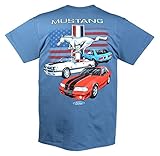
- 5 Color Main design printed on the " Rear" of the the t-shirt, Excellent detail!!
- 100% Cotton - Preshrunk
- Adult Mens T-shirt sizes Medium through 3XL
- All of our shirt designed are printed in the USA with a quality Silk Screening process.
The Birth of the Blue Oval Hot Hatch
Introduced in 1981 alongside the all-new Mk3 Escort, the XR3 replaced the rear-wheel-drive fun of earlier Escorts with a modern, transverse-engine layout. Purists were skeptical, but the platform was rigid, well-packaged, and far more space-efficient. Ford was betting that chassis tuning and power-to-weight ratio could replace tire-smoking theatrics.
At its core was the 1.6-liter CVH inline-four, breathing through a twin-choke carburetor and producing roughly 96 horsepower. Those numbers look modest today, but in a car weighing just over 1,900 pounds, the XR3 felt genuinely quick. More importantly, it felt alive, with sharp throttle response and a willingness to be driven hard.
XR3i: Fuel Injection and a Sharper Edge
The real turning point came in 1983 with the XR3i. Bosch K-Jetronic mechanical fuel injection replaced the carburetor, raising output to approximately 105 horsepower while dramatically improving drivability and cold-start behavior. Power delivery became smoother, more predictable, and better suited to aggressive corner exits.
Performance followed suit. Zero to 60 mph dropped into the mid-eight-second range, placing the XR3i squarely against rivals like the Volkswagen Golf GTI. It wasn’t just competitive—it was credible, and that mattered enormously for Ford’s reputation among European enthusiasts.
Crashes, No Sound, or Screen Glitches?
Random freezes, missing sound and display glitches usually trace back to one bad driver. Find and replace yours safely.Free scan · under a minutePC Slower Than It Used to Be?
A free scan shows the junk files, broken settings and background clutter dragging Windows down - then fixes them in one click.Free scan · Windows 10 & 11Chassis Tuning Over Raw Numbers
What truly defined the XR3 and XR3i was their chassis balance. MacPherson struts up front and a torsion-beam rear axle were hardly exotic, but Ford’s suspension tuning struck a rare balance between compliance and control. These cars thrived on imperfect roads, where feedback and stability mattered more than lap times.
Steering was quick, unassisted, and communicative, giving drivers a constant stream of information through the wheel. Lift-off oversteer was present but manageable, rewarding skill rather than punishing it. This was a car that taught drivers how to drive quickly, not just how to mash the throttle.
Design That Signaled Intent
Visually, the XR3 made no attempt to be subtle. Deep front air dams, boxed wheel arches, blacked-out trim, and distinctive alloy wheels announced its purpose immediately. Inside, heavily bolstered sport seats and a simple, driver-focused layout reinforced the message.
This wasn’t luxury pretending to be sporty. It was functional aggression, designed to look fast because it was fast for its time.
The Tool Desk
Outbyte PC Repair FREEClear out junk files and repair common Windows errorsFree Scan →Outbyte Driver Updater FREEFix the driver behind crashes, sound loss and screen glitchesFind Drivers →Why the XR3 Still Matters
The XR3 and XR3i laid the groundwork for everything that followed in Ford’s European performance lineup. Without them, there is no RS Turbo, no Cosworth-era Escort, and arguably no modern ST or RS badge credibility. They proved Ford could build a front-wheel-drive performance car that enthusiasts respected.
Today, clean XR3i examples are increasingly scarce, especially unmodified cars. For collectors and drivers alike, they represent the moment Ford successfully transitioned its performance identity into a new era—one defined not by displacement or cylinders, but by balance, efficiency, and engineering confidence.
Independent reader supportYour contribution helps us test, update, and keep practical guides available for everyone.1984–1990 Ford Bronco II: Compact 4×4 Pioneer Ahead of the SUV Boom
As the XR3 proved Ford could master precision and balance on tarmac, the Bronco II showed the company was equally adept at reading a different kind of future. In the mid-1980s, long before SUVs became suburban default transport, Ford recognized a growing demand for compact, versatile 4x4s that blended daily usability with genuine off-road ability. The Bronco II wasn’t a styling exercise or a lifestyle prop—it was a serious truck scaled down for a changing market.
Based on the Ranger pickup platform, the Bronco II arrived in 1984 as a shorter-wheelbase, enclosed alternative that split the difference between full-size Broncos and car-based wagons. This positioning made it accessible to buyers who wanted ruggedness without the bulk, and it quietly laid the groundwork for the SUV explosion that would follow a decade later.
Truck Roots, Compact Footprint
Underneath, the Bronco II was unapologetically body-on-frame, with a boxed steel chassis derived directly from the Ranger. Solid rear axle, leaf springs, and a Twin-Traction Beam front suspension gave it real durability, articulation, and trail credibility. This was not a softened crossover; it was a scaled-down truck with proper 4×4 hardware.
Its compact dimensions were key to its appeal. Short overhangs, a tight wheelbase, and upright visibility made it nimble both off-road and in urban environments. At a time when full-size SUVs were cumbersome and fuel-hungry, the Bronco II felt manageable and modern without sacrificing toughness.
Powertrains Built for Torque, Not Glory
Engine options reflected the Bronco II’s utilitarian mission rather than outright performance ambitions. Early models used a 2.8-liter Cologne V6, later upgraded to a 2.9-liter fuel-injected version producing around 140 HP and improved low-end torque. These numbers weren’t impressive on paper, but torque delivery and gearing mattered more than peak output.
Paired with a manual or automatic transmission and a two-speed transfer case, the Bronco II excelled in conditions where traction trumped acceleration. Low-range gearing, locking hubs, and respectable ground clearance gave it off-road capability far beyond what most buyers would ever fully exploit.
A Blueprint for the Modern SUV
What made the Bronco II truly influential wasn’t any single specification, but the concept it represented. It proved there was a market for compact, four-door-adjacent utility vehicles that could serve as both daily transportation and weekend adventure machines. This philosophy directly informed the development of the Ford Explorer, which would replace the Bronco II in 1991 and go on to define an entire segment.
In hindsight, the Bronco II looks less like a niche product and more like a prototype for the modern SUV formula. Its blend of size, capability, and approachability shifted Ford’s trajectory away from purely car-and-truck thinking toward something more versatile and commercially powerful.
Why Enthusiasts Still Care
Today, the Bronco II occupies a complicated but important place in Ford history. It’s remembered both for its pioneering role and for highlighting the engineering challenges of adapting truck platforms to smaller proportions. For enthusiasts, though, it represents an era when SUVs were still honest, mechanical, and purpose-driven.
Clean, unmodified examples are increasingly rare, especially those with manual transmissions and factory 4×4 equipment. To collectors and off-road purists, the Bronco II isn’t just a precursor to something bigger—it’s a reminder that Ford helped invent the compact SUV long before the world realized it needed one.
Best Value
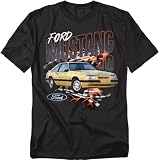
- FORD MUSTANG CHECKERED 5.0 UNISEX T SHIRT: Upgrade your daily wardrobe effortlessly with our versatile unisex t-shirt! Crafted from comfortable cotton, this tee is the ideal choice for both men and women. Embrace laid-back style for your everyday activities, whether you're running errands or out for a casual meet-up. Enjoy the comfort and fashion-forward design that suits everyone.
- PRINTED IN THE USA - Treat yourself to the unparalleled quality of our USA-printed graphic tees. Crafted in our cutting-edge US based facilities, each shirt is a testament to artistry and meticulously printed on 100% cotton. Indulge in a machine-washable masterpiece that seamlessly blends style and comfort. Elevate your wardrobe with pop culture excellence!
- OFFICIALLY LICENSED - Discover exceptional style with our officially licensed pop culture designs! Created by our in-house graphic art team, each piece is a proud representation of craftsmanship, meticulously designed and printed in the USA. Showcase your favorite characters and themes, making every wear a statement of your unique style!
- WASH & WEAR - No high maintenance care instructions here. Our tees are machine washable and easy to care for, just toss this little beauty in the washer on cold and tumble or hang dry. Comfort meets convenience! Explore our other merch for the same design on alternate body styles and keep your wardrobe effortlessly chic.
- ULTIMATE FAN GIFT - Our graphic tees are more than just apparel; they're the perfect fan gift for any occasion! Ideal for giveaways, birthday presents, graduation, back-to-school, tailgating, and perfect for celebrating Christmas, Mother's Day, Father's Day and other holidays. Add a touch of swag to goodie bags or treat yourself to the ultimate fan experience.
1989 Ford Taurus SHO: Yamaha-Tuned Sleeper That Shocked the Performance World
If the Bronco II showed Ford thinking creatively about utility, the Taurus SHO proved the company was just as willing to disrupt expectations in the performance world. On the surface, it was a sensible family sedan shaped by wind tunnels and corporate pragmatism. Under the skin, it was something entirely different: a high-revving, European-flavored sport sedan hiding in plain sight.
The SHO didn’t wear a spoiler or flares to announce its intent. That restraint was deliberate, and it made the shock all the greater when this front-wheel-drive Taurus started embarrassing established performance cars at stoplights and on highway on-ramps.
Yamaha Engineering Meets Detroit Ambition
At the heart of the SHO was one of the most unusual powerplants Ford ever put into a production car. Starting with the humble 3.0-liter Vulcan V6 block, Ford partnered with Yamaha to design an all-aluminum, 24-valve DOHC cylinder head that transformed the engine’s character. The result was 220 HP at a then-stratospheric 6,200 rpm and 200 lb-ft of torque, numbers that redefined expectations for an American sedan in the late 1980s.
What made the SHO engine special wasn’t just output, but how it delivered power. It pulled smoothly from low rpm, then came alive past 4,000 rpm with a mechanical urgency more reminiscent of an Italian sports sedan than a Detroit commuter car. A factory redline of 7,000 rpm was almost unheard of for a mass-produced American V6 at the time.
Do these 3 things before closing this tab:
1Clear out junk files and repair common Windows errors2Scan for outdated or missing drivers - takes under a minute3Repair Windows errors before they cause bigger problemsChassis Tuning That Backed Up the Power
Ford knew the engine alone wouldn’t be enough, so the SHO received serious attention beneath the bodywork. Suspension revisions included stiffer springs, revised struts, larger anti-roll bars, and quicker steering, all tuned to control body motion without sacrificing ride quality. Four-wheel disc brakes were standard, a notable upgrade over the base Taurus and a clear signal of intent.
Despite its front-wheel-drive layout, the SHO handled with composure and predictability. Torque steer was present but manageable, and the car’s long wheelbase and wide track gave it stability at speed that many smaller performance cars lacked. It wasn’t a razor-edged track weapon, but it was devastatingly effective on real-world roads.
A Sleeper That Redefined the Performance Sedan
In period testing, the SHO ran 0–60 mph in the mid-6-second range and topped out around 143 mph, figures that put it squarely in the company of BMW and Mercedes-Benz sport sedans costing far more. Even more impressive, it did so while offering room for five adults, a massive trunk, and everyday drivability. This duality was the SHO’s secret weapon.
The SHO effectively invented the American sport sedan as enthusiasts understand it today. It proved that performance didn’t have to come wrapped in a two-door body or rear-wheel drive, and that a mainstream platform could be elevated through smart engineering rather than brute force alone.
Free tools Windows power users keep installed
One-click scans. No signup required.
Why the SHO Still Matters
The 1989 Taurus SHO marked a philosophical turning point for Ford. It showed the company could blend global engineering talent with mass-market production to create something genuinely special. That mindset would later influence vehicles like the SVT lineup and, decades later, modern performance sedans that balance speed, comfort, and practicality.
For enthusiasts today, the original SHO remains a cult hero. Clean examples with the original five-speed manual are increasingly sought after, not just for nostalgia, but for what they represent: a moment when Ford took a huge risk, trusted engineering over marketing, and changed the performance conversation almost overnight.
1988–1992 Lincoln Continental Mark VII LSC: Luxury Meets Fox-Body Muscle
If the Taurus SHO proved Ford could make a family sedan run with European sport sedans, the Mark VII LSC proved something even bolder. Lincoln could build a legitimate performance coupe without abandoning comfort, technology, or brand identity. It was an unlikely hero, but one rooted deeply in Ford’s Fox-body performance DNA.
Fox-Body Foundations, Executive Attitude
Beneath the tailored sheetmetal, the Mark VII rode on the same Fox platform that underpinned the Mustang GT and LX 5.0. That meant rear-wheel drive, a relatively light unibody, and proven suspension geometry that Ford engineers understood intimately. The genius was how Lincoln refined it rather than diluted it.
Do these 3 things before closing this tab:
1Scan for outdated or missing drivers - takes under a minute2Clear out junk files and repair common Windows errors3Fix the driver behind crashes, sound loss and screen glitchesThe LSC, short for Luxury Sport Coupe, sat lower than standard Mark VIIs and featured stiffer springs, revised bushings, and larger anti-roll bars. It didn’t pretend to be a track car, but it delivered a level of chassis balance and high-speed stability that few luxury coupes of the era could match.
The 5.0 HO in a Tuxedo
From 1988 onward, the Mark VII LSC received the Mustang’s High Output 5.0-liter V8. Rated at 225 horsepower and 300 lb-ft of torque, it was fed by sequential electronic fuel injection and paired exclusively with Ford’s AOD four-speed automatic. No manual was offered, but the torque-rich V8 made the gearing work effortlessly.
Performance was quietly impressive. Contemporary tests recorded 0–60 mph in the mid-6-second range, with quarter-mile times in the low 15s, numbers that embarrassed many so-called luxury competitors. The difference was that the Mark VII did it in near silence, wrapped in leather, with cruise control set.
Technology That Was Genuinely Ahead of Its Time
The Mark VII was loaded with advanced hardware that foreshadowed modern luxury-performance cars. Four-wheel disc brakes with standard ABS were still rare in the late 1980s, yet Lincoln made them non-negotiable. The optional air suspension automatically adjusted ride height and stiffness, improving aerodynamics at speed while maintaining ride quality.
Free tools Windows power users keep installed
One-click scans. No signup required.
Digital instrumentation, trip computers, and memory seats weren’t gimmicks here. They reinforced the idea that performance and technology could coexist, a philosophy Ford was clearly exploring across multiple brands during this period.
Why the Mark VII LSC Still Matters
The LSC was a philosophical bridge between blue-collar muscle and upscale performance. It normalized the idea that a luxury badge didn’t have to mean soft dynamics or isolation from the driving experience. In many ways, it predated later performance-luxury efforts from both Ford and its competitors.
For enthusiasts today, the Mark VII LSC is a sleeper in the truest sense. Values remain reasonable, parts support is strong thanks to shared Fox-body components, and the driving experience still feels cohesive and confident. It stands as a reminder that some of Ford’s most daring performance ideas in the 1980s wore Lincoln badges, and pulled them off with surprising credibility.
The bottom line is simple. The Mark VII LSC wasn’t just a luxury coupe with a big engine. It was Ford proving that performance engineering could elevate an entire brand, not just a nameplate, and that lesson still echoes through modern luxury performance cars today.




