Do not interpret “at all times” literally. The vehicles below are not all permanent no-buy models. The sensible warning is narrower: avoid an example with an open safety recall, unresolved high-voltage problem, missing battery history, uncertain manufacturer support or no competent local repair option.
That distinction matters because recall status is tied to the individual VIN, production date, geography and remedy status. NHTSA recommends checking the VIN, and recall repairs are generally free through the manufacturer’s dealership.[CIT-001] Meanwhile, Consumer Reports’ reliability predictions describe owner-reported model-level problems—not the safety or repair status of every individual car.
As an Amazon Associate I earn from qualifying purchases.
For a used buyer, the strongest avoid cases are the unsupported Fisker Ocean, affected 2019 Jaguar I-PACE vehicles, and unrepaired or poorly documented 2017–2022 Chevrolet Bolt EVs. The Hyundai Ioniq 5, Kia EV6, Kia EV9 and Genesis GV60 require careful ICCU-history checks; the Blazer EV, Rivian R1T and Honda Prologue deserve caution as early-production reliability bets.
The 10 EVs on this list
The table is a screening tool, not a claim that every vehicle with one of these badges is unsafe. The strongest no-buy cases are an unrepaired safety recall, an unresolved high-voltage fault, missing battery documentation, or a manufacturer whose support network cannot be verified.
#1 Best Overall

- Flex Level 1 EV Charger - The EVDANCE Level 1 electric car charger is compatible with J1772 electric vehicles and plug-in hybrid vehicles (North American Standard). *Tesla requires a SAE J1772 adapter.
- Convenient to Use - This charger has both NEMA 6-20 plug for 16A 240V charging (3.68kW, 10-12 mi/h) and a NEMA 6-20 to 5-15 plug adapter for 12A 120V charging (1.44kW, 2-5 mi/h). The included bag makes it easier to carry on the go. It also has a 25ft cable length, you can use it flexibly from anywhere in the garage or driveway.
- Check Your Outlet Type -This charger works with standard 120V NEMA 5-15/5-20 outlets (2-5 mph charging speed) and 240V NEMA 6-20 outlets (10-12 mph) . It's not compatible with NEMA 6-15/10-30/14-30/14-50/6-50 outlets – you'll need a NEMA 14-50/14-30/10-30/6-50 to 6-20 adapter (sold separately) to connect.
- Compatible EV Models -This EV charger works with most major electric vehicles, including Ford, Chevrolet, Hyundai, Audi, Nissan Ariya, Rivian R1S, Kia, and others. However, it's not compatible with Mini Cooper Electric Hardtop,Toyota Prus Prime/Z4X/RAV4Prime, Porsche Taycan Base/4S/Turbo/Turbo S or Tesla models (Tesla requires a J1772 to Tesla Adapter, sold separately). For a full list of compatible models, check out the Full Compatibility List on our product page.
- Indication Displays - LED display that can tell you the status as well as indicate errors while charging your electric vehicle.
| Vehicle | Highest-risk examples | Primary reason for caution | Used-buy position |
|---|---|---|---|
| Fisker Ocean | Any example without a documented support plan | Manufacturer bankruptcy, uncertain parts and service, multiple campaigns | Generally avoid unless support, parts, recalls, warranty and price are exceptionally favorable |
| Jaguar I-PACE | 2019 vehicles with open or unresolved battery-related campaigns | High-voltage battery thermal-overload risk and a recall remedy involving repurchase | Walk away without VIN-specific remedy documentation |
| Chevrolet Bolt EV | 2017–2022 vehicles with an open or poorly documented battery recall | High-voltage battery-fire recall | Potentially attractive only after the remedy and battery history are verified |
| Hyundai Ioniq 5 | Primarily 2022–2024 vehicles with unresolved ICCU history | ICCU failures can stop 12-volt charging and eventually cause loss of drive power | Buy only after confirming every applicable campaign and repair |
| Kia EV6 | 2022–2024 vehicles with unresolved ICCU recalls or charging faults | Charging-system failures and below-average predicted reliability | Records and a successful charging test are essential |
| Kia EV9 | Early vehicles with charging or 12-volt warnings | New-architecture and ICCU-related reliability concerns | Avoid undocumented early examples |
| Genesis GV60 | Early vehicles with ICCU, electrical or repeated 12-volt problems | Low predicted reliability and potentially serious charging-system failures | Require complete dealer records and qualified high-voltage support |
| Chevrolet Blazer EV | Early-production 2024 and 2025 examples with unresolved faults | Poor predicted reliability, software and electrical complaints, plus model-specific campaigns | Only consider after updates, recalls and prior complaints are documented |
| Rivian R1T | Early trucks for buyers far from Rivian service | Very low predicted reliability and potentially disruptive repair downtime | Not automatically unsafe, but a poor fit for buyers who need predictable uptime |
| Honda Prologue | Early examples with unresolved warning lights, software issues or weak dealer documentation | New-platform maturity and low predicted reliability despite Honda’s familiar badge | Compare with a better-documented alternative before buying |
1. Fisker Ocean: the biggest support-network gamble
The Fisker Ocean is the clearest example of a vehicle that can be technically appealing yet commercially difficult to own. Fisker entered Chapter 11 proceedings in the United States in June 2024. That creates uncertainty around parts supply, warranty administration, software support and the continuity of an effective repair network.[CIT-002]
The Ocean also accumulated multiple campaigns during its early production period. NHTSA filings document a braking-software recall affecting 2023 and 2024 vehicles, a cabin electric-water-pump issue that could trigger a low-power limp mode, and a 2023 cluster-telltale compliance recall covering the entire U.S. and Canadian 2023 production population.[CIT-003][CIT-004][CIT-005]
Recalls alone do not make the Ocean uniquely bad; established automakers issue recalls too. The problem is the combination of early software and hardware defects with uncertainty about whether the original manufacturer and its service infrastructure will remain dependable for the life of the car.
Crashes, No Sound, or Screen Glitches?
Random freezes, missing sound and display glitches usually trace back to one bad driver. Find and replace yours safely.Free scan · under a minuteWindows Errors? Fix Them Before They Spread
Repair common Windows errors and clear accumulated junk for a smoother, more stable PC - no reinstall needed.Free scan · no reinstallWhen to walk away
- The seller cannot show that every applicable recall has been completed.
- There is no written explanation of who will perform warranty or high-voltage repairs.
- Parts availability is based only on a seller’s verbal assurance.
- The car has repeated low-power events, unexplained warning messages or charging problems.
- The discount is not large enough to compensate for potentially difficult repairs and limited resale confidence.
A buyer who still considers one should verify an active service channel, available parts, completed campaigns, transferable warranty coverage and the ability to obtain high-voltage repairs locally. For most shoppers, an exceptionally cheap Ocean is still not cheap enough if it cannot be supported.
2. 2019 Jaguar I-PACE: do not gamble on an unresolved battery campaign
This warning is specifically about certain 2019 Jaguar I-PACE vehicles, not every I-PACE from every model year. NHTSA recall 24V-633 addressed vehicles where earlier diagnostic-software remedies did not adequately protect against high-voltage battery thermal overload. Jaguar’s recall notice described reports of smoke or fire from beneath the vehicle and said the final remedy involved a repurchase program for affected vehicles.[CIT-006][CIT-007]
That makes the VIN and remedy history more important than the asking price. A 2019 I-PACE with an open H514 or related campaign, unresolved battery warnings, or no documentation of Jaguar’s repurchase or remedy process should be treated as a walk-away vehicle.
Do not accept a generic statement that the car was “updated.” Ask for the actual campaign documentation, the vehicle’s current VIN status and invoices showing what Jaguar or an authorized retailer did. If the seller cannot establish that the vehicle is outside the affected population or has received the final remedy, keep looking.
Recommended Free Tools
3. Chevrolet Bolt EV: avoid unrepaired or undocumented 2017–2022 cars
The Chevrolet Bolt EV can be a compelling low-cost used EV after its battery-recall situation is clearly resolved. The danger is buying a 2017–2022 example with an open recall, an uncertain battery history or missing repair paperwork.
In August 2021, NHTSA expanded the high-voltage battery-fire recall to cover all 2017–2022 Chevrolet Bolt EVs. While the remedy was pending, GM instructed owners to limit charging, avoid overnight charging and park away from structures. NHTSA also reported fires after earlier remedies and continued investigating the issue.[CIT-008][CIT-009]
What a safer used Bolt file should contain
- A VIN search showing no open recall that applies to the vehicle.
- Dealer paperwork identifying the completed battery-related remedy.
- Documentation of any high-voltage battery replacement, if one occurred.
- No evidence of a prior thermal event, smoke, melted components or underbody battery damage.
- A successful AC charging test and, where practical, a DC fast-charging test.
A completed remedy does not mean every Bolt has identical battery condition, and the absence of a warning light is not proof that the battery is healthy. Have a qualified EV technician review the vehicle if the records are incomplete. The consumer warning is directed at unrepaired and poorly documented Bolts—not at every repaired Bolt.
Rank #2
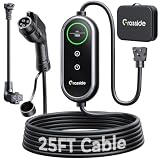
- Universal J1772 Compatibility: Designed with a standard J1772 connector, this J1772 charger works with most J1772 electric vehicles and PHEVs, including BMW, Mercedes-Benz, Hyundai, Kia, Nissan, Rivian, Ford, Chevy, Volkswagen, Toyota and more. Note: Tesla vehicles require a J1772 to Tesla adapter (not included)
- Flexible Outlet Compatibility: This portable EV charger comes with a NEMA 6-20 plug and a NEMA 5-15/5-20 to 6-20 adapter. Supports Level 1 (8–12A) and Level 2 (16A). Max 12A (1.44kW) on 120V NEMA 5-15/5-20 outlets, and full 16A (3.84kW) with a 240V NEMA 6-20 outlet. One charger is designed to cover home, garage, and travel charging needs with reliable performance
- Adjustable Smart Charging Control: Customize charging safely with adjustable current settings (8A/10A/12A/16A) to match different circuits. The 0–12 hour delay timer helps schedule overnight charging during lower electricity rates. Integrated LCD display shows real-time voltage, current, power, and charging status for clear monitoring without apps. Note: Press 'A' or 'T' for 3s to set and confirm.
- Home Charging & Travel Backup: For daily home use while remaining fully portable for travel. This level 1 ev charger includes a durable 25FT ev charging cord, providing flexible reach for garage or driveway charging. Charge overnight to take advantage of lower utility rates—potentially saving up to $500 annually on electricity costs. The included carrying case makes storage easy and keeps a dependable backup charger available in your trunk for road trips or visiting friends
- Engineered For Safety & Durability: Built for dependable daily use, this electric car charger features an IP65 waterproof rating for all weather operation. Equipped with a UL-listed cable, fully rubberized connector, and advanced protection against overcurrent, overheating, and electrical faults. Designed to ensure safe, stable, and long-term charging performance in demanding environments
4. Hyundai Ioniq 5: early ICCU history matters more than the styling
The Ioniq 5 remains attractive for its range, rapid charging capability and useful interior. The reason to avoid particular examples is the Integrated Charging Control Unit, or ICCU, which manages important charging and electrical functions.
Quick wins for a faster PC:
Fix the driver behind crashes, sound loss and screen glitchesFind Drivers →Clear out junk files and repair common Windows errorsFree Scan →Scan for outdated or missing drivers - takes under a minuteDriver Scan →Consumer Reports has identified recurring ICCU problems across Hyundai, Genesis and Kia EVs. Depending on the model and model year, its survey data found that 2% to 10% of owners reported ICCU-related issues. A failure can disable 12-volt charging and eventually result in loss of drive power.[CIT-010] Hyundai’s own reporting confirms that the issue led to a U.S. voluntary recall affecting the Ioniq 5 and related electrified vehicles.[CIT-011]
The practical screening rule is to be especially cautious with 2022–2024 vehicles that lack proof of every applicable ICCU software update, fuse inspection and replacement where required. Ask the seller for service invoices rather than relying on a sales description such as “all recalls done.” Then verify the VIN directly through Hyundai and NHTSA.
Warning signs on a used Ioniq 5
- Repeated 12-volt battery failures or jump-starts.
- Charging that stops unexpectedly or takes unusually long.
- Messages relating to electrical systems, reduced power or charging unavailable.
- Missing dealer records for ICCU campaigns.
- A seller who refuses an AC and DC charging test.
A later-production or fully remedied Ioniq 5 with complete records is materially different from an early example with an unresolved ICCU history. This is a verification problem, not a blanket verdict on the model.
5. Kia EV6: do not confuse excellent driving with low ownership risk
The Kia EV6’s performance, charging speed and range make it one of the more appealing EVs on the used market. Those strengths do not eliminate the risk associated with early ICCU problems.
The Tool Desk
Outbyte PC Repair FREEClear out junk files and repair common Windows errorsFree Scan →Outbyte Driver Updater FREEFix the driver behind crashes, sound loss and screen glitchesFind Drivers →Consumer Reports placed the EV6 among its ten least-reliable vehicles for 2026, with a predicted reliability score of 25.[CIT-012] Consumer Reports separately identified ICCU failures as a significant reason several Hyundai and Kia EVs scored below average for reliability. Canadian recall documentation describes an ICCU that can become damaged and lead to loss of drive power.[CIT-010][CIT-013]
Focus on 2022–2024 examples with unresolved recalls, intermittent charging or a history of 12-volt failures. A vehicle with completed campaigns, a documented ICCU replacement where required, and strong service records deserves a different assessment from one sitting at a dealer with no maintenance file.
Before purchase, confirm the VIN campaign status, inspect the service history, charge the vehicle on AC, and use a DC fast charger if one is available during the inspection. If charging repeatedly interrupts, the dashboard displays electrical warnings, or the seller says the issue is “just software” without an invoice, walk away until the problem is professionally diagnosed and repaired.
6. Kia EV9: early family haulers need unusually good records
The EV9’s size and three-row practicality make a charging or electrical failure more disruptive for a family than it might be for a second commuter car. Consumer Reports listed the EV9 among its ten least-reliable vehicles for 2026, giving it a predicted reliability score of 24.[CIT-012]
Do these 3 things before closing this tab:
1Scan for outdated or missing drivers - takes under a minute2Repair Windows errors before they cause bigger problems3Fix the driver behind crashes, sound loss and screen glitchesConsumer Reports reports that ICCU-related problems affect several Hyundai and Kia EVs, including the EV9, and contributed to below-average predicted reliability results.[CIT-010] That does not establish that every EV9 will lose drive power, but it does make early vehicles with incomplete campaign histories poor candidates for a buyer who needs dependable family transportation.
Rank #3

- Road-Trip Ready & Apartment-Friendly: Comes with a 20ft heavy-duty cable that easily spans a standard parking space, plus a NEMA 5-15 adapter for plug and play convenience. Whether you're charging at home or hitting the highway, this portable EV Charger is your ultimate travel companion for weekend getaways and camping trips
- Delay Timer & Adjustable Current: Use the built-in timer to delay your start by 1-12 hours and easily harvest off-peak energy savings. Then pick from 6/8/10/12/16A (Level 2) to match your garage grid. It automatically locks in your favorite setting and never forces you to re-adjust. No complicated apps or Wi-Fi needed, just straightforward, reliable control
- Tactile Buttons & LED Screen: No glitchy smartphone apps or finicky touchscreens that lag, freeze, and misfire in winter. Our EV charger is engineered with a high-definition LED display that tracks critical real-time data, including live voltage and current. Tactile buttons deliver direct, satisfying click feedback that remains highly responsive even when wearing heavy winter gloves or operating in torrential downpours—conditions where standard touchscreens completely fail
- ETL Certified Safety & IP65 All-Weather Shield: ETL certified to meet US safety standards for charging. Engineered with a certified IP65 dust-and-waterproof enclosure and a heavy-duty TPE cable that operates reliably across a wide -22°F to 130°F range. An intelligent multi-protection defense system (GFCI, over-voltage, over-current, surge, short-circuit, and over-temp) keeps a 24/7 watch for 100% safe, unattended overnight charging in any weather
- J1772 Compatible + Dual-Level Charging: Works with all J1772 EVs (Tesla requires a separate J1772 adapter). Level 2: built-in NEMA 6-20 plug. Level 1: included NEMA 5-15 adapter fits any standard outlet. Please confirm your outlet is NEMA 6-20 or 5-15 before purchase
EV9 purchase conditions
A used EV9 should have a complete recall and service history, no unexplained 12-volt battery warnings, and a successful charging test. Ask whether the vehicle has ever experienced charging interruptions, reduced-power messages or a prolonged dealer repair. If the answer is yes, require the repair order and the final diagnosis.
Do not buy an early EV9 solely because it has a substantial discount. Calculate the cost of alternative transportation, towing and lost time if a complicated electrical repair requires a long wait. A nearby dealer equipped for high-voltage work is particularly important for a large, feature-heavy EV.
7. Genesis GV60: premium pricing does not remove electrical risk
The Genesis GV60 is a premium EV, so buyers should expect a higher standard of documentation and support—not accept repeated electrical faults as the price of luxury. Consumer Reports gave the GV60 a predicted reliability score of 21 in its 2026 least-reliable-car ranking.[CIT-012]
What’s actually slowing this PC down?
Pick the symptom - the matching free tool is one click away.
Consumer Reports’ reporting on Hyundai and Kia charging-unit failures includes the GV60 and says ICCU-related failures can cause the vehicle to lose drive power.[CIT-010] The most concerning used examples are those with open campaigns, repeated 12-volt failures, charging interruptions or incomplete dealer records.
Verify that the selling dealer—or a qualified local service center—can perform the relevant high-voltage work. A luxury vehicle stranded because a specialized part or technician is unavailable can be more expensive and frustrating to own than a simpler vehicle with a lower purchase price.
For a GV60 that passes the records check, have an independent technician inspect the high-voltage system and battery condition. Do not use a generic code reader to erase warnings and treat the dashboard as clear. A basic scanner cannot prove that the battery, ICCU or other high-voltage components are healthy.
8. Chevrolet Blazer EV: early-production software and electrical maturity concerns
The Blazer EV’s strongest reason for caution is its overall early-production reliability record, not one small recall by itself. Consumer Reports ranked it among the ten least-reliable vehicles for 2026 and assigned it a predicted reliability score of 19.[CIT-012]
Free tools Windows power users keep installed
One-click scans. No signup required.
NHTSA records also show model-specific campaigns for 2024 and 2025 Blazer EV vehicles, including an incorrect chassis-harness issue affecting a small population of vehicles that had been serviced with the wrong part.[CIT-014] That campaign should be checked, but it should not be portrayed as the sole or dominant defect behind the model’s poor reliability forecast.
For an early Blazer EV, request documentation for software updates, recall work and every prior electrical or charging complaint. Test the infotainment system, driver-assistance functions, climate controls, AC charging and DC fast charging. Warning lights that disappear after a restart are still evidence that deserves a repair order and explanation.
Buyers should also confirm that the local Chevrolet retailer is familiar with the EV’s high-voltage systems. A later or fully updated vehicle with clean records may be acceptable; an early vehicle with a long list of unresolved electronic complaints is not a bargain simply because the monthly payment is low.
Rank #4

- LEVEL 1 CHARGING - The Lectron Level 1 Charger lets you quickly charge your EV with a standard 120V outlet; You get 15 amps and 1.65 kW of power for the standard full-charge time for your car, at home or at wor
- CONVENIENT OVERNIGHT CHARGING - The Lectron 15 Amp EV Charger is a more affordable and faster charging option compared to other Level 2 EV chargers, delivering an extra 40-50 miles of overnight charge at home — without breaking the bank
- J1772 COMPATIBILITY - This J1772 charger is compatible with all electric vehicles that use the J1772 standard, including BMW, Ford, Honda, Hyundai, Kia, Porsche, Nissan, and Chevy
- SAFE AND RELIABLE - FCC and ETL certified (UL2594 standard) for safety with overvoltage, overcurrent, and short circuit protection; Energy Star certified for efficiency; IP65 rated for dust and water resistance
- PORTABLE CONVENIENCE - Whether you're on a road trip or visiting a friend, you can easily plug in your EV and charge with our portable EV charger. Please refer to the included User Manual for complete operating instructions and compatibility requirements
9. Rivian R1T: avoid if service access and uptime are non-negotiable
The Rivian R1T is not included here because every truck is unsafe. It is included because reliability risk and service access matter more when the vehicle is expected to work as a truck.
Consumer Reports named the R1T the least-reliable EV in its 2026 brand-report-card findings and gave it a predicted reliability score of 18 in its ten-least-reliable ranking.[CIT-012][CIT-015] That result reflects owner-reported problems across the vehicle rather than one isolated defect. The resulting concern is expensive complexity combined with repair turnaround and service-network uncertainty.
The R1T buyer who should walk away
- You live far from a Rivian service center or approved repair option.
- You use the truck for work and cannot tolerate an unpredictable repair delay.
- The seller cannot explain previous warning lights, suspension, charging or electrical repairs.
- The warranty position is unclear or does not transfer as expected.
- You have no backup transportation or roadside plan.
A documented R1T at a compelling price can suit a buyer who understands those trade-offs and has convenient service access. A buyer who needs predictable uptime should choose a vehicle with a longer and more established repair record instead.
10. Honda Prologue: a familiar badge is not the same as a mature EV
The Honda Prologue is an important reminder that a respected badge cannot substitute for model-specific evidence. Consumer Reports placed it in its 2026 ten-least-reliable ranking with a predicted reliability score of 25.[CIT-012]
This is an early-production and new-platform reliability warning, not evidence that Honda’s entire lineup is unreliable. The areas to examine closely are software, charging behavior, infotainment, warning messages and the dealer’s familiarity with the vehicle.
A Prologue with unresolved warning lights, incomplete software campaigns or poor dealer documentation should be avoided, particularly when a comparable EV with a longer reliability history is available. During the inspection, operate the charging controls, infotainment and driver-assistance systems, and confirm that the dealer has completed all VIN-specific work.
Do not assume that a nearly new vehicle has no meaningful history. Early software and electrical issues can appear quickly, and the first owner may already have taken the car back to the dealer several times. Ask for repair orders and confirm the warranty transfer terms before signing.
Independent reader supportYour contribution helps us test, update, and keep practical guides available for everyone.How to decide whether any used EV is safe enough to consider
NHTSA advises consumers to check recalls by vehicle identification number, and recall repairs are generally completed free of charge through the manufacturer’s dealership. Recall status can change by VIN, geography, production date and remedy status, so a model-level article cannot replace an individual lookup.[CIT-001]
Use this three-tier rule:
| Decision | Conditions |
|---|---|
| Walk away | Open safety recall; missing battery history; unresolved high-voltage warning; evidence of a prior thermal event; unclear manufacturer support; or a seller unwilling to permit inspection and charging tests. |
| Buy only after verification | All applicable campaigns are complete; repairs are documented; the battery receives a qualified health assessment; the title is clean; the vehicle charges normally; warranty transfer is confirmed; and a competent local service center is available. |
| Potentially acceptable | Later production or materially improved remedy, complete records, no unexplained warnings, successful charging tests and a price that compensates for residual complexity and resale risk. |
Used-EV inspection checklist
- Run the VIN through two official sources. Check the NHTSA recall lookup and the manufacturer’s owner portal. Save or print the results. A dealer’s statement that the vehicle is “up to date” is not a substitute for a VIN-specific record.
- Ask for invoices, not promises. Request paperwork for battery replacement, ICCU work, fuse inspections, software updates, high-voltage repairs and any repeated 12-volt battery replacement.
- Arrange an independent EV battery health check. A qualified EV technician can assess available battery-health data and look for diagnostic trouble codes or physical concerns. This inspection does not replace a recall lookup and a generic OBD-II reader cannot diagnose every high-voltage battery defect.
- Test both charging paths. Confirm that the car begins and sustains AC charging. If practical, test DC fast charging as well. Record charge power, interruptions and dashboard messages rather than relying on the seller’s description.
- Inspect the underbody. Look for impact damage, coolant leaks, corrosion, damaged covers and evidence of heat or thermal damage. Do not remove high-voltage covers yourself.
- Check the 12-volt system and warning history. Repeated 12-volt failures are especially relevant to the Ioniq 5, EV6, EV9 and GV60 ICCU discussion. Ask whether the vehicle has ever entered reduced-power or limp mode.
- Confirm high-voltage service capability. Call the local dealer or authorized service center before purchase. Ask whether it can work on the exact model and whether parts or appointment delays are currently a concern.
- Review title, accident and service history. An independent used EV history report can help identify accidents, title brands and recorded service, but it cannot replace the official recall lookup or a physical inspection.
- Confirm warranty transfer. Obtain the terms in writing, including battery coverage, exclusions, geographic restrictions and any requirements for transferring coverage to the next owner.
- Plan for breakdowns realistically. For a discontinued, distressed-brand or service-limited EV, investigate EV roadside assistance and nearby high-voltage repair options. Verify geographic coverage and towing limits; roadside assistance does not make an unsafe vehicle safe.
Charging equipment is not a repair
If an inspected vehicle passes the safety and service checks, a compatible J1772 EV charging cable can be a useful accessory for many North American EV owners using AC charging. Before buying one, verify the vehicle’s connector, whether an adapter is required, the cable’s voltage and amperage rating, and whether the home circuit can safely support it. Charging equipment cannot fix an ICCU, battery, software or thermal problem, and it should never be used to work around an open recall.
What the reliability scores do—and do not—mean
The Consumer Reports figures used here are predicted reliability estimates based on owner survey information. They are not recall counts, crash-safety scores or a guarantee that a particular VIN will fail. The 2026 figures provide a useful warning about model-level ownership risk: EV9 24, EV6 25, GV60 21, Blazer EV 19, R1T 18 and Prologue 25.[CIT-012][CIT-015]
Best Value

- 【Delay Timer - Adjustable Current】Ev charger can adjust the current (8A/10A/12A/16A) through the physical button of level 1 ev charger. Charging power can reach up to 3.68KW (240V/16A). One-touch switch for ev charger operation. Built-in 2–8 hour delay timer for off-peak charging to save on electricity bills.
- 【NEMA 6-20 Plug & NEMA 5-15 Adapter】Nema 6-20 plug for 240V outlets and 5-15 adapter for standard 120V realize plug-and-charge (With 5-15 adapter, need to adjust the current to 12A or below, otherwise the charger may be demeged). Overall length of ev charger level 2 is 27FT, providing enough charging distance across garages at home or outdoor. Portable storage bag supports you take portable EV Charger during travel, business trip, electric vehicle charging stations anywhere.
- 【ETL/FCC and IP67 Safety】J1772 charger is equipped with advanced safety functions such as overvoltage, overheating, and short-circuit automatic shutdown. IP67 waterproof and dustproof, extreme temperature protection level for withstanding harsh weather conditions from -40°F to 131°F in sunny, rain, snow and sandstorm. Electric car charger has ETL certified, FCC listed, meets UL safety standards. Industrial-grade construction with high-strength TPU-coated cables and 99.95% oxygen-free copper cores.
- 【J1772 Connector】J1772 charger works for all J1772 standard electric vehicles, Ford, GM, Nissan, Audi, Kia, Honda, BMW, Hyundai, Gmc, Chevy, Mercedes, and all PHEV/BEV. [Not fits Tesla cars/Nacs connector]
- 【One-Touch Charging Operation】16A electric car charger supports plug-and-charge functionality and features one-touch scheduled charging and current adjustment. Its intuitive and user-friendly operation allows flexible customization of personalized charging plans. Level 1 ev charger automatically shuts off when your car is fully charged.
NHTSA recall documents measure something different: a defined safety or compliance defect, the affected population and the manufacturer’s remedy. A model can have an average reliability forecast and still have an open safety recall, while a model with poor predicted reliability can contain an individual vehicle whose campaigns are complete and whose service history is excellent.
Model year, production date, software version, VIN, country and remedy status can materially change the conclusion. That is why the right question is not simply, “Is this model on a worst-cars list?” It is, “What specifically happened to this vehicle, has the problem been remedied, and can I get it repaired where I live?”
Bottom line for buyers
Start with the Fisker Ocean, an unrepaired 2019 Jaguar I-PACE, and an unrepaired or poorly documented 2017–2022 Bolt EV as the most serious walk-away cases in this group. Treat early Ioniq 5, EV6, EV9 and GV60 vehicles as ICCU-history purchases, not automatic bargains. Approach the Blazer EV, R1T and Prologue as early-production reliability bets whose service access and documentation must justify the price.
Never take delivery with an open safety recall or unresolved high-voltage warning. If the VIN check, repair records, battery inspection, charging test or service plan fails, the correct price is no price.
Sources and research limits
This article uses NHTSA recall guidance and recall filings for the Ocean, I-PACE, Bolt EV and Blazer EV, and Consumer Reports reliability reporting for the Hyundai, Kia, Genesis, Chevrolet, Rivian and Honda models. The relevant dossier references are CIT-001 through CIT-015. The sources measure different things and should not be treated as interchangeable. Recall status should always be confirmed for the individual VIN in the buyer’s country.
Frequently Asked Questions
Are all of these electric cars unsafe?
No. A model appearing on this list does not mean every example is defective or unsafe. The warning is directed at specific model years, unresolved recalls, incomplete repair histories, early-production reliability concerns and vehicles that cannot be supported locally.
Should I automatically reject a used EV with an open recall?
Do not take delivery until an open safety recall is completed and documented. NHTSA says recall repairs are generally free through the manufacturer’s dealership, but some issues—especially battery and high-voltage faults—also justify an independent inspection before purchase.
Recommended Free Tools
Which EV on this list deserves the most caution?
The Fisker Ocean is the most difficult support-risk case because Fisker entered Chapter 11 proceedings and the long-term parts, warranty and service situation is uncertain. An unrepaired 2019 Jaguar I-PACE and an unrepaired or poorly documented 2017–2022 Chevrolet Bolt EV are also serious walk-away cases.
Can a battery-health report replace a recall check?
No. A battery-health inspection can provide useful evidence about battery condition and diagnostic history, but it cannot replace an official VIN recall check, service invoices or a professional diagnosis of an active warning.
Are newer model years automatically safe to buy?
Not necessarily. Reliability and recall status vary by model year, production date, software version, VIN, geography and remedy status. A later or fully repaired vehicle with complete records may be materially safer to buy than an early example of the same model.
The Bottom Line
The safest rule is simple: do not buy any vehicle on this list with an open safety recall, unresolved high-voltage warning, missing battery history or no credible local service plan. A fully repaired, well-documented example may be acceptable, but the VIN and the paperwork—not the badge or discount—should decide.
Quick Recap
Product prices and availability are accurate as of the date/time indicated and are subject to change. Any price and availability information displayed on Amazon at the time of purchase will apply.