PC Slower Than It Used to Be?
A free scan shows the junk files, broken settings and background clutter dragging Windows down - then fixes them in one click.Free scan · Windows 10 & 11Outdated Drivers Are Slowing You Down
One free scan finds every outdated or missing driver and matches the right update for your exact hardware.Free scan · exact hardware matchItaly’s 1960s and ’70s produced an extraordinary range of sports cars, from championship-winning GTs to racing prototypes and striking grand tourers. There is no official top-ten ranking, so this editorial selection weighs period significance, competition record, design influence and the variety of cars represented. The models below show why the period is often treated as a golden age: Italian manufacturers were prominent in an expanding luxury-sports-car market by the end of the 1950s, and the Italian Motor Web Museum describes the 1960s as a golden age for motor sport.
How this list defines the golden age
“Golden age” is an editorial description, not a formally bounded period, and “best” depends on what a reader values. This list spans road-going grand tourers, competition-derived cars and purpose-built racing sports prototypes. It is not a definitive ranking: the available manufacturer and museum histories establish the models’ significance and selected results, but do not provide a shared scoring system for comparing them.
The Italian Motor Web Museum places the rise of the luxury sports-car market and Italian prominence in the late 1950s, and characterizes the 1960s as a golden age for motor and motorcycle sport. That context makes the 1960s and ’70s a useful frame for considering both road cars and the competition programs that shaped them.
10 standout Italian sports cars of the 1960s and ’70s
1. Ferrari 250 GTO
The 250 GTO is the list’s defining competition-bred GT. Ferrari’s official history dates its presentation to 24 February 1962 and reports that it won the International Championship for GT Manufacturers in 1962, 1963 and 1964. Those consecutive championship seasons make its period competition record a compelling reason for inclusion. Ferrari’s 1962 history.
Do these 3 things before closing this tab:
1Repair Windows errors before they cause bigger problems2Scan for outdated or missing drivers - takes under a minute3Clear out junk files and repair common Windows errors#1 Best Overall

- BUILD A HYPERCAR ICON – Car fans ages 9 years old and up can experience the thrill of race day with the LEGO Speed Champions Bugatti Centodieci Hyper Sports Car (77240) building set
- AUTHENTIC BUGATTI DETAILS – Young builders can recreate signature Centodieci elements, including the 5 round air intakes, horseshoe radiator grille, overhanging rear wing, and quad tailpipes
- BUILD, RACE & DISPLAY – Kids can stage epic hyper car showdowns with their Bugatti toy car—complete with a driver minifigure in racing gear—then showcase it as eye-catching room decor
- GIFT IDEA FOR MODEL CAR FANS – Makes an awesome birthday gift for boys and girls who love sports cars, building toys, and model car kits
- LEGO SPEED CHAMPIONS – Kids and car fans can use LEGO bricks to build scale replicas of some of the world's most iconic vehicles
2. Lamborghini Miura
The Miura represents the period’s boldest move toward a supercar-shaped road car. The Ferruccio Lamborghini Museum says the P400 was exhibited at Turin’s auto show in 1966 and that the car has been exhibited at New York’s Museum of Modern Art since 1968. Those museum milestones establish its cultural reach without needing to rely on promotional claims about its design. Ferruccio Lamborghini Museum: History.
3. Alfa Romeo GTA
The GTA brought Alfa Romeo’s competition ambitions into touring-car racing. Museo Alfa Romeo connects the marque’s official return to racing in the 1960s with Autodelta, and credits the GTA with touring-car success. It earns a place here as a reminder that the era’s most consequential sports cars were not all exotic two-seat road cars. Museo Alfa Romeo: Alfa Romeo’s racing history.
Rank #2

- LAMBORGHINI REVUELTO SUPERCAR MODEL CAR KIT - Build the cutting-edge Lamborghini Revuelto, the brand’s first hybrid V12 supercar, recreated in highly detailed 1:24 scale for collectors and car enthusiasts.
- HIGHLY DETAILED 101-PIECE KIT - Includes multi-piece interior, detailed chassis, and precision-molded components that bring this next-generation supercar to life.
- REALISTIC V12 ENGINE DETAIL - Features a highly detailed hybrid V12 engine with opening engine cover, allowing you to showcase the heart of Lamborghini performance.
- POSEABLE & CUSTOM FEATURES - Front wheels can be positioned left or right, and the interior includes optional left- or right-hand drive configuration for added realism.
- AUTHENTIC INTERIOR DESIGN - Detailed cockpit with sport bucket seats and driver-focused layout, inspired by the real Revuelto’s aerospace-style interior.
4. Alfa Romeo Tipo 33
Where the GTA is associated with touring cars, the Tipo 33 represents Alfa Romeo’s sports-prototype campaign. Museo Alfa Romeo says that the Tipo 33’s sports-car career culminated in world titles in 1975 and 1977. Its inclusion brings a purpose-built racing machine into a list otherwise weighted toward road-going cars. Museo Alfa Romeo: Alfa Romeo’s racing history.
5. Lancia Fulvia Coupé 1.6 HF
The Fulvia Coupé 1.6 HF is a rally-bred choice with a clear result behind it: Lancia records that it won the 1972 Monte Carlo Rally. That achievement gives the car a distinct place among the era’s competition stories, alongside the GT and circuit-racing successes elsewhere on this list. Lancia: Le Icone di Lancia.
Rank #3

- This plastic model requires assembly and painting Adhesives, tools, paints, etc., sold separately
- 1/25 scale unpainted plastic assembly kit
- Size when assembled: Total length approx. 7.9 inches (200 mm), Width approx. 3.0 inches (76
- The 1964 Chevy II Nova has been reproduced with a completely new mold
- The body is modeled after a 2-door coupe
6. Lancia Stratos
The Stratos turned Lancia’s rally program into one of the period’s signature competition efforts. Lancia says it debuted at the Tour de Corse in November 1972 and reports three consecutive Monte Carlo Rally wins, as well as three World Constructors’ Championship wins. The manufacturer’s history makes it an essential counterpart to the Fulvia: both represent rallying, but the Stratos has its own later competition record. Lancia: Le Icone di Lancia.
7. Lamborghini Espada
The Espada broadens the picture beyond two-seat sports cars. It is among the production models documented in the ASI Bertone Collection by Stellantis Heritage Hub, making it a useful design-led grand-touring entry in a selection that also includes racing-focused cars. The collection listing supports its place among the period’s notable Italian designs; it does not by itself establish a comparative performance ranking. Stellantis Heritage Hub: ASI Bertone Collection.
Rank #4

- Revell Model Kit #14533, Skill Level 4, Contains 104-Parts, Recommended for ages 12 and up
- Iconic Shelby 427 Cobra S/C body with an opening hood and separate chrome detail parts.
- Highly detailed 427-cubic-inch V-8 engine, separate tube frame, and side-mount exhausts Moteur V-8.
- All-new decal sheet with the 427 Cobra’s signature over-the-top twin stripes and optional race markings.
- Molded in white, transparent red, and clear with chrome plated parts and soft black tires. Paint and glue required(not included).
8. Fiat Dino Coupé
The Fiat Dino Coupé adds a more accessible marque to a list dominated by Alfa Romeo, Ferrari, Lamborghini and Lancia. Stellantis Heritage Hub lists the 1970 model among the production cars in the ASI Bertone Collection. Its inclusion reflects the design variety of the era rather than an unsupported claim that it outranked its contemporaries. Stellantis Heritage Hub: ASI Bertone Collection.
9. Fiat X1/9
The Fiat X1/9 brings a compact sports-car format into the selection. The Stellantis Heritage Hub identifies the 1977 X1/9 as part of the ASI Bertone Collection. That makes it a useful contrast to the larger GTs and racing prototypes, and an example of the period’s breadth beyond high-end marques. Stellantis Heritage Hub: ASI Bertone Collection.
What’s actually slowing this PC down?
Pick the symptom - the matching free tool is one click away.
Best Value
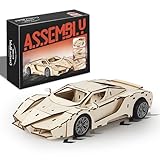
- CLASSIC ROADSTER DESIGN – Build a stunning replica of a classic sports car with authentic details. This 87-piece 3D wooden puzzle features realistic design elements and delivers an engaging, hands-on assembly experience perfect for beginners and enthusiasts alike.
- EASY & ENJOYABLE ASSEMBLY – With 87 laser-cut wooden pieces, this model kit is designed for a smooth and satisfying build. Follow the clear instructions and have your roadster ready in just 2–3 hours! Required glue (not include), use glue to make the sports car more durable.
- PULL-BACK & GO ACTION – Fun doesn’t stop after building! Pull the car back to power it up and watch it race forward—up to 20 feet. A rewarding feature that brings your creation to life.
- HIGH-QUALITY & SAFE MATERIALS – Crafted from premium poplar plywood, this puzzle is eco-friendly, splinter-free, and has no strong odor. Each piece is laser-cut for perfect precision, ensuring a snug fit and durable finished model. Suitable for ages 14 and up.
- PERFECT GIFT FOR ALL AGES – Whether for a hobbyist, car lover, or someone who enjoys DIY projects, this 3D puzzle makes a unique and memorable gift. Great for birthdays, holidays, or just a relaxing creative challenge. Decorate or paint it to make it truly one-of-a-kind!
10. Ferrari 308 GT4
The Ferrari 308 GT4 rounds out the list with another production model represented in the ASI Bertone Collection. Stellantis Heritage Hub dates its example to 1978. It offers a final design-led counterpoint to the period’s championship cars and early supercar landmarks. Stellantis Heritage Hub: ASI Bertone Collection.
Independent reader supportYour contribution helps us test, update, and keep practical guides available for everyone.What these cars represent
- Championship GTs: Ferrari’s 250 GTO shows how a road-car category could anchor a sustained international competition campaign.
- Touring and prototype racing: Alfa Romeo’s GTA and Tipo 33 illustrate two different strands of the marque’s return to racing.
- Rally icons: The Fulvia Coupé 1.6 HF and Stratos connect Italian sports cars to Monte Carlo and world championship success.
- Design and road-car variety: The Miura, Espada, Fiat Dino Coupé, X1/9 and Ferrari 308 GT4 broaden the selection beyond competition results.
Taken together, the ten cars make a stronger case for the period’s importance than any single winner could: the era’s identity came from a mix of competition achievement, road-car ambition and markedly different approaches to the sports-car idea.
Quick Recap
Product prices and availability are accurate as of the date/time indicated and are subject to change. Any price and availability information displayed on Amazon at the time of purchase will apply.




