Vehicles that “turn into a boat” do not literally transform into separate boats: amphibious vehicles switch from road travel to powered movement through water. The range is broader than cars, from the Amphicar’s exposed propellers to Gibbs designs that retract their wheels and use water jets. The performance figures below are manufacturer-reported where noted, not independent test results.
How to compare amphibious vehicles
These examples serve different roles, so their reported speeds are not a like-for-like ranking. Some are passenger cars, while others are ATVs, motorcycles, a UTV, or a large utility platform. Specifications and availability can also vary by model and individual vehicle.
| Vehicle | Class and role | Water propulsion or transition | Reported specifications and status |
|---|---|---|---|
| Gibbs Aquada | Three-seat amphibious car | Retracting wheels; water jet | Gibbs lists 100+ mph on land and 30+ mph on water. Proof of concept; no longer in production. |
| Gibbs Humdinga | Four-wheel-drive utility/off-road amphibian | Gibbs integrated amphibious platform | Gibbs describes it as a road-legal high-speed amphibian; detailed current specifications were not available in the research. |
| Gibbs Phibian | Large truck/boat and response utility platform | Water jet | Gibbs lists up to 15 seats, 70+ mph on land, 30+ mph on water, and two V8 turbo-diesel engines. |
| Gibbs Quadski | Amphibious ATV | Retracting wheels; water jet | Identified by Gibbs as a high-speed amphibious ATV; no performance figures included here. |
| Gibbs Quadski XL | Two-seat amphibious ATV | Quadski-family platform | Listed by Gibbs as a distinct two-seat development; no current-availability claim. |
| Gibbs Biski | Amphibious motorbike | Two-wheel amphibious platform | Identified by Gibbs as a two-wheel amphibious motorbike. |
| Gibbs Triski | Three-wheel road-legal amphibious motorcycle | Three-wheel amphibious platform | Identified by Gibbs as a road-legal amphibious motorcycle. |
| Gibbs Terraquad | Two-seat UTV | Retracting wheels; water jet | Gibbs lists 50 mph on land, 45 mph on water, and a transition in under five seconds. |
| WaterCar Panther | Amphibious off-road car | Water jet | WaterCar sale listings report up to 35 knots on water for specific listed vehicles; this is not an independent test or universal model figure. |
| Amphicar Model 770 | Historic passenger car | Twin rear propellers; front wheels steer in water | A secondary reference reports 70 mph on land and 7 knots on water; treat those as attributed historical figures. |
1. Gibbs Aquada
The Aquada is a three-seat amphibious car built around a rapid change from road vehicle to watercraft. Gibbs describes its system as using retractable wheels and a water jet. The company lists speeds above 100 mph on land and above 30 mph on water, but these are manufacturer specifications, not independent measurements.
Availability matters: Gibbs calls the Aquada a proof-of-concept vehicle, says it is no longer in production, and notes that only a small number were made available to collectors. It is an example of what the technology attempted, not a current production-car option.
Recommended Free Tools
#1 Best Overall

- Uniden's Marine Radios protect you from what lies ahead, as well as getting you out of dicey waters, by informing you the moment a storm starts brewing and transmitting your location should you need help.
- With triple watch features, DSC capabilities, a range of international marine channels and S. A. M. E Weather Alert—the UM385 brings everything you’ll need on the water into one compact design.
- The UM385 rugged handheld mic allows you to transmit easily from the wheel while keeping your focus on the waters ahead.
- Waterproof Radio – Complies with IPX4 waterproof standards, which means the radio is resistant to damage from rain or splashing water.
- DSC (Digital Selective Calling) - Includes Distress Button, Position Send and Request. Gives you the ability to press one button to call for help during an emergency. Full Class D DSC capability. High performance transceiver ensures clear communication and
2. Gibbs Humdinga
The Humdinga is a four-wheel-drive amphibian intended for utility and off-road use, rather than a passenger sports car. Gibbs identifies it as part of its amphibious vehicle family and describes it as a road-legal high-speed amphibian.
The researched material does not provide detailed current specifications, so exact engine, speed, payload, and production claims should not be inferred. Its place in the family illustrates that amphibious design can target practical transport as well as personal recreation.
3. Gibbs Phibian
The Phibian is a large amphibious platform designed around truck, boat, and response-utility roles. Gibbs lists two V8 turbo-diesel engines, capacity for up to 15 people, speeds above 70 mph on land, and above 30 mph on water.
Those figures are manufacturer specifications. The Phibian is a very different proposition from a car: its passenger capacity and utility orientation make it better understood as a large transport platform.
Do these 3 things before closing this tab:
1Clear out junk files and repair common Windows errors2Fix the driver behind crashes, sound loss and screen glitches3Repair Windows errors before they cause bigger problems4. Gibbs Quadski
The Quadski is an amphibious ATV, not a passenger car. Gibbs identifies it as a high-speed amphibious ATV in its vehicle family. Its category is useful context: the appeal is a compact personal vehicle that can operate on land and water, rather than a conventional automobile that happens to float.
Rank #2

- Uniden's Marine Radios protect you from what lies ahead, as well as getting you out of dicey waters, by informing you the moment a storm starts brewing and transmitting your location should you need help.
- With triple watch features, DSC capabilities, a range of international marine channels and S. A. M. E Weather Alert—the UM385BK brings everything you’ll need on the water into one compact design.
- The UM385BK rugged handheld mic allows you to transmit easily from the wheel while keeping your focus on the waters ahead.
- Waterproof Radio – Complies with IPX4 waterproof standards, which means the radio is resistant to damage from rain or splashing water.
- DSC (Digital Selective Calling) - Includes Distress Button, Position Send and Request. Gives you the ability to press one button to call for help during an emergency. Full Class D DSC capability. High performance transceiver ensures clear communication and
The researched source set does not support a specific speed or transition-time figure for this model, so none is stated here.
5. Gibbs Quadski XL
The Quadski XL is a distinct two-seat development in the Quadski family, according to Gibbs’ platform information. It extends the personal ATV concept to carry a second occupant.
Being listed as a platform does not establish that it is currently produced or available for purchase. No additional performance figures are included because the researched material does not substantiate them.
PC Slower Than It Used to Be?
A free scan shows the junk files, broken settings and background clutter dragging Windows down - then fixes them in one click.Free scan · Windows 10 & 11Crashes, No Sound, or Screen Glitches?
Random freezes, missing sound and display glitches usually trace back to one bad driver. Find and replace yours safely.Free scan · under a minute6. Gibbs Biski
The Biski is Gibbs’ two-wheel amphibious motorbike concept. It broadens the meaning of “amphibious vehicle” beyond cars and four-wheelers: its road-going form is a motorcycle, while its design is intended to operate in water as well.
Gibbs’ platform description supports the vehicle type, but the research does not provide a verified speed, transition time, or current-sale status for the Biski.
Rank #3

- High Visibility Floating Core - The perfect compact VHF radio for marine use on any size vessel, designed with a high-visibility orange floating core for buoyancy and easy retrieval if dropped overboard
- 6 Watt VHF Power – Switchable between 1/3/6 Watts of power for range demands and battery optimization, use only the amount of power you need for vessels/stations near and far
- Day/Night Display - Day/Night selectable LCD display for easy viewing and high visibility at any time of day or night, regardless of weather conditions
- Tri-Watch Mode - Instantly access Channels 9, 16, and any user-specified channel with Tri-Watch, allowing you to monitor multiple channels at once in busy waterways for safety
- NOAA Weather Alerts - 12 weather channels and National Oceanic and Atmospheric Administration emergency broadcast channel access to stay informed and safe on the water
7. Gibbs Triski
The Triski is a three-wheel road-legal amphibious motorcycle identified in Gibbs’ platform family. Like the Biski, it is not a car; it is a two-environment motorcycle design.
The available researched description is narrow, so specific performance or availability claims would go beyond the evidence. Its inclusion shows how far amphibious engineering can range across vehicle classes.
What’s actually slowing this PC down?
Pick the symptom - the matching free tool is one click away.
8. Gibbs Terraquad
The Terraquad is a two-seat UTV derived from the Quadski family. Gibbs lists 50 mph on land, 45 mph on water, and a land-to-water transition in under five seconds. These are manufacturer-listed specifications, not independent test results.
The Terraquad’s UTV format distinguishes it from a car: it is a utility-oriented off-road vehicle with amphibious capability. Its reported transition time is a particularly clear example of the mode-switching described by the phrase “turn into a boat.”
9. WaterCar Panther
The Panther is an amphibious off-road car from WaterCar. WaterCar’s sales page describes rare, individually listed examples and reports specifications for those vehicles, including water speeds of up to 35 knots. That is a manufacturer sale-listing claim for specific examples, not an independent test or a guaranteed figure for every Panther.
Rank #4

- High Visibility Floating Core - The perfect compact VHF radio for marine use on any size vessel, designed with a high-visibility orange floating core for buoyancy and easy retrieval if dropped overboard
- 6 Watt VHF Power – Switchable between 1/3/6 Watts of power for range demands and battery optimization, use only the amount of power you need for vessels/stations near and far
- Day/Night Display - Day/Night selectable LCD display for easy viewing and high visibility at any time of day or night, regardless of weather conditions
- Tri-Watch Mode - Instantly access Channels 9, 16, and any user-specified channel with Tri-Watch, allowing you to monitor multiple channels at once in busy waterways for safety
- NOAA Weather Alerts - 12 weather channels and National Oceanic and Atmospheric Administration emergency broadcast channel access to stay informed and safe on the water
WaterCar’s material also indicates that availability is not the same as mass-market production: individual examples are rare. Check the current listing and vehicle-specific details rather than assuming a standard price or specification.
10. Amphicar Model 770
The Amphicar Model 770 is the historic passenger car in this group. A secondary reference describes a rear engine that drives the road wheels on land and twin rear propellers in water. Unlike a conventional boat, it is steered in water using its front wheels.
The same secondary reference reports 70 mph on land and 7 knots on water. Those exact figures should be treated as attributed historical specifications, not independently verified test results. Its retained road wheels and propellers make a useful contrast with Gibbs’ retractable-wheel, water-jet approach.
Independent reader supportYour contribution helps us test, update, and keep practical guides available for everyone.How amphibious vehicles move between land and water
There is no single design for an amphibious vehicle. The Amphicar uses propellers while retaining its road wheels; several Gibbs designs use a water jet and retractable wheels to reduce drag in water. Gibbs describes its core technology as an integrated land-and-water powertrain, marine water jet, hull, and retractable suspension or wheels, with one engine supplying power in most cases.
The transition is a change in operating mode, not a literal transformation into an ordinary boat. How it works depends on the vehicle’s class and design, and a manufacturer’s transition or speed figures should not be confused with independent testing.
The Tool Desk
Outbyte PC Repair FREEClear out junk files and repair common Windows errorsFree Scan →Outbyte Driver Updater FREEScan for outdated or missing drivers - takes under a minuteDriver Scan →Best Value
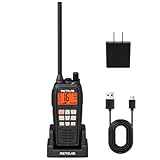
- IP68 waterproof marine radio; the RM15 VHF radio marine resists saltwater corrosion; rated for water immersion up to 1.5 meters for 30 minutes; corrosion-resistant charging contacts; perfect for offshore fishing, bass fishing, and fishing tournaments
- Floating design; the RM15 vhf radio marine stays on the water’s surface if dropped overboard; a water activated emergency strobe light indicates its location; suitable for marine activities such as boating fishing or kayaking; RM15 complies with PART 80
- Dual-way noise reduction system; the RM15 VHF marine radio reduces noise on both transmit and receive audio for clearer two-way communication; a powerful 1000mW (1W) speaker delivers loud, crisp sound even in noisy marine environments
- 16km long range communication;6W vhf marine radio;designed for open water marine activities;whether racing sailboats or navigating choppy seas during fishing trips;helps you stay connected in demanding offshore environments
- Long battery life; the RM15 VHF marine radio features a 2000mAh battery, USB-C ports on both the radio body and charger, and a included cable for 5V/2A or 5V/1A adapter charging. Enjoy over 10 hours of operation and up to 100 hours standby.
Are amphibious vehicles still made?
Some designs are no longer in production, and others are presented as platforms or rare individual sale listings rather than widely available new vehicles. Gibbs explicitly says the Aquada is no longer in production; WaterCar describes rare Panther examples and presents its EV as reservation/build based. Availability can change, so verify current information with the manufacturer or seller.
FAQ
How do amphibious cars drive on water?
They use marine propulsion, such as propellers or water jets, rather than relying on their road wheels alone. Designs differ: the Amphicar uses twin propellers, while the Gibbs approach described in its technology material uses a water jet and, in many models, retractable wheels.
Do amphibious vehicles literally turn into boats?
No. “Turn into a boat” is shorthand for switching from land operation to self-propelled movement through water. The vehicle remains the same machine, with a hull and marine propulsion designed into it.
Are amphibious cars still made?
Some amphibious designs are discontinued, and availability varies by model. Gibbs says the Aquada is no longer in production, while WaterCar describes rare Panther examples and a reservation/build process for its EV. Check current manufacturer or seller information before assuming a vehicle is available.
Are manufacturer speed figures independently tested?
Not necessarily. The Gibbs and WaterCar figures cited here are manufacturer-reported specifications or sale-listing claims. They should not be treated as independent test results, and comparisons across cars, ATVs, motorcycles, UTVs, and utility platforms are not directly equivalent.
Quick Recap
Product prices and availability are accurate as of the date/time indicated and are subject to change. Any price and availability information displayed on Amazon at the time of purchase will apply.




